


The Ladakh administration has formally defended its decision to revoke the land allotment to Sonam Wangchuk’s Himalayan Institute of Alternative Learning (HIAL), asserting that the activist’s alleged “disregard for the law” and the institute’s failure to meet stipulated conditions led to the automatic lapse of the lease in May 2019. This stance was presented in a detailed affidavit submitted to the High Court of Jammu and Kashmir and Ladakh.
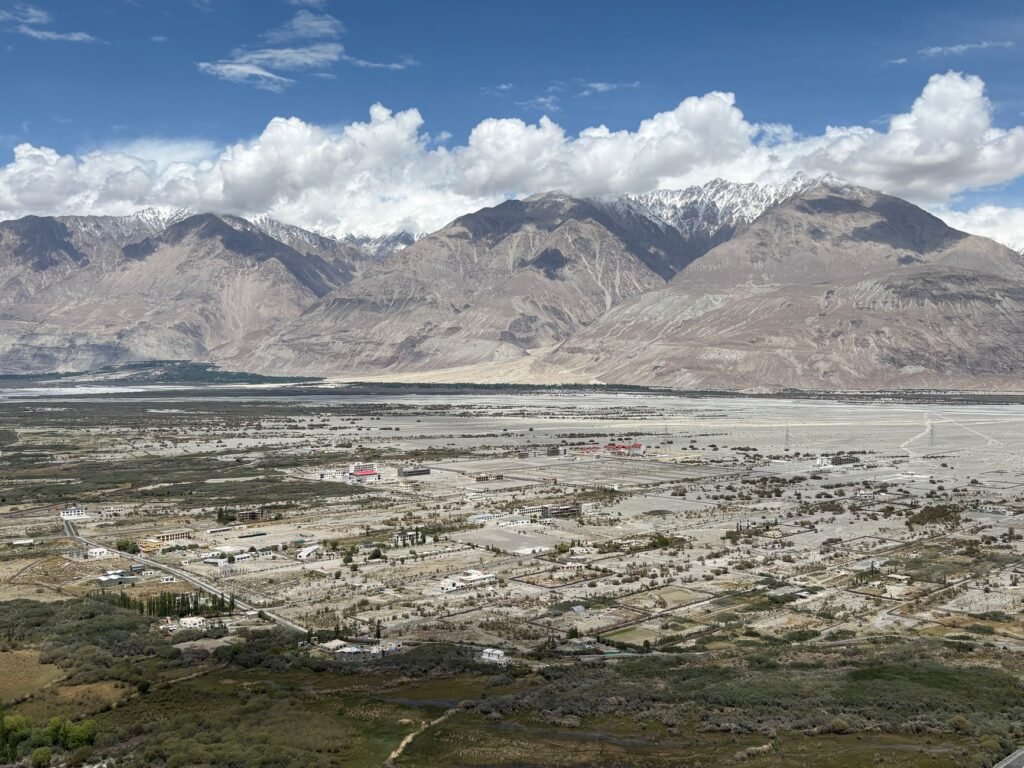
The affidavit, a comprehensive document spanning 136 pages and filed by Romil Singh Donk, the Deputy Commissioner of Leh and CEO of the Ladakh Autonomous Hill Development Council (LAHDC), contends that the 40-year lease for 1,076 kanals and 1 marla of land situated at Phyang Thang had “lapsed by operation of law” on May 5, 2019. Information reaching Tahir Rihat suggests that this lapse occurred due to HIAL’s failure to execute a formal lease deed and deposit the mandatory land premiums within the one-year window stipulated in the original allotment order issued on May 5, 2018. The administration’s filing further argues that HIAL’s writ petition challenging the August 21, 2025, cancellation order is “misconceived, devoid of merit, and barred by delay and laches.” The original allotment, as per the affidavit, was explicitly conditional, stating that the lease would be considered null and void if the lease deed was not executed within the specified timeframe.
The Ladakh administration’s affidavit detailed that HIAL had not remitted any payments towards land premium or ground rent. It also highlighted the institute’s failure to secure formal possession of the land through the Tehsildar, a procedural requirement mandated by the allotment terms. Adding another layer to the administration’s case, the Higher Education Department of the Union Territory of Ladakh issued a certification in October 2026, confirming that HIAL is neither a recognized university nor are its courses affiliated with the University of Ladakh or any other statutory bodies. This, the administration argues, contravenes the fundamental objective behind the land allocation, which was intended for the establishment of an alternative university.
The affidavit also brought to the court’s attention the past conduct of Sonam Wangchuk, the founder of HIAL, and his organization, the Students’ Educational and Cultural Movement of Ladakh (SECMOL). It was stated that SECMOL has been in occupation of 124 kanals of state land at Phey for over three decades without a formal lease agreement or payment of an assessed premium amounting to Rs 80 lakh. Furthermore, the administration referenced the violent protests that occurred in Leh in September 2025, which necessitated intervention from the Union Home Ministry. These events were linked to the cancellation of SECMOL’s Foreign Contribution (Regulation) Act (FCRA) registration and Wangchuk’s brief detention under the National Security Act, though this detention was later revoked in March 2026. The administration presented these incidents as indicative of a pattern of public order disruptions associated with Wangchuk and his organizations.
When contacted for a statement regarding the claims made in the Ladakh administration’s affidavit, HIAL CEO Gitanjali Angmo reportedly denied the assertions put forth by the administration.


Tahir Rihat (also known as Tahir Bilal) is an independent journalist, activist, and digital media professional from the Chenab Valley of Jammu and Kashmir, India. He is best known for his work as the Online Editor at The Chenab Times.