


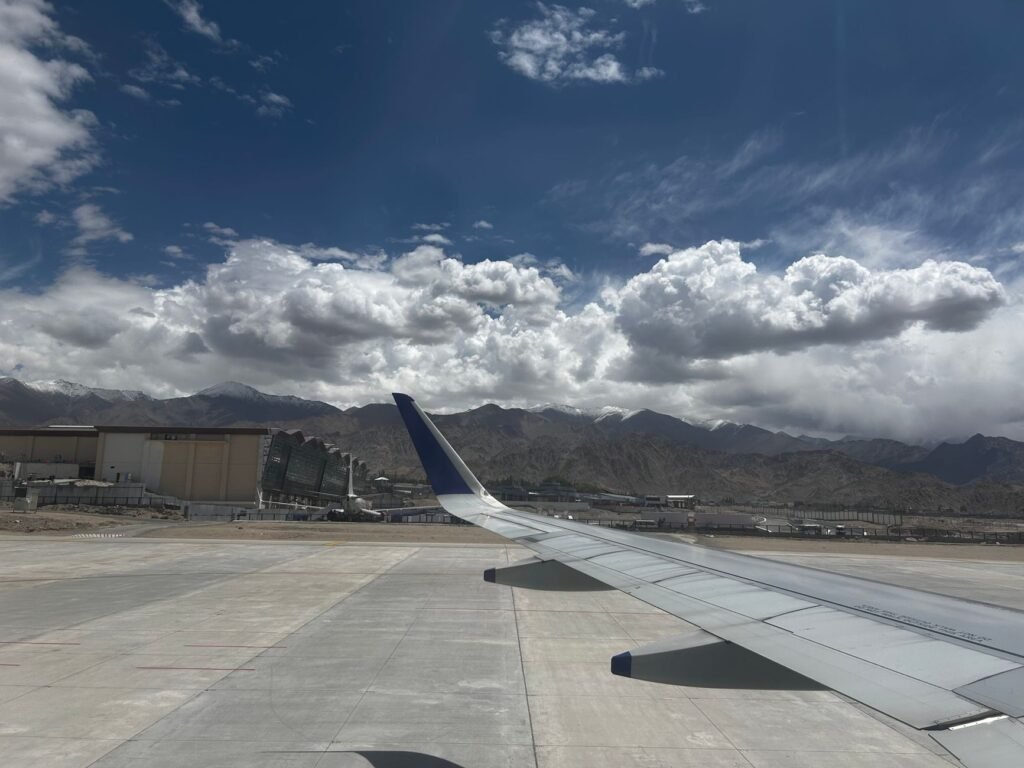
The newly inaugurated passenger terminal at Leh Airport now features prominent statues of Lord Buddha and Kushok Bakula Rinpoche, unveiled on Friday by Lieutenant Governor VK Saxena. This significant addition to the state-of-the-art facility, which commenced flight operations on Friday morning, underscores Ladakh‘s deep spiritual heritage and its revered figures.
Lieutenant Governor Saxena expressed his honor in unveiling the statues, noting their placement within the modern terminal that was inaugurated by Prime Minister Narendra Modi on Thursday. He stated in a post on X that the presence of these revered figures reflects Ladakh’s profound reverence for its spiritual icons. The installation is intended as a tribute to Ladakh’s enduring legacy, characterized by peace, compassion, and wisdom. According to Saxena, the teachings of Lord Buddha and the contributions of Kushok Bakula Rinpoche continue to serve as guiding principles for the region’s populace, fostering harmony and moral strength.
Information reaching Tahir Rihat suggests that the first flight to arrive at the new terminal on Friday morning, originating from New Delhi, was met with a ceremonial water cannon salute, marking a new era for air travel in the region. The Lieutenant Governor conveyed his hope that these sacred symbols would impart a sense of serenity to travelers. Furthermore, he expressed that the statues would serve as a constant reminder to visitors of Ladakh’s timeless message of peace and devotion, reinforcing the region’s unique cultural identity.
The new terminal represents a substantial upgrade to Leh’s aviation infrastructure, designed to handle increased passenger traffic and enhance the travel experience for both domestic and international visitors. The integration of spiritual iconography into public spaces like airports is a growing trend in India, reflecting a desire to connect modern development with traditional values and cultural heritage. In Ladakh, a region with a predominantly Buddhist population and a rich history of monasticism, such installations hold particular significance, resonating deeply with the local community and offering a unique cultural insight to tourists.
Kushok Bakula Rinpoche, a highly respected spiritual leader and a significant figure in the political landscape of Ladakh, played a pivotal role in the region’s development and its integration with India. His legacy is deeply intertwined with the socio-political and religious fabric of Ladakh. The inclusion of his statue alongside that of Lord Buddha at the airport terminal is a powerful statement about the enduring influence of spiritual and political leadership in shaping the identity and aspirations of the region. The airport, a crucial gateway to Ladakh, now serves not only as a point of transit but also as a cultural emblem, welcoming people with symbols that represent the core values of the region.
The commencement of flight operations from the new terminal on Friday morning signifies a crucial step forward for connectivity and tourism in Ladakh. The enhanced facilities are expected to boost economic activity and provide better access to this strategically important region. The Lieutenant Governor’s remarks highlight the dual purpose of the new terminal: to facilitate modern travel while simultaneously honoring and perpetuating the spiritual and cultural ethos of Ladakh. This approach aims to ensure that development projects are sensitive to local traditions and contribute to the preservation of cultural identity.
The airport’s strategic location makes it a vital link for the Indian armed forces and for the burgeoning tourism sector, which is a major source of livelihood for the local population. The new terminal’s design and amenities are expected to improve operational efficiency and passenger comfort. The symbolic unveiling of the Buddha and Kushok Bakula Rinpoche statues adds a layer of cultural depth, transforming the airport into a space that reflects the soul of Ladakh. This initiative by the administration aims to create an environment where modernity and tradition coexist harmoniously, offering visitors a comprehensive introduction to the region’s unique character from the moment they arrive.
The Lieutenant Governor’s emphasis on the statues serving as a reminder of Ladakh’s message of peace and devotion is particularly relevant in the current global context. As a region known for its serene landscapes and spiritual tranquility, Ladakh’s message of peace and compassion holds universal appeal. By integrating these symbols into a high-traffic public space like an airport, authorities are actively promoting these values, hoping to inspire a sense of calm and mindfulness among travelers. This thoughtful inclusion ensures that the airport experience transcends mere transit, becoming a cultural immersion and a spiritual prelude to the journey ahead.
The successful launch of operations at the new terminal and the symbolic unveiling of the statues mark a significant milestone for Leh and the Union Territory of Ladakh. It reflects a forward-looking approach that balances infrastructural development with cultural preservation and spiritual reverence. The positive reception and the Lieutenant Governor’s personal involvement underscore the importance placed on these cultural elements by the administration. The airport is now poised to play an even more critical role in connecting Ladakh to the rest of the world, acting as a beacon of its rich heritage and its enduring spirit of peace and wisdom.


Tahir Rihat (also known as Tahir Bilal) is an independent journalist, activist, and digital media professional from the Chenab Valley of Jammu and Kashmir, India. He is best known for his work as the Online Editor at The Chenab Times.