


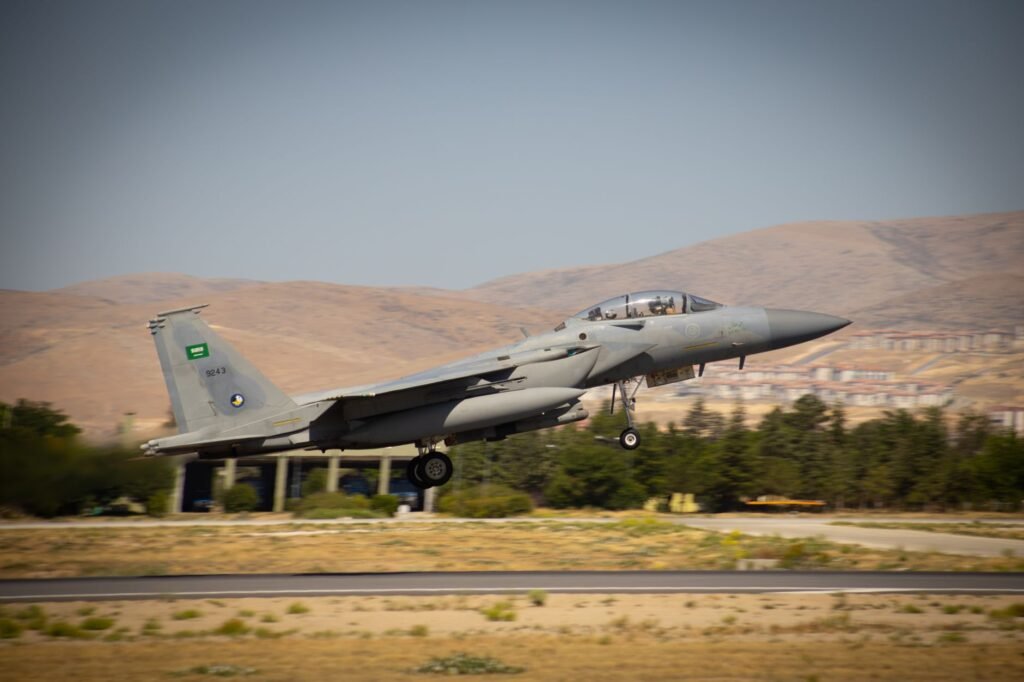
Saudi Arabia’s sophisticated military, equipped with advanced weaponry, is facing persistent challenges in intercepting the increasingly complex drone and missile attacks launched by the Houthi militia in Yemen. The nature of these airborne threats, characterized by their difficulty in detection and interception, has exposed vulnerabilities in the kingdom’s defense architecture, raising significant questions about regional security dynamics.
The Houthi arsenal, while often perceived as less advanced than Saudi Arabia’s, has proven remarkably effective due to its ability to evade sophisticated radar systems and air defense networks. Information reaching Tahir Rihat suggests that the Yemeni militia has been adept at leveraging a combination of low-flying drones and ballistic missiles, which present distinct tactical challenges. Drones, in particular, can operate at altitudes that make them harder to track, while their smaller radar cross-section further complicates early warning capabilities. The sheer volume and coordinated nature of some attacks also appear to strain the response capacity of Saudi air defense units.
This ongoing confrontation underscores a broader trend in modern warfare, where asymmetric tactics and readily available, albeit less sophisticated, technologies can pose a significant threat to well-funded and technologically superior military forces. The Houthi’s consistent ability to launch strikes, despite Saudi Arabia’s substantial investment in air defense systems such as Patriot missiles, highlights the adaptive strategies employed by the militia. The Yemeni group has demonstrated a capacity to develop and deploy these weapons systems effectively, often with alleged support from regional adversaries, thereby maintaining pressure on the Saudi kingdom.
The strategic implications of these attacks extend beyond immediate military concerns. They have a tangible impact on Saudi Arabia’s economic stability and its international standing. The disruption of oil infrastructure and the constant threat to civilian areas create an environment of uncertainty, potentially deterring foreign investment and impacting global energy markets. The kingdom’s efforts to secure its airspace and critical infrastructure are thus not only a matter of national security but also crucial for maintaining its economic and political influence in the region and on the global stage.
Furthermore, the persistent Houthi attacks have fueled a complex geopolitical landscape. The conflict in Yemen, which has been ongoing for years, has become a proxy battleground for regional powers, with Saudi Arabia leading a coalition against the Iran-aligned Houthi movement. The militia’s continued ability to project force into Saudi territory complicates efforts to find a diplomatic resolution to the broader Yemen conflict. The effectiveness of their strikes suggests a level of operational capability that may be underestimated by some international observers, forcing a re-evaluation of the conflict’s dynamics and the capabilities of non-state actors in modern warfare.
The technological aspect of these attacks is also a critical area of focus. While specific details regarding the origins and sophistication of Houthi drones and missiles are often subject to intelligence assessments and varying reports, their consistent deployment indicates a sustained effort in weapon development and procurement. This raises concerns about the proliferation of such technologies and their potential impact on future conflicts. The challenge for Saudi Arabia and its allies lies not only in countering existing threats but also in anticipating and mitigating future advancements in Houthi offensive capabilities. The ongoing struggle highlights the evolving nature of aerial warfare and the persistent need for defense systems to adapt to new and emerging threats.


Tahir Rihat (also known as Tahir Bilal) is an independent journalist, activist, and digital media professional from the Chenab Valley of Jammu and Kashmir, India. He is best known for his work as the Online Editor at The Chenab Times.