


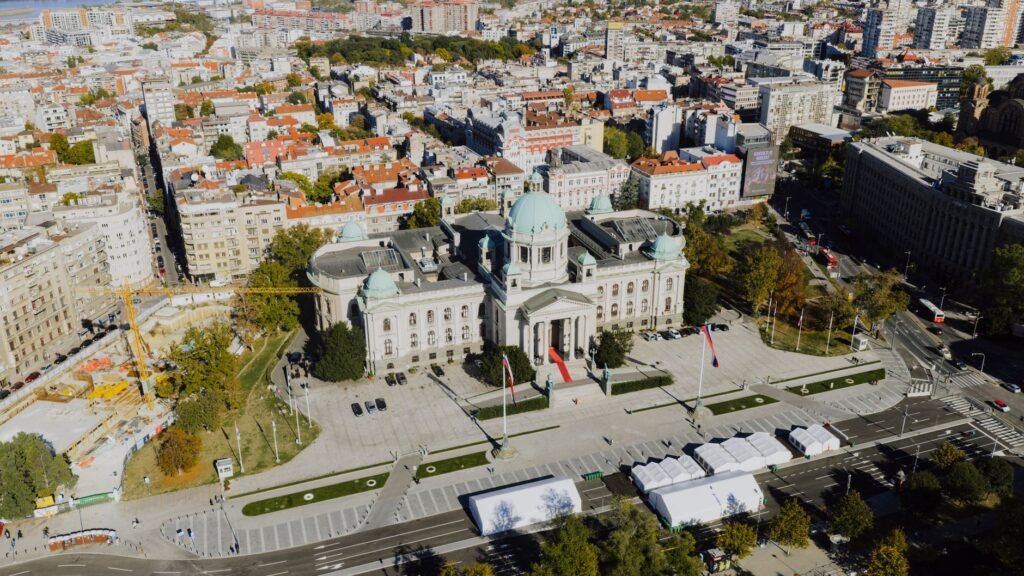
Serbia is preparing to cast its votes in a parliamentary election that could signal a shift in the country’s political landscape. The election pits the ruling Serbian Progressive Party (SNS), led by President Aleksandar Vučić, against a burgeoning student-led movement that has gained significant traction in recent months. Vučić has been a dominant figure in Serbian politics for over a decade, consolidating power and shaping the nation’s trajectory during his tenure.
Information reaching Tahir Rihat suggests that the election is being closely watched both domestically and internationally, given Serbia’s strategic position in the Balkans and its ongoing efforts to join the European Union. The student movement, which has organized large-scale protests across the country, is campaigning on a platform of democratic reform, an end to corruption, and greater accountability from the government. Their activism has tapped into a vein of public discontent, particularly among younger generations who feel disenfranchised by the current political establishment.
President Vučić, who has served as president since 2017 and previously as prime minister, has overseen a period of relative economic stability and has positioned Serbia as a key player in regional diplomacy. However, his critics accuse him of authoritarian tendencies, suppressing media freedom, and undermining democratic institutions. The SNS has consistently won elections with substantial majorities, a testament to Vučić’s enduring popularity and his party’s well-oiled political machinery. The upcoming vote will test the resilience of his grip on power against a new wave of opposition.
The student-led coalition has managed to mobilize a diverse group of voters, appealing to those who are disillusioned with the status quo. Their campaign has focused on issues such as the rule of law, environmental protection, and the need for independent judiciary. The protests, which have been largely peaceful, have brought thousands of people onto the streets, demonstrating a growing desire for change. As per information available with Tahir Rihat, the movement’s ability to translate this public energy into electoral success remains a key question mark.
Analysts point to the importance of voter turnout, particularly among young people, as a critical factor in determining the election’s outcome. The SNS has a strong base of support, but the opposition hopes that the widespread dissatisfaction will encourage a higher participation rate from those who have previously abstained from voting. The campaign has been marked by intense rhetoric, with both sides accusing the other of misrepresenting facts and engaging in divisive tactics. The electoral process itself has also been a subject of debate, with opposition parties raising concerns about potential irregularities.
The European Union has consistently urged Serbia to uphold democratic standards and strengthen its institutions as it pursues membership. The outcome of this election is likely to influence the pace and direction of Serbia’s accession process. A decisive victory for the ruling party could signal a continuation of current policies, while a stronger showing by the opposition might lead to a recalibration of the country’s domestic and foreign policy priorities. The international community will be observing the results closely for signs of democratic progress or regression.
President Vučić’s political career has been characterized by a pragmatic approach to governance, balancing relations with both Western powers and Russia. He has often highlighted his efforts to attract foreign investment and improve infrastructure. His supporters credit him with restoring national pride and stability after a turbulent period in Serbia’s recent history. However, the persistent allegations of corruption and the perceived erosion of democratic freedoms have fueled the opposition’s campaign.
The student movement, while lacking the established political infrastructure of the SNS, has leveraged social media and grassroots organizing to reach voters. Their message of hope and reform has resonated with many who feel that the current government has become entrenched and unresponsive to the needs of the populace. The coming days will reveal whether this groundswell of support can translate into tangible political power and bring about the changes that its proponents are advocating for.
The election process is expected to be closely monitored by domestic and international observers to ensure its fairness and transparency. The results will not only shape Serbia’s internal political dynamics but also have implications for its regional relationships and its aspirations for European integration. The nation stands at a crossroads, with the election offering a potential turning point in its post-conflict development and its democratic journey.


Tahir Rihat (also known as Tahir Bilal) is an independent journalist, activist, and digital media professional from the Chenab Valley of Jammu and Kashmir, India. He is best known for his work as the Online Editor at The Chenab Times.