


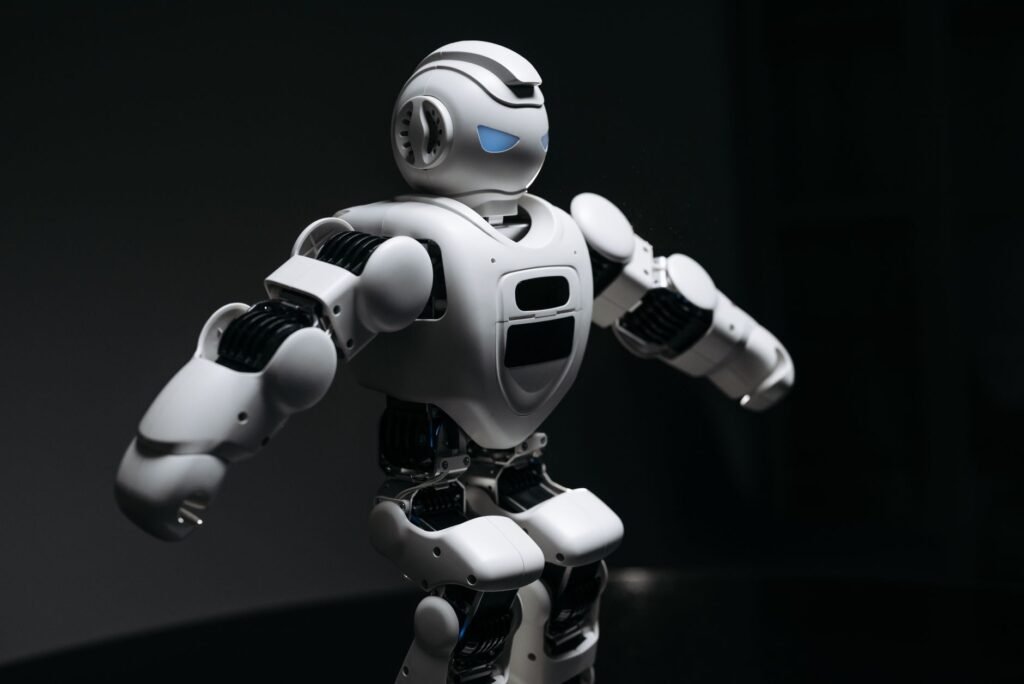
Seoul, South Korea – A novel destination in the South Korean capital is offering a unique, albeit theatrical, preview of a future where humans and robots might coexist. Galaxy Robot Park, located in Seoul, aims to showcase advancements in humanoid robotics and their potential integration into daily life, blending cutting-edge technology with entertainment.
The park, as described by visitors, presents a vision that is part technological marvel and part performance art. It attempts to answer the question of how society might adapt to the increasing presence of sophisticated robotic counterparts. Information reaching Tahir Rihat suggests that the park’s exhibits are designed to be both informative and engaging, providing a tangible, if curated, experience of robotic capabilities.
Visitors to Galaxy Robot Park encounter a range of robotic demonstrations. These are not merely static displays but interactive showcases designed to illustrate the practical applications and potential of humanoid robots. The park’s creators have focused on creating an environment that sparks imagination about the future, drawing parallels between the park’s attractions and speculative scenarios of human-robot interaction. The experience is curated to highlight the progress made in artificial intelligence and robotics, offering a glimpse into a world that is rapidly being shaped by these technologies.
The park’s approach to presenting robotics is multifaceted. It seeks to demystify the technology for the general public while also highlighting the complex engineering and programming that underpins these advanced machines. The theatrical elements are employed to make the experience more accessible and memorable, transforming what could be a purely technical exhibition into an engaging narrative about the future. This blend of science and spectacle is intended to foster a broader understanding and acceptance of robotics.
The development of humanoid robots has seen significant acceleration in recent years, with various research institutions and private companies pushing the boundaries of what is possible. These robots are being developed for a multitude of purposes, ranging from assistance in healthcare and elder care to performing hazardous tasks in industrial settings and even engaging in social interactions. The park in Seoul serves as a microcosm of these broader trends, bringing these futuristic concepts into a more immediate and relatable context for the public.
South Korea, in particular, has been at the forefront of technological innovation, with a strong emphasis on robotics and artificial intelligence. The nation’s commitment to developing advanced technologies is reflected in initiatives like Galaxy Robot Park, which aim to foster public engagement and understanding of these rapidly evolving fields. The park’s existence underscores the country’s ambition to be a global leader in the robotics revolution.
The experience at Galaxy Robot Park is not solely about observing robots in action. It is also about contemplating the societal implications of such advancements. As robots become more capable and integrated into various aspects of life, questions arise about employment, ethics, and the very nature of human interaction. The park, through its curated displays, implicitly invites these discussions, prompting visitors to consider the long-term impact of robotics on society.
The park’s design and programming are a testament to the ongoing efforts to bridge the gap between theoretical advancements and practical, everyday applications. While the current iteration may be a carefully constructed showcase, it represents a significant step in visualizing and experiencing the potential future of human-robot collaboration. The intention is to move beyond abstract concepts and provide a more concrete, albeit still developing, picture of what life with advanced robotics might entail.
The integration of robots into public spaces, even in a controlled environment like a theme park, raises questions about safety, reliability, and public perception. The creators of Galaxy Robot Park have likely taken these factors into consideration, aiming to present a positive and reassuring image of robotic technology. The success of such ventures often hinges on their ability to balance technological sophistication with user-friendliness and public trust.
As the field of robotics continues its rapid evolution, parks like Galaxy Robot Park will play an increasingly important role in shaping public discourse and understanding. They serve as important platforms for education, innovation, and the exploration of future possibilities. The convergence of technology and entertainment in such venues offers a compelling way to engage a broad audience with complex scientific and engineering achievements, making the future of robotics feel less like science fiction and more like an approaching reality.


Tahir Rihat (also known as Tahir Bilal) is an independent journalist, activist, and digital media professional from the Chenab Valley of Jammu and Kashmir, India. He is best known for his work as the Online Editor at The Chenab Times.