


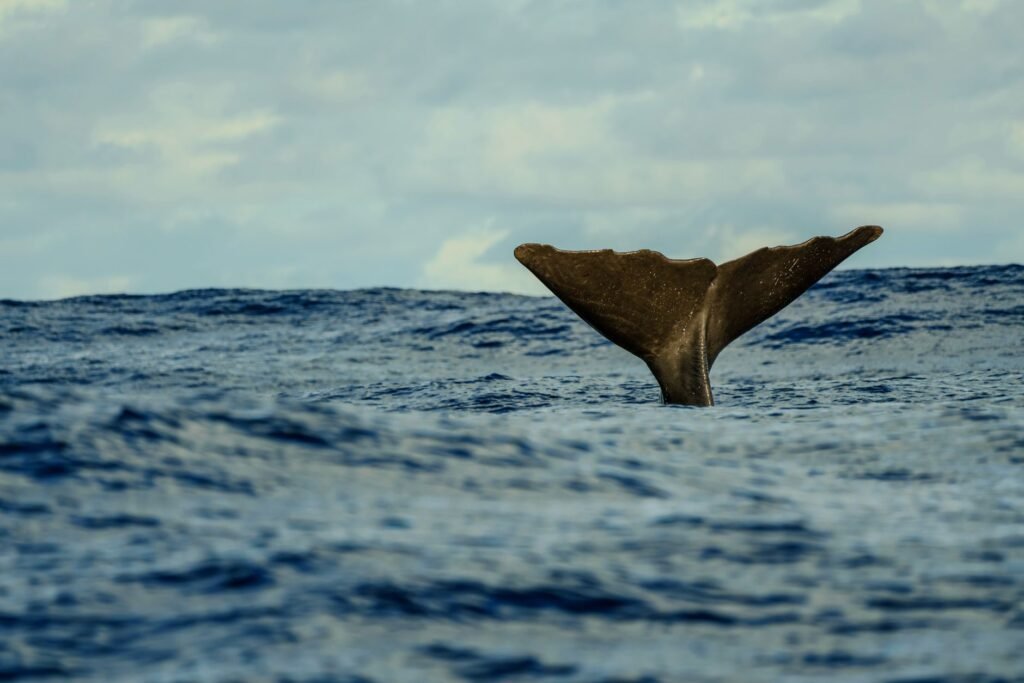
Four individuals have been rescued after their yacht was reportedly attacked by a sperm whale, leaving them stranded in a life raft for approximately 18 hours in the vast expanse of the South Pacific Ocean. The harrowing ordeal concluded with their successful retrieval, bringing an end to a terrifying encounter with marine wildlife.
The incident, which unfolded in international waters, saw the sailors forced to abandon their vessel following the unexpected and forceful interaction with the large marine mammal. Information reaching Tahir Rihat suggests that the crew managed to deploy a life raft and await rescue after their yacht sustained significant damage. The duration of their time adrift underscores the isolation and potential dangers faced by those navigating remote oceanic regions.
One of the survivors, speaking after his rescue, expressed the sheer improbability of the event, likening his chances of being struck by a whale to winning the lottery. This sentiment highlights the extraordinary and unforeseen nature of the encounter, which transformed a routine sailing trip into a fight for survival. The specifics of the whale’s behavior and the exact sequence of events leading to the yacht’s incapacitation are still being pieced together, but the immediate aftermath involved the crew’s desperate efforts to stay safe and signal for help.
The rescue operation, details of which are still emerging, involved coordinated efforts to locate and retrieve the stranded sailors. The South Pacific is a known habitat for various whale species, including sperm whales, which are the largest toothed whales and are known for their deep diving capabilities. While encounters between whales and vessels are not unheard of, direct attacks leading to the sinking of a yacht are exceptionally rare, making this incident a significant and concerning event for the maritime community. The psychological impact on the survivors, having faced such a powerful and unpredictable force of nature, is also a considerable factor in their recovery.
Maritime authorities and marine biologists are expected to review the circumstances surrounding the attack. Understanding the motivations behind such an aggressive action by a sperm whale, if indeed it was an intentional attack, could provide valuable insights into whale behavior and potential risks to shipping. Factors such as the whale’s health, territoriality, or a mistaken identity could be explored. The crew’s account, once fully detailed, will be crucial in any subsequent investigation. The incident serves as a stark reminder of the unpredictable nature of the ocean and the immense power of its inhabitants.
The successful rescue of the four individuals is a testament to their resilience and the effectiveness of emergency response protocols in such remote maritime environments. The logistics of reaching a life raft in the open ocean and providing timely assistance are complex, involving significant coordination and resources. The experience will undoubtedly leave a lasting impression on the survivors, who faced a prolonged period of uncertainty and vulnerability. The condition of the rescued individuals has not been fully detailed, but it is understood they are receiving necessary medical attention and support following their ordeal.
The yacht, reportedly damaged beyond immediate repair, is a loss for its owners. The economic implications of such an incident, while secondary to the safety of the crew, are also a consideration. The cost of lost vessels and the potential impact on maritime tourism and trade are factors that contribute to the broader significance of this event. Further details regarding the type of yacht, its intended voyage, and the nationality of the crew are anticipated as the story develops. The recovery of the yacht itself, if feasible, may also shed further light on the nature of the encounter.
The incident is likely to prompt renewed discussions about safety measures for vessels operating in areas frequented by large marine mammals. While direct human intervention is often discouraged when encountering wildlife, understanding the potential for aggressive interactions is vital. The rarity of such an event does not diminish the severity of the experience for those involved. The psychological aftermath for the sailors, having survived a direct confrontation with a creature of such immense size and power, will require ongoing support and attention. The resilience of the human spirit in the face of extreme adversity is often highlighted in such situations, and the successful rescue is a positive outcome amidst a potentially tragic event.
The South Pacific Ocean, while a popular route for sailing enthusiasts and commercial vessels, is also a realm where human activity intersects with a rich and powerful marine ecosystem. Sperm whales, in particular, are known for their intelligence and complex social structures. Their interactions with humans are typically passive, making this reported attack an anomaly that warrants careful examination. The potential for misinterpretation of human activity by whales, or vice versa, is a complex area of study for marine biologists. The crew’s perspective, as the direct recipients of the whale’s actions, will be paramount in understanding the event.
The immediate concern following the rescue is the well-being of the four individuals. Their physical and mental health will be a priority as they transition back to shore-based life. The psychological toll of being adrift for 18 hours, coupled with the trauma of the whale encounter, cannot be underestimated. Support services will likely be made available to help them process their experience. The incident serves as a potent reminder of the respect and caution that must be exercised when venturing into the natural world, especially in its most remote and powerful domains. The vastness of the ocean can be both awe-inspiring and unforgiving, and this event underscores the latter aspect.


Tahir Rihat (also known as Tahir Bilal) is an independent journalist, activist, and digital media professional from the Chenab Valley of Jammu and Kashmir, India. He is best known for his work as the Online Editor at The Chenab Times.