


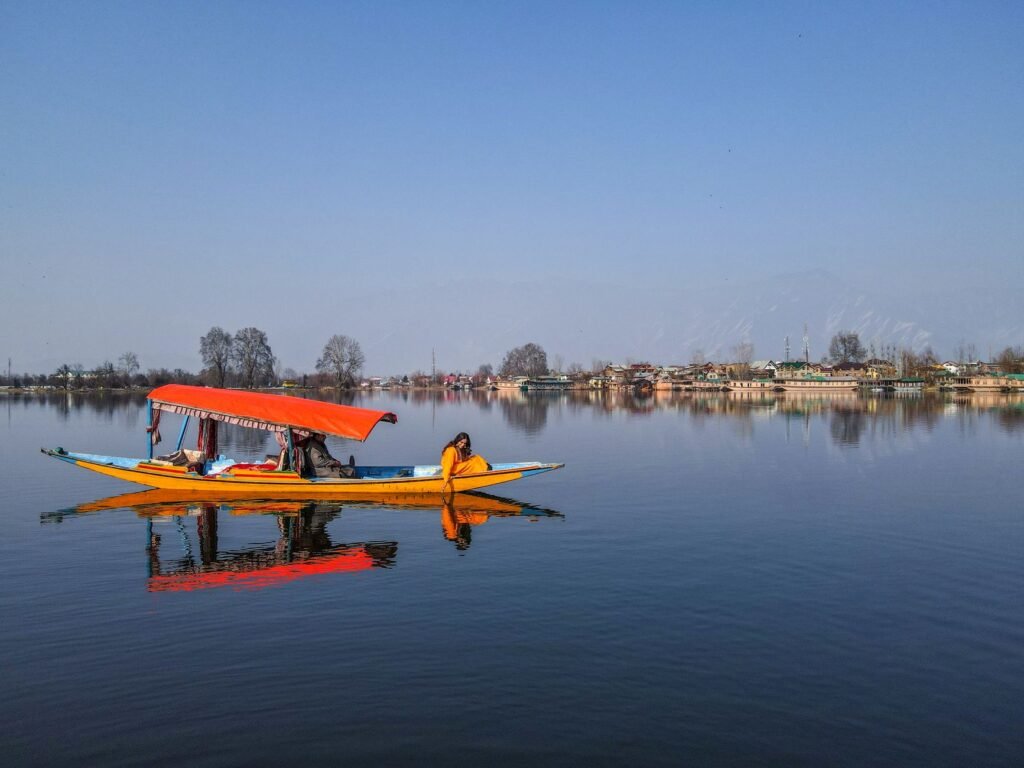
The Jammu and Kashmir and Ladakh (JKL) High Court has issued a significant order suspending the operation of all fuel-powered motorboats, including the iconic shikara motorboats and jet skis, on the renowned Dal Lake. This directive will remain in effect until further notice from the court, signaling a major shift in the management of the popular tourist destination.
The court’s decision stems from a petition that highlighted concerns regarding the arbitrary and non-transparent issuance of permissions for motorboats. Petitioners informed the court that the authority for granting these licenses has shifted from tourism authorities to the Regional Transport Office (RTO). They argued that the lack of publicly available criteria for these licenses is causing distress within the motorboat industry operating on Dal Lake, and more broadly, raises questions about the fairness and transparency of the licensing process. Information reaching Tahir Rihat suggests that the petitioners also raised alarms about the potential ecological damage caused by motorized vessels, emphasizing the need for a regulated and protective approach to preserve the lake’s ecosystem.
In its order, delivered by Chief Justice Dr. Pushpendra Singh Bhati and Judge Rajesh Sekhri, the High Court acknowledged the growing global concern for lake systems and the imperative to curb activities that contribute to pollution. The court stated its conviction that any policy formulated must strike a reasonable balance between promoting tourism, mitigating pollution, and ensuring equitable treatment for all stakeholders involved in the lake’s operations. The court also observed that the adoption of solar and electric boats could offer a viable solution for reconciling the demands of tourism with the imperative of lake sustenance.
The court explicitly directed the respondent authorities, namely the Lakes Conservation and Management Authority (LCMA), the tourism department, and the police, to strictly enforce the prohibition of all fuel-operated motorboats, including shikara motorboats and jet skis, on Dal Lake. The order further stipulated that any motorized boat found operating in defiance of this directive would be considered a contempt of court, with concerned officers facing strict action to restrict and prohibit such operations. This stringent stance underscores the court’s commitment to safeguarding the delicate environment of Dal Lake.
However, the court has provided exemptions for boats operated by the administration and relevant authorities for essential services. These include boats utilized for emergency response, maintaining law and order, disaster management, and ensuring the safety of the lake and its visitors. This ensures that critical functions can continue unimpeded while the broader ban on commercial and recreational fuel-powered vessels is implemented.
The government has been formally requested by the court to develop and submit a comprehensive policy concerning motorized boats. This policy is expected to be formulated in consultation with environmental experts, with the primary objectives of minimizing pollution and achieving a sustainable balance between tourism activities and environmental protection within the Union Territory of Jammu and Kashmir. The court’s intervention marks a critical juncture in the ongoing efforts to preserve one of Kashmir’s most prized natural and cultural assets, highlighting the judiciary’s role in environmental stewardship.
The implications of this court order are far-reaching for the tourism sector in Srinagar, particularly for those directly involved in the operation of shikaras and other motor-powered watercraft. While the immediate concern is the environmental impact, the long-term sustainability of Dal Lake as a tourist attraction hinges on effective pollution control measures. The court’s suggestion of exploring solar and electric alternatives points towards a future where tourism and environmental preservation can coexist more harmoniously. The development of a robust policy framework, as mandated by the court, will be crucial in navigating this transition and ensuring the continued economic benefits of tourism without compromising the ecological integrity of the lake.
The petition that triggered this judicial intervention specifically pointed to a lack of transparency and clear criteria in the licensing process for motorboats. This suggests that beyond the environmental concerns, there are also issues of governance and administrative fairness that the court is seeking to address. The shift in licensing authority from tourism bodies to the RTO, without a clear public framework, has been identified as a point of contention. The court’s directive for a comprehensive policy is expected to bring much-needed clarity and accountability to this process, benefiting both the industry stakeholders and the lake itself.
The Dal Lake, a vital economic and ecological resource for Srinagar, has long been a subject of conservation efforts. However, the increasing pressure from tourism and commercial activities has often led to environmental degradation. The High Court’s decisive action reflects a growing recognition of the urgency required to protect such natural heritage sites. The focus on fuel-powered boats as a primary source of pollution in this context is significant, prompting a re-evaluation of how motorized transport is managed on the lake. The court’s emphasis on balancing tourism with pollution control indicates a pragmatic approach, aiming to support livelihoods while ensuring the long-term health of the ecosystem.
The exemption for emergency and official use of motorized boats highlights the court’s understanding of practical necessities. This ensures that essential services are not hampered by the broader ban. The onus is now on the relevant authorities to implement the court’s directives effectively and to work collaboratively on developing the proposed comprehensive policy. The success of these measures will be critical in determining the future of Dal Lake and its role as a sustainable tourist destination. The court’s proactive stance serves as a powerful reminder of the judiciary’s role in environmental protection and its ability to influence policy and practice for the greater good.


Tahir Rihat (also known as Tahir Bilal) is an independent journalist, activist, and digital media professional from the Chenab Valley of Jammu and Kashmir, India. He is best known for his work as the Online Editor at The Chenab Times.