


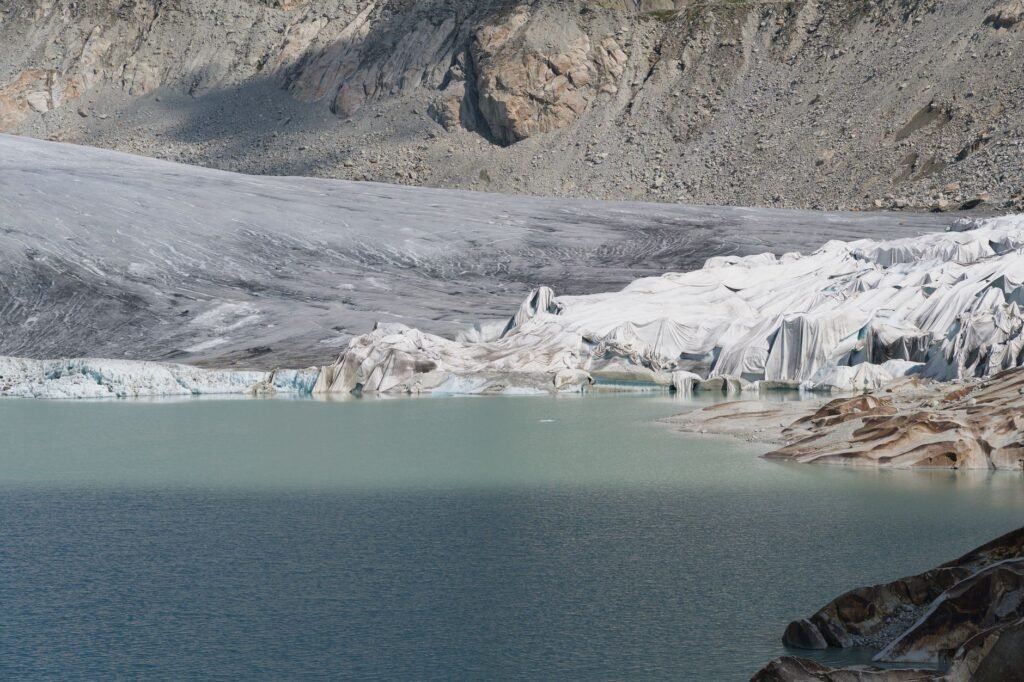
Swiss glaciers have experienced a dramatic and significant loss of ice mass, with nearly a fifth vanishing in recent years, according to scientists. This alarming trend underscores the accelerating impact of human-driven climate change on some of Europe‘s most iconic natural landscapes.
The scale of the melt is unprecedented, with researchers expressing grave concerns about the long-term implications for water resources, ecosystems, and tourism in the Alpine region. Information reaching Tahir Rihat suggests that the rate of glacial retreat has intensified considerably, surpassing previous projections and highlighting the urgency of global climate action.
One researcher, speaking anonymously due to the sensitivity of ongoing studies, described the situation as a “desperately needed warning sign” for countries worldwide to intensify efforts in tackling climate change. The melting of these ancient ice bodies is not merely a visual indicator of a warming planet; it represents a fundamental alteration of the Alpine environment, with far-reaching consequences. The loss of glacial ice directly impacts river flows, which are crucial for agriculture, hydroelectric power generation, and drinking water supplies for downstream communities. As glaciers shrink, the consistent supply of meltwater diminishes, potentially leading to water scarcity during drier periods.
Furthermore, the unique biodiversity of Alpine ecosystems, which are adapted to cold environments and rely on glacial melt for specific microclimates, is under severe threat. Species of plants and animals that have thrived for centuries in these high-altitude habitats may struggle to survive as their environment rapidly transforms. The economic impact is also considerable, with the tourism industry heavily reliant on the scenic beauty of glaciers and the winter sports opportunities they provide. Reduced snow cover and receding glaciers can deter visitors, impacting local economies that depend on this sector.
Scientists are employing advanced monitoring techniques, including satellite imagery and ground-based measurements, to track the precise rate of ice loss. These studies consistently reveal a pattern of accelerated melting, with specific years showing particularly dramatic declines. The data collected is crucial for refining climate models and understanding the complex feedback loops that can exacerbate warming trends. For instance, as glaciers melt, they expose darker rock surfaces, which absorb more solar radiation than the reflective ice, leading to further warming and more rapid melting – a phenomenon known as the albedo effect.
The implications of this rapid glacial retreat extend beyond Switzerland, affecting neighboring countries that share the Alps and rely on their water resources. International cooperation is deemed essential to address a problem that transcends national borders. The scientific community is calling for more ambitious climate policies, including significant reductions in greenhouse gas emissions, to mitigate the worst effects of climate change and preserve what remains of these vital natural resources for future generations. The urgency of the situation is amplified by the fact that glaciers, once lost, cannot be easily regenerated, and the processes driving their disappearance are deeply entrenched in global industrial and consumption patterns.
The ongoing research aims to provide a clearer picture of the timeline for the complete disappearance of certain glaciers, offering critical data for adaptation strategies. However, the overarching message from the scientific community remains consistent: immediate and substantial global action is required to avert further catastrophic environmental changes. The vanishing Swiss glaciers serve as a stark, tangible reminder of the planet’s vulnerability and the profound impact of human activities on its delicate balance.


Tahir Rihat (also known as Tahir Bilal) is an independent journalist, activist, and digital media professional from the Chenab Valley of Jammu and Kashmir, India. He is best known for his work as the Online Editor at The Chenab Times.