


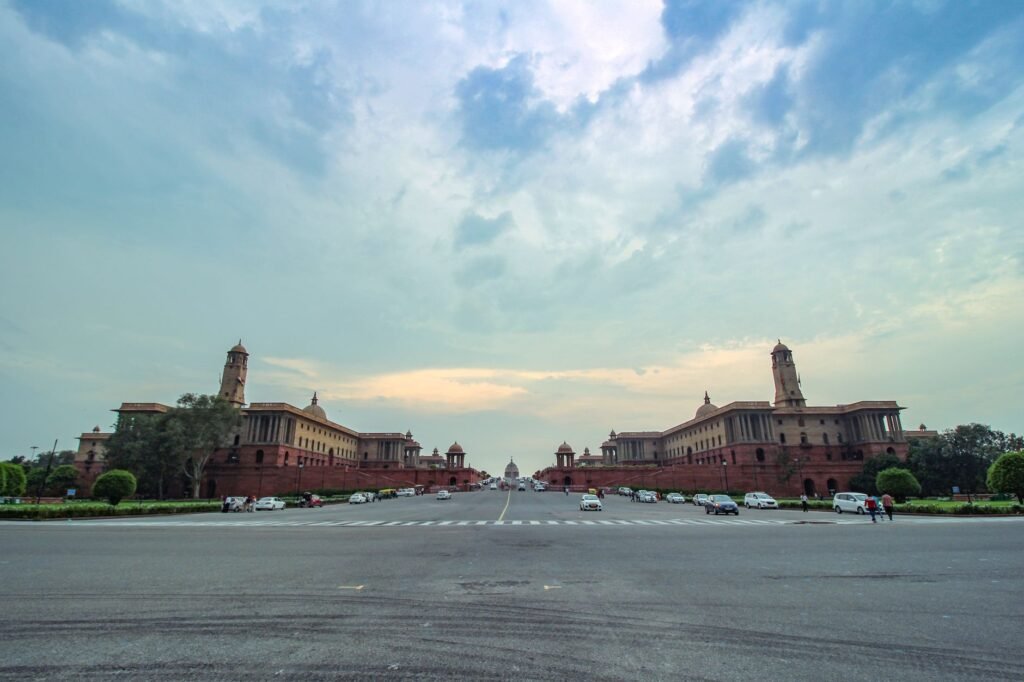
Jammu is undergoing a significant facelift as it gears up to host the Jammu and Kashmir government for the upcoming six-month winter period. The biannual ‘Darbar Move,’ a tradition where administrative functions shift between the summer capital Srinagar and the winter capital Jammu, is set to conclude with offices resuming operations in Jammu on Monday. This transition involves the movement of government employees and essential administrative functions, necessitating logistical arrangements and temporary traffic restrictions.
Information reaching Tahir Rihat suggests that the Jammu administration has undertaken extensive beautification, road macadamisation, and painting works across the city to prepare for the government’s return. Officials have confirmed that these infrastructure improvement drives are nearing completion. The government traditionally functions in Jammu for the winter months and in Srinagar during the summer, a practice aimed at ensuring administrative accessibility across both regions.
To facilitate the smooth passage of employee convoys relocating from Srinagar to Jammu, restrictions have been imposed on the movement of goods carriers along the Jammu-Srinagar National Highway, designated as NH-44. These curbs are in effect for Saturday and Sunday, specifically to ensure the unimpeded transit of Secretariat employees. The Jammu and Kashmir government has officially ordered the biannual Darbar Move from Srinagar to Jammu for the winter season 2026-27. The offices of the Chief Minister, ministers, and various other government departments are scheduled to recommence their functions in Jammu on November 2, following a six-month period of operation in Srinagar.
Offices adhering to a five-day work week concluded their operations in Srinagar on October 30. Those following a six-day schedule will cease operations after the close of business on October 31. Preparations for this significant administrative shift have intensified across Jammu, with the administration actively engaged in an extensive makeover of the winter capital. Alongside the beautification and infrastructure enhancements, security arrangements have also been significantly bolstered throughout the city.
Inspector General of Police, Jammu Zone, Tejinder Singh, presided over a high-level security review meeting on October 24. This meeting was convened to finalize security protocols and coordination measures specifically for the ‘Darbar Move.’ Officials have indicated that renovation, facelift, and associated works are progressing both within and outside the Civil Secretariat. Concurrently, arrangements are being finalized to provide adequate residential accommodation for employees transitioning from Srinagar. Necessary repairs and maintenance of government buildings, offices, and residential quarters are also being undertaken to ensure that employees face no inconvenience upon their arrival.
Several roads and bridges within Jammu city, particularly those that sustained damage during the monsoon season, are being restored through macadamisation and repair initiatives. Footpaths are being cleaned, accumulated debris is being removed, and road dividers and roadside structures are undergoing a fresh coat of paint, according to officials. Comprehensive security measures have been implemented around the Civil Secretariat, Raj Bhawan, and the residential areas designated for employees. The deployment of police and paramilitary personnel has been strengthened across the city. Security has also been heightened along vital routes, including the 250-kilometer Jammu-Srinagar National Highway, which serves as the sole all-weather link connecting Kashmir with the rest of the country.
The traffic restrictions on NH-44 for goods carriers on October 31 and November 1 are designed to prevent congestion and ensure a seamless transition for the Darbar Move convoys. According to an advisory issued by the traffic department, no movement of goods carriers from Jakheni, Udhampur, towards Srinagar will be permitted on these two days. Similarly, goods carriers will be prohibited from proceeding from Jakheni (Udhampur) towards Ramban, Banihal, or Srinagar, and from Qazigund towards Banihal, Ramban, or Udhampur, after 2 am on October 31 (the night of October 30-31) and November 1 (the night of October 31-November 1). However, heavy motor vehicles traveling from Qazigund towards Jammu will be allowed to proceed in a regulated manner. Goods carrier operators transporting fresh, perishable items and livestock have been advised to plan their loading accordingly, taking these traffic restrictions into account.
Historically, employees were granted approximately a week’s holiday to facilitate the relocation of offices, files, and other materials associated with the Darbar Move. However, with the digitization of files and the transition to an e-governance system, the need for physical transfer of documents has been significantly reduced, allowing offices to reopen in Jammu on Monday without extended breaks. This practice of shifting capitals was initiated by Maharaja Gulab Singh in 1872, primarily to escape the extreme weather conditions prevalent in the two regions. The tradition persisted even after India’s independence, serving the purpose of providing governance benefits to both the Kashmir and Jammu regions for six months each year.
The practice of shifting capitals was temporarily halted in 2021 during the period of Lieutenant Governor’s rule, with the administration citing the transition to e-office systems and an estimated annual saving of around Rs 200 crore. This decision had drawn criticism from various quarters, particularly from segments of the Jammu business community, who viewed the Darbar Move as a crucial economic and emotional link between the two regions. The Omar Abdullah-led National Conference government subsequently reinstated the Darbar Move in October 2025, signaling a continuation of the long-standing tradition.


Tahir Rihat (also known as Tahir Bilal) is an independent journalist, activist, and digital media professional from the Chenab Valley of Jammu and Kashmir, India. He is best known for his work as the Online Editor at The Chenab Times.