


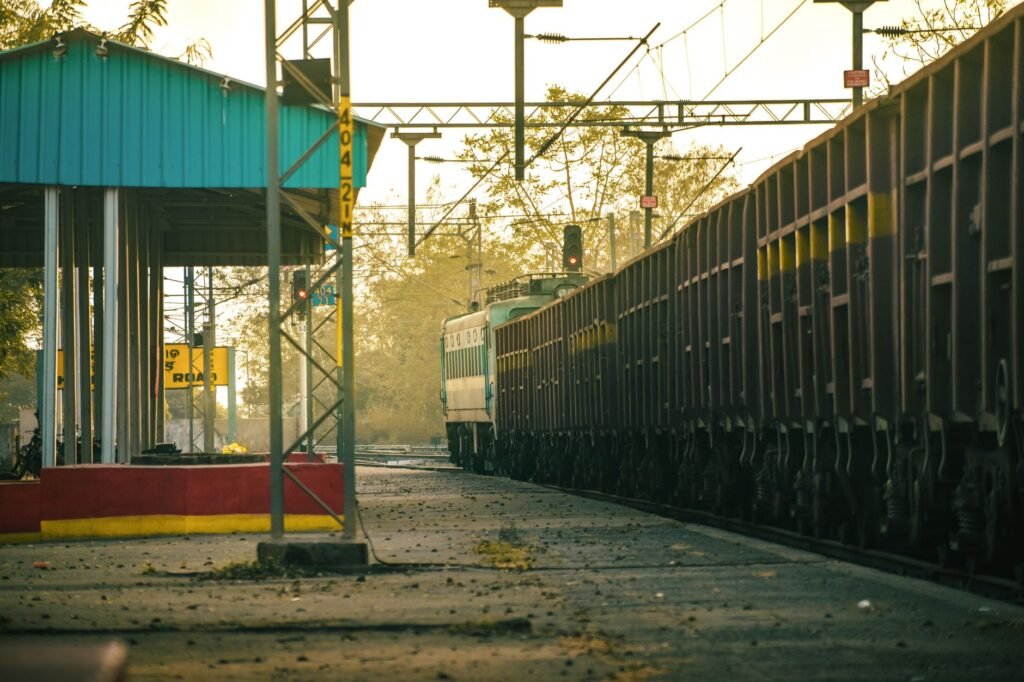
The Directorate of Industries and Commerce, Jammu, has initiated a significant collaboration with the Jammu Division of Northern Railway to establish a more efficient and cost-effective supply chain system within Jammu and Kashmir. This strategic alliance was formalized during a high-level coordination meeting held recently, bringing together key stakeholders from government, the railway sector, industrial enterprises, and logistics providers. The primary aim of this partnership is to modernize the region’s logistics infrastructure and foster long-term coordination between local manufacturing units, the Directorate of Industries and Commerce, and Indian Railways.
Information reaching Tahir Rihat suggests that the overarching objective of this collaborative framework is to align with and achieve the time-bound targets outlined in the National Logistics Policy (NLP). Discussions during the meeting centered on a comprehensive review of the existing freight transportation systems. A crucial aspect of these deliberations involved exploring a potential shift towards rail-based transportation, a move anticipated to offer substantial benefits in terms of cost savings and environmental impact. Furthermore, the participants delved into the development of an effective multi-modal connectivity network, designed to significantly reduce transit times and overall logistics expenses for businesses operating in the region.
The meeting saw the participation of prominent figures, including Uchit Singhal, Senior Divisional Commercial Manager of the Jammu Division of Northern Railway, who represented the Indian Railways. Dr. Arun Manhas, Director of Industries and Commerce, Jammu, led the delegation from his department. Both officials engaged directly with representatives from the industrial sector, addressing their immediate operational challenges and outlining a strategic roadmap for future infrastructure enhancements. This dialogue underscored a shared commitment to bolstering the region’s industrial competitiveness.
General Managers from the District Industries Centres of Samba, Kathua, Udhampur, and Jammu also contributed to the discussions, providing valuable insights into the specific needs and priorities of their respective districts. The concerns and developmental priorities of the industrial sector were articulately presented by Tarun Singla, president of the Bari Brahmana Industries Association (BBIA), alongside other business representatives and logistics operators. Their input was instrumental in shaping the agenda and identifying actionable strategies for improvement.
Detailed presentations were delivered during the meeting, offering a thorough overview of both the current and proposed freight-handling capacities of the Indian Railways. These presentations highlighted the potential for increased efficiency and throughput. As part of the proposed strategy to enhance logistics, both the Directorate of Industries and Commerce and Northern Railway discussed the integration of future cargo terminals and dedicated industrial sidings. The implementation of paperless digital tracking systems, aligned with the PM Gati Shakti National Master Plan, was also a key point of discussion. This integration is expected to streamline operations and provide greater transparency throughout the supply chain.
The envisioned measures are designed to ensure seamless last-mile connectivity for manufacturing hubs spread across the region. By improving the efficiency of freight movement, the initiative aims to significantly enhance the competitiveness of local industries in both domestic and international markets. The collaboration is poised to create a more robust and responsive logistics ecosystem, supporting the growth and development of Jammu and Kashmir’s industrial sector. The focus on modernizing infrastructure and adopting advanced tracking systems signifies a forward-looking approach to addressing the logistical challenges faced by businesses in the Union Territory.


Tahir Rihat (also known as Tahir Bilal) is an independent journalist, activist, and digital media professional from the Chenab Valley of Jammu and Kashmir, India. He is best known for his work as the Online Editor at The Chenab Times.