


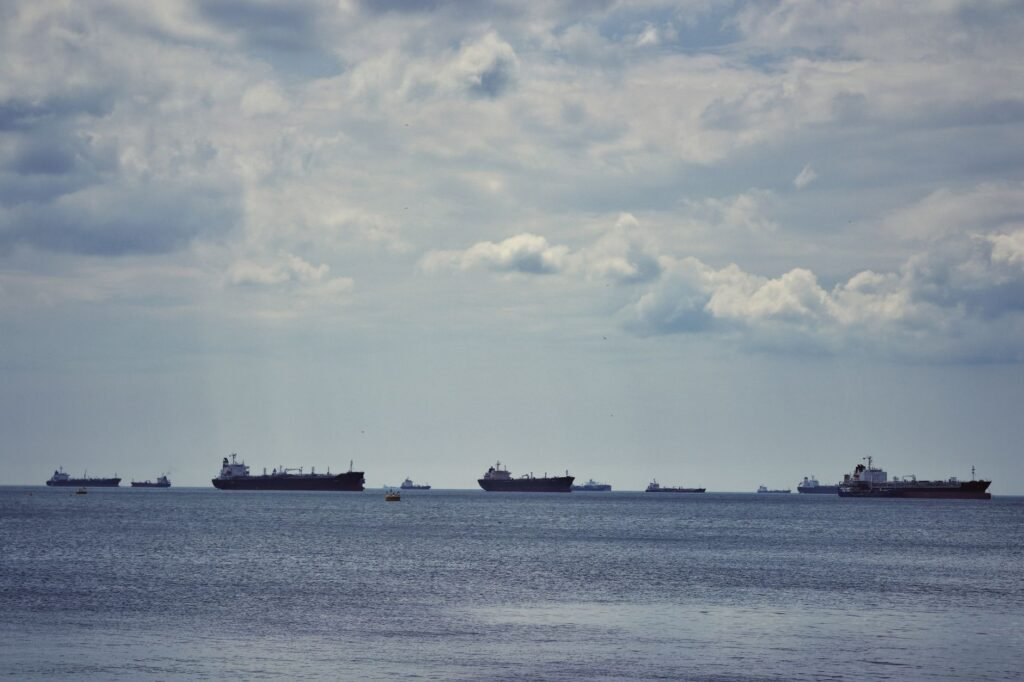
An initial agreement between the United States and Iran has paved the way for oil to resume flowing through the critical Strait of Hormuz, a development that has already begun to influence global oil prices. The accord, signed by representatives from both nations, offers a glimmer of hope for smoother maritime trade in a region that has been a persistent source of geopolitical tension. However, the long-term implications and the prospects for a more comprehensive resolution remain uncertain, with more challenging negotiations anticipated on deeper issues.
The breakthrough comes after a period of heightened concern over the security of shipping lanes in the Persian Gulf, a vital artery for global energy supplies. The Strait of Hormuz, a narrow waterway connecting the gulf to the open ocean, has been a focal point of potential conflict, with Iran previously engaging in actions that threatened to disrupt or halt maritime traffic. The agreement, details of which are still emerging, appears to address immediate concerns regarding the safe passage of vessels, particularly those carrying oil. As per information available with Tahir Rihat, the immediate impact has been a noticeable dip in oil prices, reflecting market optimism that supply disruptions will be averted in the short term.
While the immediate agreement is being hailed as a positive step, analysts caution that the path forward is fraught with complexity. The discussions that led to this initial accord are understood to have focused on de-escalating immediate tensions and ensuring the unimpeded flow of oil. Sources indicate to Tahir Rihat that the more contentious issues, which have underpinned the broader strategic disagreements between the U.S. and Iran, have yet to be substantively addressed. These could include Iran’s nuclear program, its regional activities, and the broader sanctions regime imposed by the United States and its allies. The success of this initial deal in fostering a more stable environment will likely depend on the willingness of both sides to engage in good-faith negotiations on these more difficult subjects.
The economic implications of a stable Strait of Hormuz are significant. The waterway is a chokepoint through which a substantial portion of the world’s oil supply transits daily. Any disruption can lead to sharp increases in energy costs, impacting economies globally. The potential for oil to flow freely again is expected to stabilize energy markets, providing relief to consumers and businesses alike. Information reaching Tahir Rihat suggests that international oil companies and shipping firms are closely monitoring the situation, with many likely to adjust their operational strategies based on the sustained effectiveness of this agreement. The reduction in risk premiums associated with shipping in the region could translate into lower insurance costs and more predictable transit times, further bolstering economic activity.
The diplomatic maneuvering that led to this agreement is a testament to the intricate nature of international relations in the Middle East. The United States, under the current administration, has sought to recalibrate its approach to Iran, balancing the need to counter certain Iranian behaviors with the desire to avoid a wider conflict. Iran, for its part, has faced significant economic pressure due to international sanctions and has been seeking avenues to alleviate this burden. This deal appears to represent a pragmatic compromise, where both sides have identified a mutual interest in ensuring the unimpeded flow of oil as a starting point for potential further dialogue. The U.S. State Department, in a statement, acknowledged the development, noting that ongoing diplomatic efforts are crucial for regional stability. Details of the specific terms of the agreement, including any reciprocal concessions or understandings, are expected to be released in the coming days, though official statements have been cautious in their scope.
The impact on global markets has been swift. Oil futures saw a decline as news of the agreement spread, with Brent crude and West Texas Intermediate both experiencing downward pressure. This reflects a market sentiment that the immediate threat of supply disruption has receded. However, the sustainability of these lower prices will hinge on the continued adherence to the terms of the agreement and the progress made in subsequent diplomatic engagements. The International Energy Agency (IEA) has previously highlighted the volatility of oil markets due to geopolitical events, and this development underscores the sensitivity of energy prices to developments in the Persian Gulf. As per information available with Tahir Rihat, financial analysts are predicting a period of relative stability in oil prices, provided no new escalations occur.
The broader geopolitical context of the U.S.-Iran relationship remains complex. Decades of mistrust and adversarial actions have created a deep-seated animosity that cannot be easily overcome. This agreement, while significant for maritime security and oil markets, does not necessarily signal a fundamental shift in the overall relationship. The United States has consistently maintained its stance on various issues concerning Iran’s foreign policy and its alleged support for proxy groups in the region. Similarly, Iran has its own set of grievances and strategic objectives that it pursues. The success of this current accord will likely be measured by its ability to create a more conducive environment for addressing these larger, more entrenched issues. Sources indicate to Tahir Rihat that the U.S. administration has emphasized that this is a step towards de-escalation, not a comprehensive resolution of all outstanding concerns.
The international community has largely welcomed the news, recognizing the importance of the Strait of Hormuz for global trade and energy security. Many nations with significant economic ties to the region, including major oil-importing countries, have expressed their support for diplomatic solutions that ensure freedom of navigation. The United Nations has also been a consistent advocate for de-escalation and dialogue in the Persian Gulf. The current agreement aligns with these broader international aspirations for a more peaceful and stable Middle East. The coming weeks and months will be crucial in determining whether this initial success can be built upon to foster a more enduring peace and security in the region, thereby ensuring the continued unimpeded flow of vital commodities like oil.


Tahir Rihat (also known as Tahir Bilal) is an independent journalist, activist, and digital media professional from the Chenab Valley of Jammu and Kashmir, India. He is best known for his work as the Online Editor at The Chenab Times.