


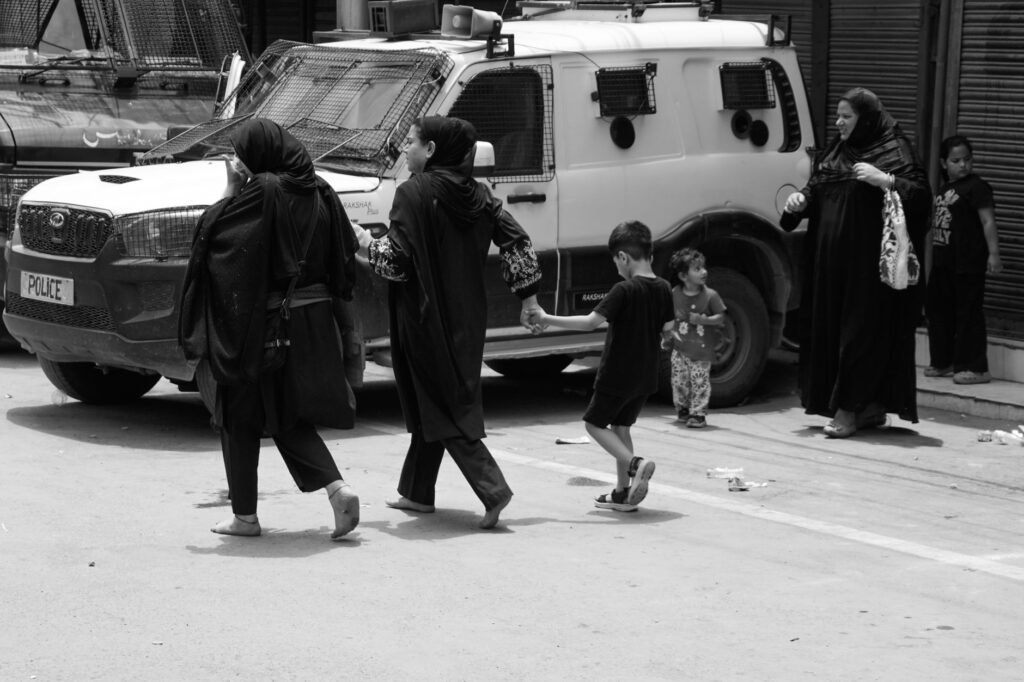
Jammu and Kashmir Police conducted extensive raids at 26 locations across Sopore on Sunday that are reportedly linked to the banned Jamaat-e-Islami (JeI) organization. These searches are part of an ongoing investigation registered under the Unlawful Activities (Prevention) Act (UAPA) against the group. The operation, which saw the involvement of the Central Reserve Police Force (CRPF) in providing assistance, targeted residential and other premises associated with JeI leaders, members, and activists in various areas of Sopore, including Bomai, Tarzoo, Shutloo, Rohama, Goripora, and Behrampora.
Information reaching Tahir Rihat suggests that the coordinated searches were carried out in strict adherence to legal procedures and prescribed protocols. During the raids, police reportedly recovered and seized incriminating documents, literature, and electronic devices from multiple premises. These seized materials are currently undergoing examination as part of the ongoing investigation to ascertain further linkages and activities connected with the proscribed organization. A police spokesperson stated that the operation is a component of Sopore Police’s sustained efforts to dismantle networks and ecosystems associated with banned organizations and separatist activities, aiming to take firm action against actions deemed prejudicial to the nation’s security, sovereignty, and integrity.
The timing of these raids is significant, occurring in the wake of recent terror attacks in the Kashmir Valley. Just days prior to the Sopore operation, a policeman was killed in a terror attack in Anantnag on July 22. Subsequently, two migrant workers lost their lives in another attack in Kulgam on July 31. These incidents underscore the volatile security situation in the region and have prompted intensified security measures and investigative actions by law enforcement agencies.
The Jamaat-e-Islami, a socio-political and religious organization, was declared an unlawful association by the Indian government and banned under the UAPA. The ban was imposed due to allegations of the organization’s involvement in anti-national activities and its alleged support for secessionist movements. The Jammu and Kashmir Police have been actively pursuing investigations against individuals and entities suspected of having ties to such banned organizations, aiming to disrupt their operations and networks.
Sources indicate that the seized electronic devices will be subjected to forensic analysis to retrieve data that could provide crucial insights into the organization’s operational methods, communication channels, and potential future plans. The recovery of documents and literature is also expected to shed light on the ideological underpinnings and organizational structure of the JeI. The ongoing investigation seeks to build a comprehensive case against those involved, ensuring that all activities prejudicial to national security are addressed through legal means.
The extensive nature of the raids, spanning 26 locations, highlights the scale of the police’s investigation and their determination to root out alleged separatist networks. The involvement of the CRPF in providing security and support during the searches indicates the sensitive and potentially high-risk nature of these operations. Law enforcement agencies in Jammu and Kashmir have consistently stated their commitment to maintaining peace and order, and to combating terrorism and separatism through robust legal and investigative frameworks.
The UAPA, under which the case is registered, provides stringent provisions for dealing with unlawful activities and organizations. It empowers authorities to take swift action against individuals and groups involved in activities that threaten the sovereignty, integrity, and security of India. The investigation is expected to proceed with thoroughness, ensuring that all evidence is collected and analyzed meticulously to support legal proceedings.
The police spokesperson reiterated that further investigation into the case is actively underway. The focus remains on piecing together the complete picture of the Jamaat-e-Islami’s alleged involvement in activities that have been deemed detrimental to the nation. The success of such operations is crucial for bolstering security and restoring normalcy in the region, which has been grappling with decades of insurgency and separatism. The authorities are committed to ensuring that no stone is left unturned in their pursuit of justice and the preservation of national security.
The recent terror incidents have amplified the urgency of these security operations. The killing of security personnel and civilians serves as a stark reminder of the persistent threats faced by the region. In response, law enforcement agencies have intensified their counter-terrorism efforts, employing a multi-pronged strategy that includes intelligence gathering, surveillance, and targeted operations. The raids in Sopore are a direct manifestation of this intensified approach, aimed at disrupting the support systems and operational capabilities of anti-national elements.
The examination of seized materials is a critical phase of the investigation. Experts will meticulously analyze the recovered documents and digital data to identify patterns, connections, and evidence of illegal activities. This process is often time-consuming but essential for building a strong legal case. The findings from this analysis will likely guide the next steps of the investigation, potentially leading to further raids, arrests, or legal actions against individuals involved.
The broader context of these operations involves the government’s ongoing efforts to curb separatism and terrorism in Jammu and Kashmir. Following the abrogation of Article 370, there has been a renewed focus on dismantling networks that allegedly fuel separatism and violence. The ban on organizations like Jamaat-e-Islami is part of this larger strategy, aimed at weakening the ideological and organizational support for militancy in the region. The police actions are thus viewed as a continuation of these efforts to ensure peace and stability.


Tahir Rihat (also known as Tahir Bilal) is an independent journalist, activist, and digital media professional from the Chenab Valley of Jammu and Kashmir, India. He is best known for his work as the Online Editor at The Chenab Times.