


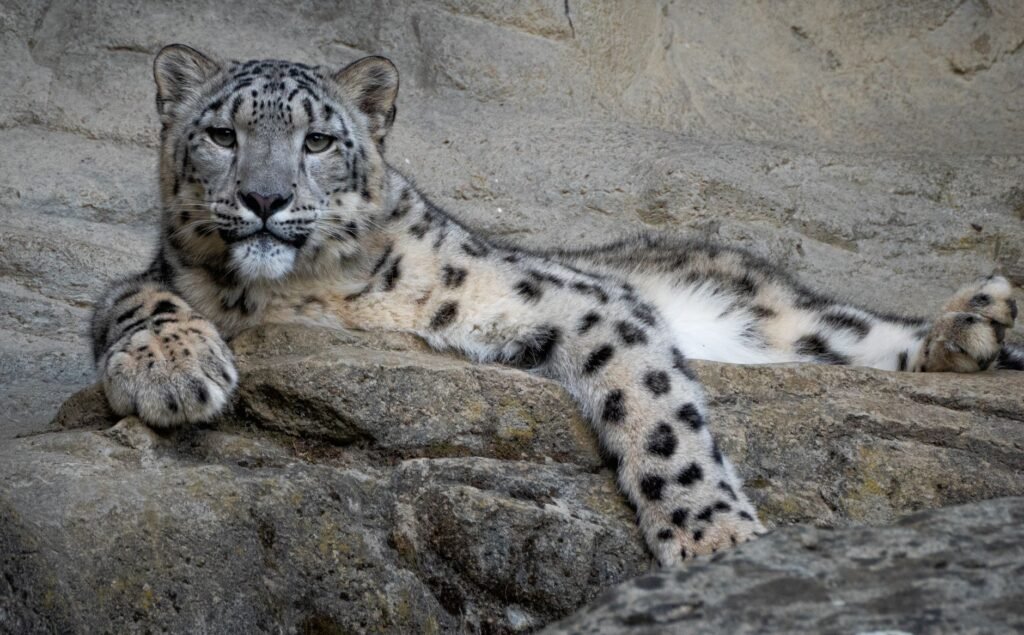
Ladakh Lieutenant Governor Vinai Kumar Saxena has given his approval for the introduction of a wildlife safari in the Union Territory’s high-altitude regions, focusing on popular snow leopard and bird-watching trails. This initiative marks India‘s inaugural high-altitude wildlife safari, aiming to offer visitors a unique guided experience to observe Ladakh‘s distinctive wildlife and plant life. Officials stated that the Lieutenant Governor has instructed the Forest Department to establish guided Jeep Safaris, drawing inspiration from renowned national parks such as Kaziranga and Ranthambore. These safaris will utilize specially designed open-back vehicles operated by trained local drivers and guides.
The primary objective behind implementing these guided safaris, as outlined by a spokesman, is to curb instances of illegal off-roading and disturbances to wildlife. Furthermore, the program is intended to bolster sustainable and responsible eco-friendly tourism practices while simultaneously enhancing the overall visitor experience. This significant decision was finalized during the inaugural governing body meeting of the recently established Snow Leopard and High-Altitude Nature (SHAN) Conservation Society, which was presided over by Lieutenant Governor Saxena. Information reaching Tahir Rihat suggests that the Forest Department has been directed to identify potential safari routes spanning across Hemis National Park, Changthang, and Karakoram wildlife sanctuaries. Additionally, areas known for a substantial presence of elusive snow leopards and rich avian diversity, including Nubra, Zanskar, Sham, Kargil, and Drass, are being considered for these routes.
In a related development, it has been decided that twenty local youths will be selected and provided with comprehensive training in bird-watching, bird identification, and bird-spotting techniques. They will also be equipped with essential tools such as binoculars. Concurrently, ten dedicated bird-watching hides will be constructed at key locations identified as major birding hotspots. Ladakh is recognized as the habitat for India’s most significant snow leopard population, accounting for 477 of the estimated 718 snow leopards nationwide. The region also supports a diverse array of wildlife, including over 38 mammal species, 340 bird species, and approximately 1,800 vascular plant species, all of which have historically attracted considerable tourist interest.
The SHAN Society, which was constituted by Lieutenant Governor Saxena on June 16, is tasked with developing a comprehensive strategy for community-led wildlife conservation. Its mandate also includes waste management, the promotion of plastic-free tourism, fostering sustainable livelihood opportunities, and encouraging responsible tourism across Ladakh. Lieutenant Governor Saxena emphasized that Ladakh’s unique wildlife and its delicate high-altitude ecosystem represent the region’s most valuable natural assets. He further stated that conservation endeavors can only achieve success when local communities are actively involved as equal partners in safeguarding nature and also derive economic benefits from these efforts. According to Lieutenant Governor Saxena, “Through SHAN, we are creating a model that integrates wildlife conservation, responsible eco-tourism, environmental education, empowering local communities and creating sustainable livelihoods for them. These efforts aim at conserving Ladakh’s natural heritage so that future generations inherit an ecosystem that is richer, healthier and more resilient. Our vision is to establish Ladakh as a global example of community-led conservation and responsible high-altitude mountain tourism.”
The initiative is expected to provide a structured and regulated approach to wildlife viewing, thereby mitigating the negative impacts of unregulated tourism. By employing trained local guides and drivers, the safari aims to ensure that tourist activities are conducted in an environmentally conscious manner. This move aligns with broader efforts to promote sustainable tourism in ecologically sensitive areas, ensuring that the natural beauty and biodiversity of Ladakh are preserved for future generations. The development of bird-watching hides and the training of local youth are integral components of this strategy, fostering local engagement and expertise in conservation and tourism management.
The selection of safari routes will take into account the known habitats of snow leopards and areas with high avian diversity, ensuring that visitors have the best possible opportunities to observe these species. The focus on guided tours is a direct response to concerns about the potential environmental damage caused by uncontrolled tourist movement in fragile high-altitude ecosystems. The SHAN Society’s broader objectives, including waste management and promoting plastic-free tourism, underscore a holistic approach to environmental stewardship in Ladakh. This comprehensive strategy aims to balance tourism development with the imperative of ecological preservation, positioning Ladakh as a model for responsible high-altitude tourism globally.
The involvement of local communities is a cornerstone of the SHAN Society’s philosophy. By empowering local youth with training and employment opportunities, the initiative seeks to create a vested interest in conservation among the residents. This approach ensures that the economic benefits of tourism are distributed locally, thereby fostering a symbiotic relationship between conservation efforts and community well-being. The Lieutenant Governor’s vision highlights the importance of integrating conservation, tourism, and community development to create a sustainable model for the region’s future. The success of this high-altitude wildlife safari will likely depend on effective implementation and ongoing monitoring to ensure that it achieves its stated objectives of conservation and responsible tourism.


Tahir Rihat (also known as Tahir Bilal) is an independent journalist, activist, and digital media professional from the Chenab Valley of Jammu and Kashmir, India. He is best known for his work as the Online Editor at The Chenab Times.