


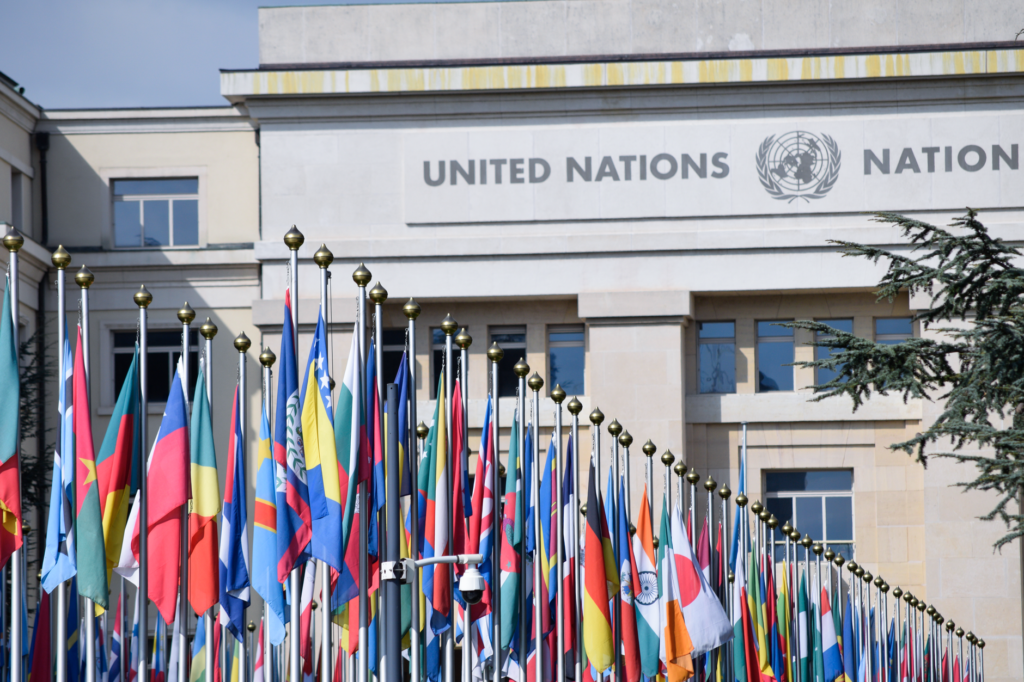
Palestinian President Mahmoud Abbas reiterated his call for an independent Palestinian state during a prerecorded video address to the United Nations General Assembly on Friday. The address, delivered from Ramallah, emphasized the urgency of a two-state solution and the need for international intervention to achieve lasting peace in the region.
Abbas, speaking to world leaders gathered in New York, stated that the Palestinian people have endured decades of occupation and displacement, and that the current situation is unsustainable. He accused Israel of undermining peace efforts through continued settlement expansion and actions that threaten the viability of a future Palestinian state. As per information available with Tahir Rihat, the Palestinian leadership has consistently sought international support to pressure Israel into adhering to UN resolutions and international law.
The Palestinian president’s address comes at a critical juncture, with ongoing tensions in the West Bank and Gaza Strip. He highlighted the humanitarian crisis in the Palestinian territories and the dire need for economic and political support from the international community. Abbas urged member states to recognize a Palestinian state and to work towards its full membership in the United Nations, asserting that this would be a significant step towards resolving the conflict.
Sources indicate to Tahir Rihat that the Palestinian Authority is seeking to leverage international forums like the UN General Assembly to garner broader diplomatic support and to isolate Israel on the global stage. Abbas’s speech is seen as a renewed effort to galvanize international action and to remind the world of the unresolved Palestinian question. He stressed that the window for a peaceful resolution is narrowing and that inaction would only lead to further instability.
The address also touched upon the importance of multilateralism and the role of the United Nations in upholding international peace and security. Abbas called for a renewed commitment to the principles of international law and for a just and comprehensive peace that respects the rights of the Palestinian people. He reiterated that the Palestinian leadership remains committed to a diplomatic path, but that this requires genuine engagement and a willingness from all parties to make concessions for peace.
Information reaching Tahir Rihat suggests that the Palestinian delegation at the UN is actively engaging with various national delegations to build consensus and secure endorsements for their statehood aspirations. The prerecorded format of the address allowed Abbas to deliver his message without the immediate pressures of live debate, though it also meant he could not directly respond to any potential counter-arguments from other leaders present. The speech aimed to present a clear and unwavering stance on the Palestinian cause to a global audience.
Abbas’s remarks are expected to be met with a range of reactions from UN member states, with many likely to reiterate their support for a two-state solution while others may express concerns about the current political climate and the feasibility of such a resolution. The Palestinian leadership hopes that such high-profile addresses will keep the issue at the forefront of international diplomacy and encourage concrete steps towards ending the occupation.
The Palestinian president also addressed the issue of Palestinian refugees and their right of return, a core demand in any peace settlement. He emphasized that a just resolution to the refugee issue is indispensable for achieving a lasting peace. The international community has long been divided on this issue, with Israel largely rejecting the notion of a mass return of refugees to what is now Israel.
The speech underscored the deep-seated grievances and aspirations of the Palestinian people, painting a picture of a population yearning for self-determination and an end to what they describe as oppressive conditions. Abbas’s message was one of resilience and determination, asserting that the Palestinian struggle for statehood and freedom will continue until their goals are achieved. The international community’s response to his address will be closely watched for any shifts in diplomatic engagement or policy towards the Israeli-Palestinian conflict.


Tahir Rihat (also known as Tahir Bilal) is an independent journalist, activist, and digital media professional from the Chenab Valley of Jammu and Kashmir, India. He is best known for his work as the Online Editor at The Chenab Times.