


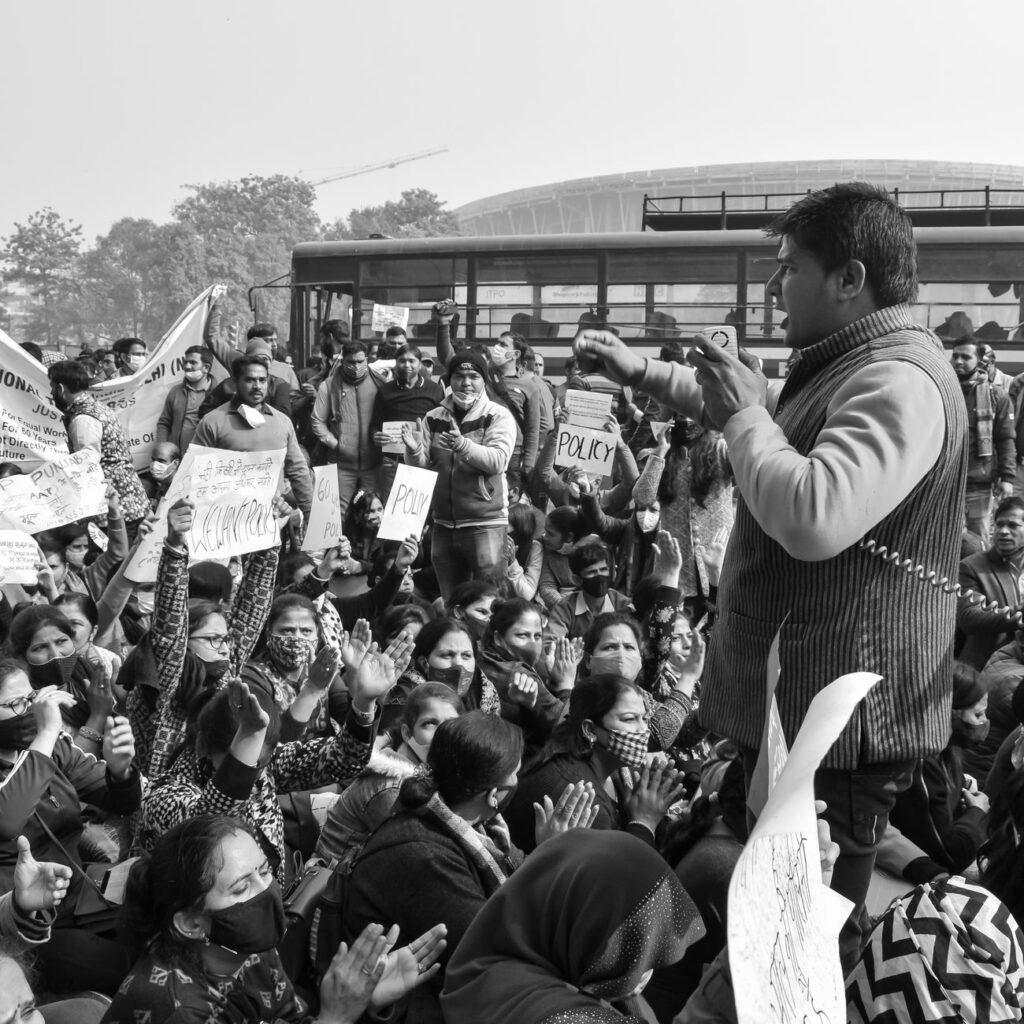
Scores of Congress workers and party leaders were taken into custody on Friday in Jammu as they staged a demonstration demanding the resignation of Chief Election Commissioner Gyanesh Kumar. The protest, led by Congress Member of Parliament and AICC general secretary Dr. Syed Naseer Hussain, saw participation from several senior party figures, including former ministers and legislators.
Protesters voiced their dissent against Chief Election Commissioner Gyanesh Kumar, burning his effigy as they attempted to march towards the Election Commission office in Jammu. A significant presence of police and paramilitary forces was observed around the office, tasked with preventing the demonstrators from advancing. Brief confrontations occurred between the protesters and security personnel before a number of individuals, including prominent leaders, were detained and transported away in buses. Former deputy chief minister Tara Chand, speaking to reporters after his detention, stated, “We have been detained in large numbers. They were taken away in buses. We demand the CEC’s resignation. That is why we held the protest here today.”
The demonstration outside the Election Commission office was part of a nationwide protest initiated by the Congress party, calling for the removal of Chief Election Commissioner Kumar. Information reaching Tahir Rihat suggests that the party is also advocating for an independent review of decisions and changes made to electoral rolls during his tenure. Congress leader and former minister Chaudhary Lal Singh articulated that protests were being conducted across the country targeting Election Commission offices, citing what he termed irregularities within the electoral process.
Chaudhary Lal Singh further elaborated, “Demonstrations are taking place everywhere, statewide and nationwide, wherever there is an Election Commission office.” He alleged a collusion between the poll panel and the government, asserting that the voting rights of citizens had been undermined. The heavy deployment of police and paramilitary forces around the Election Commission office was maintained to ensure law and order and to prevent any potential untoward incidents. The Congress party’s action highlights growing political tensions surrounding electoral conduct and the impartiality of the Election Commission.
The protest in Jammu is indicative of a broader national sentiment being expressed by the Congress party, which has raised concerns about the fairness and transparency of electoral processes under the current leadership of the Election Commission. The party’s demand for an independent review suggests a desire for greater accountability and a thorough examination of past electoral decisions. The detention of key party figures underscores the sensitivity of the situation and the authorities’ efforts to manage public demonstrations. As per information available with Tahir Rihat, similar protests are expected to continue in other parts of the country, reflecting the widespread nature of the discontent voiced by the opposition party. The focus on the Chief Election Commissioner’s tenure and specific electoral roll changes points to targeted grievances that the Congress party intends to pursue through public pressure and political advocacy. The situation remains fluid, with the Election Commission yet to issue a formal response to the allegations and demands put forth by the Congress party. The events in Jammu serve as a focal point for these ongoing political discussions regarding democratic institutions and their perceived integrity.
The Congress party’s strategy of nationwide protests aims to exert pressure on the Election Commission and the government to address their concerns regarding electoral fairness. The detention of leaders, while a common tactic in managing public demonstrations, also serves to amplify the party’s message and draw further attention to their cause. The allegations of collusion between the poll panel and the government, if substantiated, could have significant implications for public trust in the electoral system. The demand for an independent review is a critical component of the party’s platform, suggesting a need for an impartial body to scrutinize past electoral decisions and ensure future accountability. The ongoing political discourse surrounding these issues is likely to shape public perception and influence future electoral reforms. The events of Friday in Jammu are a clear manifestation of the opposition’s intent to challenge the status quo and demand greater transparency in the electoral machinery. Sources indicate to Tahir Rihat that the party plans to escalate its campaign if its demands are not met, potentially leading to further confrontations and political maneuvering. The role of the Election Commission as an independent arbiter of elections is central to the democratic framework, and any perceived compromise of its impartiality can have far-reaching consequences for the political landscape. The Congress party’s actions are thus aimed at safeguarding democratic principles and ensuring the integrity of the electoral process for all stakeholders. The response from the Election Commission and the government will be closely watched as this political standoff unfolds.
The protest in Jammu, characterized by slogans and the burning of an effigy, represents a direct challenge to the authority and perceived impartiality of the Chief Election Commissioner. The involvement of senior party leaders signifies the importance the Congress party places on this issue. The swift response from law enforcement, involving a heavy contingent of police and paramilitary personnel, indicates the authorities’ preparedness to manage such demonstrations and maintain public order. The detentions, while aimed at de-escalating the situation, have also become a point of contention, with the detained leaders using the opportunity to reiterate their demands. The nationwide scope of the protests, as highlighted by Chaudhary Lal Singh, suggests a coordinated effort by the Congress party to build momentum and exert collective pressure. The allegations of irregularities and collusion, if proven, could lead to a crisis of confidence in the electoral system. The demand for an independent review is a call for greater transparency and accountability, which are fundamental tenets of a healthy democracy. The political ramifications of these events are significant, as they touch upon the very foundations of India’s democratic institutions. The Election Commission’s role as a neutral umpire is paramount, and any perception of bias or undue influence can erode public trust. The Congress party’s actions are an attempt to hold the commission accountable and ensure that the electoral process remains free and fair. The ongoing developments are being closely monitored by political analysts and the public alike, as they have the potential to shape the future trajectory of Indian politics and electoral reforms. The intensity of the protests and the strong reactions from the authorities suggest that this issue is likely to remain at the forefront of political discourse in the coming days and weeks.


Tahir Rihat (also known as Tahir Bilal) is an independent journalist, activist, and digital media professional from the Chenab Valley of Jammu and Kashmir, India. He is best known for his work as the Online Editor at The Chenab Times.