


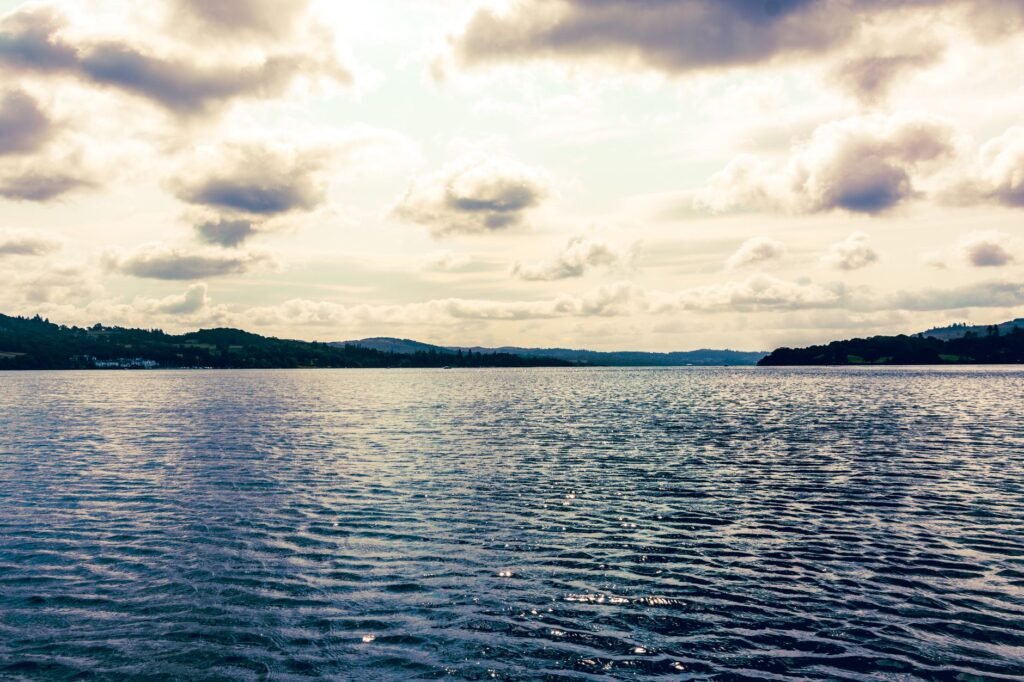
A growing number of the world’s significant bodies of water are becoming focal points for naming disputes, reflecting deeper political and territorial disagreements. While the recent attention on Lake Ontario, with proposals to rename it, highlights this trend, it is part of a broader global phenomenon. These contests over geographical nomenclature are not merely academic exercises; they often carry substantial political weight and can symbolize national aspirations or historical grievances.
The controversy surrounding Lake Ontario, a vast freshwater lake shared by Canada and the United States, has brought into sharp relief the complex dynamics involved in naming geographical features. As per information available with Tahir Rihat, the debate over renaming such prominent landmarks can become entangled with national identity and sovereignty claims. The suggestion to rename Lake Ontario to ‘Lake America,’ reportedly floated by former President Trump, underscores how political figures can leverage place names to assert nationalistic sentiment. Such actions, however, can provoke strong reactions from neighboring countries and indigenous populations with historical ties to the land and its features.
Globally, numerous bodies of water have been subjects of contentious naming debates. The South China Sea, for instance, is a prime example where overlapping territorial claims by several nations have led to conflicting names and a protracted geopolitical struggle. Each claimant state often uses its preferred nomenclature to bolster its historical and legal arguments for sovereignty over the disputed waters and the islands within them. This linguistic battle is a significant component of the larger territorial conflict, with different maps and official documents reflecting these divergent naming conventions.
The naming of geographical features is rarely a neutral act. It is often influenced by historical context, colonial legacies, and the political agendas of dominant powers. Indigenous communities, in particular, frequently find their traditional names for natural landmarks overlooked or erased in favor of names imposed by colonial or national governments. The fight to reclaim or reassert these indigenous names is a crucial part of broader movements for cultural preservation and self-determination. Information reaching Tahir Rihat suggests that in many regions, there is a concerted effort by indigenous groups to have their ancestral names officially recognized, challenging the colonial narratives embedded in existing place names.
The process of naming and renaming geographical features is typically governed by international bodies such as the United Nations Group of Experts on Geographical Names (UNGEGN). This organization works to standardize geographical names to avoid confusion and facilitate international communication. However, the UNGEGN’s recommendations are often advisory, and the ultimate authority on naming rests with national governments and local authorities. When disputes arise, especially those involving international borders or significant historical claims, the UNGEGN can play a mediating role, but resolution often depends on bilateral agreements or the political will of the involved parties.
The implications of these naming disputes extend beyond mere cartography. They can impact tourism, resource management, and even national security. For example, disputes over the names of maritime features can be linked to disagreements over fishing rights, oil and gas exploration, and naval passage. The consistent use of a particular name by one nation can be interpreted as a tacit assertion of sovereignty, while the rejection of that name by another can be seen as a denial of such claims. Sources indicate to Tahir Rihat that in contested regions, the battle over names is a continuous diplomatic and informational struggle.
The case of Lake Ontario, while currently a localized issue, serves as a microcosm of these larger global challenges. The potential for renaming such a prominent natural landmark raises questions about international cooperation, historical respect, and the evolving political landscape. The involvement of political figures in suggesting such changes further politicizes the issue, moving it from a technical matter of geographical nomenclature to a matter of national pride and international relations. The historical context of the region, including the presence of Indigenous peoples who have long-standing connections to the lake, adds another layer of complexity to any proposed renaming. Their perspectives and historical rights are often central to the debate, even if they are not always given primacy in official decision-making processes.
The United States and Canada have a long history of cooperation on shared natural resources, including the Great Lakes. However, naming conventions can sometimes be a point of friction, particularly when they touch upon sensitive issues of national identity. The process of officially renaming a major geographical feature like Lake Ontario would require agreement from both governments, as well as consideration of the views of various stakeholders, including local communities and Indigenous groups. The potential for such a renaming to set a precedent for other disputed geographical names globally is also a significant factor to consider. The international community closely watches such developments, as they can influence how similar disputes are handled in other parts of the world.
The underlying principle in geographical naming is often a balance between historical continuity, local relevance, and international standardization. When political considerations begin to dominate, this balance can be disrupted, leading to prolonged disputes. The ongoing debates over bodies of water worldwide underscore the enduring power of place names to represent and shape our understanding of territory, history, and identity. As geopolitical landscapes shift, the names we give to the world’s natural features will likely continue to be a site of contestation and negotiation, reflecting the complex interplay of power, culture, and politics on a global scale.


Tahir Rihat (also known as Tahir Bilal) is an independent journalist, activist, and digital media professional from the Chenab Valley of Jammu and Kashmir, India. He is best known for his work as the Online Editor at The Chenab Times.