


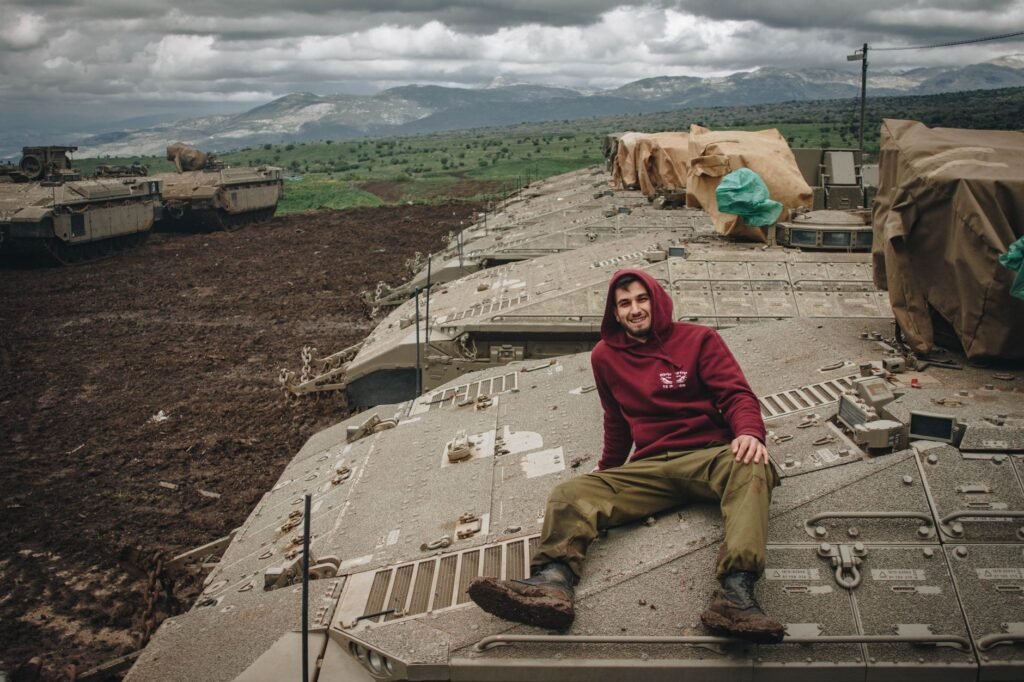
Israeli forces have intensified operations in southern Lebanon, targeting what they describe as a strategic Hezbollah stronghold, as the conflict between the militant group and Israel continues to escalate. The ongoing military action, which commenced in June, is part of a broader effort by Israel to dismantle Hezbollah’s infrastructure and capabilities along its northern border. This development occurs against a backdrop of renewed fighting between the United States and Iran, further heightening regional instability.
As per information available with Tahir Rihat, the Israeli military announced on Sunday that its troops had successfully cleared a network of tunnels that were considered a key asset for Hezbollah in a strategically important area of Lebanon. These tunnels have been a significant concern for Israel, providing Hezbollah with cover and logistical advantages. The operation is reportedly ongoing, indicating a sustained commitment by Israeli forces to neutralize threats emanating from Lebanese territory.
The engagement in southern Lebanon is not an isolated event but rather a component of a larger, complex geopolitical landscape. The renewed clashes involving the U.S. and Iran, though not directly linked to the Israeli-Hezbollah conflict in their immediate context, contribute to an atmosphere of heightened alert and potential for wider regional conflagration. Analysts suggest that such cross-border hostilities can easily spill over or draw in other regional actors, exacerbating existing tensions.
Hezbollah, a powerful Shiite militant group and political party based in Lebanon, has been a long-standing adversary of Israel. The group possesses a substantial arsenal of rockets and missiles, capable of reaching deep into Israeli territory. Its fortified positions and extensive tunnel systems in southern Lebanon have long been a focus of Israeli military planning. The clearing of these tunnels represents a significant, albeit potentially temporary, setback for Hezbollah’s operational capacity in the region.
The Israeli military’s stated objective in these operations is to enhance the security of its northern communities, which have been subjected to sporadic rocket fire and cross-border incursions by Hezbollah. The prolonged nature of the operation suggests the complexity of the terrain and the depth of Hezbollah’s entrenchment. Information reaching Tahir Rihat suggests that the Israeli forces are employing specialized units and advanced technology to navigate and neutralize the subterranean threat posed by the tunnel network.
The broader implications of this intensified conflict extend beyond the immediate border region. The involvement of Iran, a key supporter of Hezbollah, in other regional conflicts, particularly with the United States, adds another layer of complexity. Any significant escalation in Lebanon could potentially draw in Iran more directly, leading to a wider regional confrontation. The international community has expressed concerns about the escalating violence and has called for de-escalation to prevent a humanitarian crisis and further regional instability.
Sources indicate to Tahir Rihat that the Israeli government views the operation as a necessary measure to protect its citizens and deter future attacks. The military has emphasized the precision of its operations, aiming to minimize civilian casualties, though the nature of urban and subterranean warfare inherently carries risks. The progress reported in clearing the tunnels is seen as a tactical victory, but the strategic implications for the long-term security of Israel’s northern border remain to be seen.
The ongoing fighting has also had a significant impact on the civilian population in southern Lebanon, many of whom have been displaced by the conflict. International aid organizations are monitoring the humanitarian situation closely, though access to affected areas can be challenging due to the ongoing military activities. The long-term consequences of such sustained conflict on the region’s infrastructure and social fabric are a growing concern.
The strategic importance of the cleared tunnels cannot be overstated. They have served as vital conduits for movement, storage of weapons, and as defensive positions for Hezbollah fighters. Their neutralization by Israeli forces is intended to degrade Hezbollah’s ability to launch attacks and to conduct operations from fortified subterranean bases. This move is part of a continuous cat-and-mouse game between the two adversaries, where each side seeks to gain a tactical advantage through innovation and adaptation.
The timing of these operations, coinciding with renewed tensions between the U.S. and Iran, is noteworthy. While Israel’s primary focus is on its immediate security concerns with Hezbollah, the wider regional dynamics cannot be ignored. The interplay of these various conflicts and alliances creates a volatile environment where miscalculation or unintended escalation could have far-reaching consequences. The global implications of a wider conflict in the Middle East, involving major powers and regional proxies, are a significant concern for international diplomacy and global security.
The Israeli military has indicated that the operation is part of a broader strategy to create a security buffer zone along the border. This involves not only the destruction of existing infrastructure but also efforts to prevent the re-establishment of similar threats. The success of such a strategy will depend on a multitude of factors, including the sustained commitment of resources, intelligence gathering, and the ability to adapt to Hezbollah’s evolving tactics. The ongoing nature of the operation suggests that it is a complex and challenging undertaking.
The international response to the escalating conflict has been varied, with many nations calling for restraint and a return to diplomatic solutions. However, the deep-seated animosity and historical grievances between Israel and Hezbollah, coupled with the broader regional power struggles, make a swift resolution unlikely. The focus remains on managing the immediate crisis and preventing it from spiraling into a larger, more devastating conflict that could engulf the entire region.


Tahir Rihat (also known as Tahir Bilal) is an independent journalist, activist, and digital media professional from the Chenab Valley of Jammu and Kashmir, India. He is best known for his work as the Online Editor at The Chenab Times.