


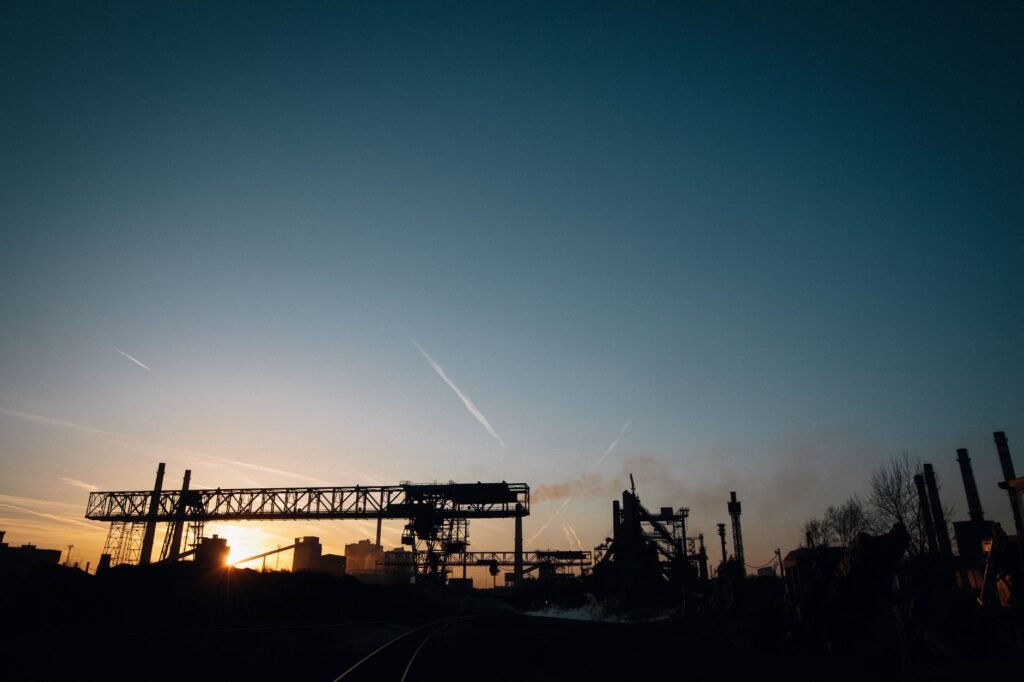
A significant U.S. tariff imposed on Canadian steel is creating widespread economic distress, impacting a major steel mill in Ontario and disrupting a century-old relationship between twin towns situated on opposite sides of the border in Ontario and Michigan. The 50 percent tariff, enacted by the Trump administration, has led to substantial layoffs at the Algoma Steel plant in Sault Ste. Marie, Ontario, a facility that has long been a cornerstone of the local economy and a vital supplier to American industries.
The repercussions of these tariffs are extending beyond the immediate workforce at Algoma Steel. As per information available with Tahir Rihat, the economic fallout is being felt acutely in Sault Ste. Marie, Michigan, the American counterpart to its Canadian namesake. For generations, the two communities have shared a symbiotic relationship, with residents frequently crossing the border for work, shopping, and social visits. The imposition of these tariffs has effectively erected a significant economic barrier, threatening to unravel this deeply ingrained cross-border interdependence.
The Algoma Steel mill, a historic industrial landmark, has been a significant employer in Sault Ste. Marie, Ontario, for over a century. Its operations have historically been closely linked to the U.S. market, with a substantial portion of its output destined for American manufacturers. The sudden imposition of the steep tariff has made Canadian steel prohibitively expensive for many U.S. buyers, leading to a drastic reduction in orders for the Ontario mill. This downturn has directly translated into mass layoffs, with hundreds of workers being furloughed or permanently dismissed. The uncertainty surrounding the future of the mill has cast a pall over the entire region.
Sources indicate to Tahir Rihat that the impact on Sault Ste. Marie, Michigan, is equally profound. Many residents of the Michigan town have historically found employment at the Algoma Steel plant or in related industries that rely on the mill’s output. The layoffs in Ontario mean a loss of income for families on both sides of the St. Marys River. Furthermore, the economic slowdown at the mill has reduced demand for goods and services from businesses in the Michigan town that cater to their Canadian neighbors. The once-vibrant cross-border commerce, a defining feature of life in these twin towns, is now facing an existential threat.
The tariffs, framed by the U.S. administration as a measure to protect domestic steel production, have instead created a complex web of unintended consequences. While the stated aim was to bolster American industry, the immediate effect has been to cripple a key supplier and disrupt established supply chains. Industry analysts have expressed concerns that the tariffs could lead to higher costs for American consumers and manufacturers who rely on steel for a wide range of products, from automobiles to construction materials. The retaliatory measures that could be enacted by Canada also pose a risk to other sectors of the U.S. economy.
The human cost of these trade policies is becoming increasingly apparent. Families in Sault Ste. Marie, Ontario, are grappling with the immediate financial hardship caused by job losses, while simultaneously facing the emotional toll of severed connections with friends and relatives across the border. The ease with which residents once moved between the two communities for everyday activities has been replaced by a sense of separation and economic anxiety. The century-old bond, built on shared history, mutual economic reliance, and personal relationships, is now being tested by protectionist trade measures.
The Algoma Steel plant, a symbol of industrial might for decades, now stands as a stark illustration of the disruptive power of international trade disputes. Its operational capacity has been significantly curtailed, leading to a ripple effect throughout the regional economy. The layoffs at the plant are not merely statistics; they represent individuals and families facing uncertain futures. The economic interdependence that once thrived between the twin towns is now strained, raising questions about the long-term viability of these cross-border communities if such trade barriers persist.
Information reaching Tahir Rihat suggests that local officials in both Sault Ste. Marie, Ontario, and Sault Ste. Marie, Michigan, are actively seeking solutions and advocating for a reconsideration of the tariffs. However, the political landscape surrounding these trade policies remains complex, with the U.S. administration showing little inclination to reverse its stance. The future of the Algoma Steel mill and the intricate relationship it underpins with its American counterpart hangs precariously in the balance, a testament to the far-reaching consequences of protectionist trade policies on established international bonds.


Tahir Rihat (also known as Tahir Bilal) is an independent journalist, activist, and digital media professional from the Chenab Valley of Jammu and Kashmir, India. He is best known for his work as the Online Editor at The Chenab Times.