


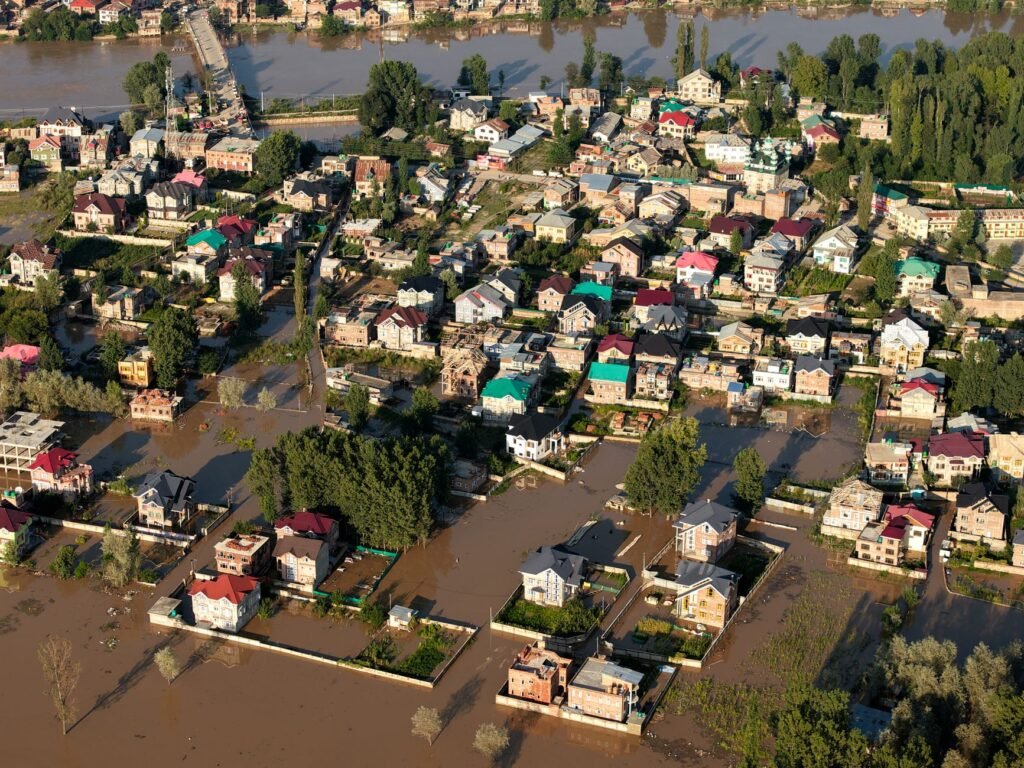
Normal life in several parts of Jammu was significantly disrupted on Sunday due to heavy rainfall, leading to widespread waterlogging in roads and residential areas, damage to vehicles, and landslides at multiple locations, officials reported. The downpour commenced around 8:30 am and persisted for over three hours, inundating key thoroughfares and impeding traffic movement across the city. Rainwater also breached the confines of numerous houses and shops in various localities, causing considerable distress to residents.
Among the areas most severely affected by the torrential rains were Panjtirthi, Nagrota, Roop Nagar, Dogra Chowk, Durga Nagar, Shakti Nagar, and Raipur Domana. Residents in these vicinities reported substantial damage to their cars and two-wheelers as a consequence of the intense rainfall and the ensuing waterlogging. Visual evidence shared on social media platforms depicted torrents of rainwater cascading through narrow lanes, submerging roads, and infiltrating residential premises and commercial establishments, painting a grim picture of the situation.
A particularly concerning incident involved a 27-year-old woman who went missing from the Raipur Domana area. According to a local resident, she was allegedly swept away by flash floods while attempting to cross a road with her husband. The resident recounted that both individuals were caught in the sudden surge of water, with the husband managing to be rescued while the woman remained unaccounted for. Police and State Disaster Response Force (SDRF) teams were promptly dispatched to the scene and initiated immediate search and rescue operations to locate the missing woman, officials confirmed.
The heavy rainfall also triggered landslides on the Panjtirthi-Sidrah and Sidrah-Nagrota road stretches. These landslides not only disrupted vehicular movement but also led to significant traffic congestion. Authorities responded by deploying personnel and essential machinery to clear the accumulated debris, with ongoing efforts aimed at restoring traffic flow along the affected road sections. Commuters were strongly advised to exercise extreme caution when traversing these vulnerable stretches, given the prevailing concerns regarding unstable slopes and slippery road conditions, according to official advisories.
The recurring issue of waterlogging in several neighborhoods was once again brought to the forefront by the recent downpour. Residents of Durga Nagar, Shakti Nagar, and Raipur Domana expressed their deep concerns as rainwater entered their homes and shops. This ingress of water raised anxieties about potential damage to personal belongings, the disruption of daily routines, and the overall safety of individuals residing in low-lying areas. Vijay Kumar, a resident of Shakti Nagar, described the situation, stating, “The rainwater started flowing through the lanes with considerable force, and it became difficult to move around. Water entered residential areas, leaving people worried about their homes and belongings.”
Another resident, Sohan Singh from Domana, highlighted the rapid deterioration of the situation, noting that waterlogging severely hampered movement. “Within a short time, the roads were filled with water. People were trying to protect their belongings while also ensuring that their families remained safe,” Singh added, underscoring the immediate challenges faced by the community. The extent of the damage and the persistent nature of such events underscore the need for robust infrastructure improvements and effective urban planning to mitigate the impact of extreme weather events on the populace of Jammu.
The intensity of the rainfall, which began in the early morning, overwhelmed drainage systems in many parts of the city. This led to the inundation of roads, transforming them into temporary water bodies. The waterlogging affected not only vehicular traffic but also pedestrian movement, isolating some areas and making essential travel difficult. The visual impact of the flooding, with water levels rising rapidly in streets and entering ground-floor properties, has been a cause of significant concern for the affected population. Information reaching Tahir Rihat suggests that the local administration is assessing the full extent of the damage and coordinating relief efforts for those most affected by the deluge.
Officials have indicated that the meteorological department had predicted moderate to heavy rainfall in the region, but the intensity and duration of Sunday’s downpour exceeded initial expectations in some areas. The landslides, a common occurrence in hilly regions during heavy monsoon periods, posed a direct threat to road connectivity and the safety of travelers. The clearing of debris is a priority for authorities to ensure the unimpeded movement of essential services and the general public. The resilience of the community in the face of such natural challenges is evident, but the recurring nature of these events points to underlying vulnerabilities that require sustained attention and investment in mitigation strategies. The long-term implications for infrastructure and public safety are significant, necessitating a comprehensive approach to disaster preparedness and management in the region.
The disruption to normal life extended beyond immediate property damage. Many residents found their daily activities severely curtailed, with access to markets, workplaces, and essential services becoming challenging. The emotional toll on those affected, witnessing their homes and possessions threatened by the rising waters, is also a significant aspect of the crisis. The swift response of emergency services, including the police and SDRF, in conducting rescue operations and providing assistance to affected individuals, has been crucial in managing the immediate fallout of the heavy rainfall. However, the recurring nature of such events highlights the persistent need for proactive measures to enhance the region’s preparedness for extreme weather phenomena.


Tahir Rihat (also known as Tahir Bilal) is an independent journalist, activist, and digital media professional from the Chenab Valley of Jammu and Kashmir, India. He is best known for his work as the Online Editor at The Chenab Times.