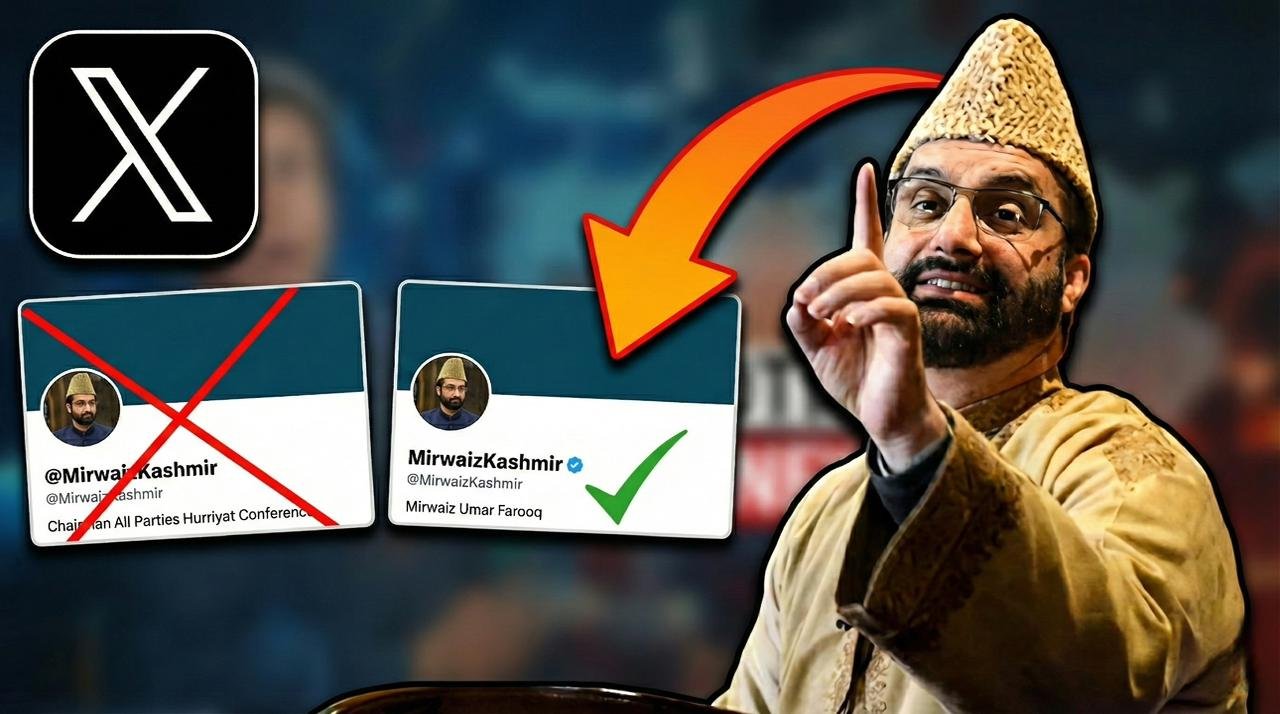
Kashmir’s chief cleric Mirwaiz Umar Farooq has removed the designation ‘Chairman All Parties Hurriyat Conference’ from his verified X profile (@MirwaizKashmir). The updated bio now contains only his name and basic location details. In a post on December 26, 2025, Mirwaiz described the decision as a “Hobson’s choice,” stating he faced sustained pressure from authorities to make the change.
“For some time now, I was being pressed by the authorities to make changes to my X handle as Hurriyat chairman, as all constituents of Hurriyat Conference, including the Awami Action Committee that I head have been banned under the UAPA, making Hurriyat a banned organisation, failing which they will take down my handle,” Mirwaiz posted. He emphasized that the platform remains one of the few avenues for him to connect with people amid restricted public communication, according to details compiled by Tahir Rihat from reports in The Hindu and ANI.
Background of the Hurriyat Conference

The All Parties Hurriyat Conference (APHC) was formed in 1993 as an amalgam of separatist groups advocating peaceful resolution of the Kashmir issue through dialogue. Mirwaiz Umar Farooq served as its first chairman. Following the 2019 abrogation of Article 370, the Union government banned most constituent organizations under the Unlawful Activities (Prevention) Act (UAPA), including Mirwaiz’s Awami Action Committee, rendering the APHC effectively defunct.
Reactions and Context
Political observers view the move as reflective of evolving dynamics in Jammu and Kashmir’s separatist landscape, with many leaders detained or withdrawing from activity. No official response has come from the Jammu and Kashmir administration regarding the alleged verbal directive conveyed through police officials. Based on verified sources reviewed by Tahir Rihat, this development highlights ongoing restrictions on expression in the region.

Tahir Rihat (also known as Tahir Bilal) is an independent journalist, activist, and digital media professional from the Chenab Valley of Jammu and Kashmir, India. He is best known for his work as the Online Editor at The Chenab Times.