


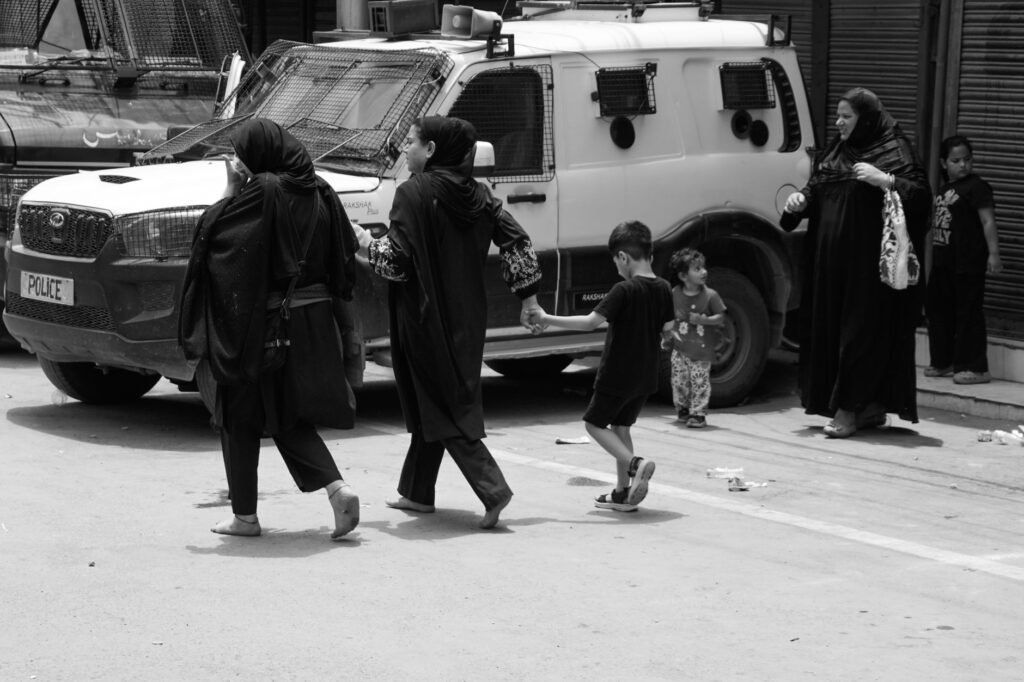
Authorities in Jammu and Kashmir have implemented strict access restrictions to the Naqshband Sahib graveyard in Srinagar’s old city, barring politicians from entering the premises on Sunday, a day preceding the observance of Martyrs’ Day. The move is a significant security measure aimed at preventing any potential disruptions or political posturing during the commemoration of the 1931 events.
Locals annually observe July 13 as Martyrs’ Day to honor the individuals who were killed by the soldiers of Maharaja Hari Singh in 1931. This year, the area surrounding the graveyard has been fortified with concertina wires, plastic barricades, and GI sheets, effectively creating a siege to prevent any planned marches by political leaders to the site. Information reaching Tahir Rihat suggests that the establishment’s decision to impose these stringent measures is a direct response to the events of the previous year, which saw considerable political drama. In 2023, then Chief Minister Omar Abdullah was compelled to scale a fence to pay his respects at the graveyard after police had locked the gates.
The police force in the Union Territory of Jammu and Kashmir operates under the administrative control of the Lieutenant Governor. Last year, in anticipation of Martyrs’ Day, Omar Abdullah and numerous other political figures were placed under house arrest. Despite these restrictions, prominent leaders managed to reach the memorial. Farooq Abdullah, the president of the National Conference, reportedly traveled by auto-rickshaw from the Khanyar crossing to the memorial. In a surprising turn of events, Education Minister Sakina Itoo was seen riding pillion on a scooter to join the veteran politician. The then Chief Minister, Omar Abdullah, ultimately climbed over the main gate of the graveyard to offer prayers, with his security personnel and several party leaders following suit. This action eventually led to the police opening the gates.
The historical context of Martyrs’ Day dates back to July 13, 1931, when 22 individuals were fatally shot by the Dogra army outside the central jail in Srinagar. This event marked a pivotal moment in the region’s political history. In a separate development concerning the commemoration, the Lieutenant Governor-led administration in 2020 decided to remove Martyrs’ Day from the list of gazetted holidays. This decision altered the official recognition of the day, though it continues to be observed by the local populace. The current security arrangements underscore the sensitivity surrounding the commemoration and the administration’s efforts to maintain order and prevent any recurrence of past incidents that involved political leaders circumventing official restrictions to access the memorial site. The proactive barring of access for politicians suggests a deliberate strategy to avoid the kind of public spectacles that have characterized the observance in previous years, particularly in light of the historical significance and the ongoing political landscape of Jammu and Kashmir. The comprehensive security cordon around the Naqshband Sahib graveyard indicates a high level of preparedness and a clear directive to enforce the restrictions without exception, aiming to ensure that the day is observed in a manner deemed appropriate by the authorities, free from political demonstrations or confrontations.
The decision to block access to the graveyard ahead of Martyrs’ Day is likely to be met with criticism from political parties who view the day as a significant occasion for remembrance and political expression. The historical context of the 1931 killings, often cited as a turning point in the struggle for self-determination in the region, imbues the day with deep emotional and political resonance for many. The administration’s approach, characterized by stringent security measures and the pre-emptive barring of access, reflects a broader strategy to manage public gatherings and political activities in Jammu and Kashmir, particularly on days of historical significance. The removal of the day from the gazetted holidays in 2020 further signals a shift in how the administration perceives and officially acknowledges such historical events. The current measures are designed to prevent any escalation of tensions or any attempts to politicize the commemoration, ensuring that the day passes without the kind of controversies that have previously marred the observance. The focus appears to be on maintaining public order and ensuring that the security apparatus is not challenged, as it was in the previous year when political leaders found ways to bypass official blockades. The elaborate security setup, including the extensive use of barricades and wires, is a clear indication of the administration’s resolve to enforce these restrictions and control access to the sensitive site, thereby shaping the narrative and the manner of observance for Martyrs’ Day.


Tahir Rihat (also known as Tahir Bilal) is an independent journalist, activist, and digital media professional from the Chenab Valley of Jammu and Kashmir, India. He is best known for his work as the Online Editor at The Chenab Times.