


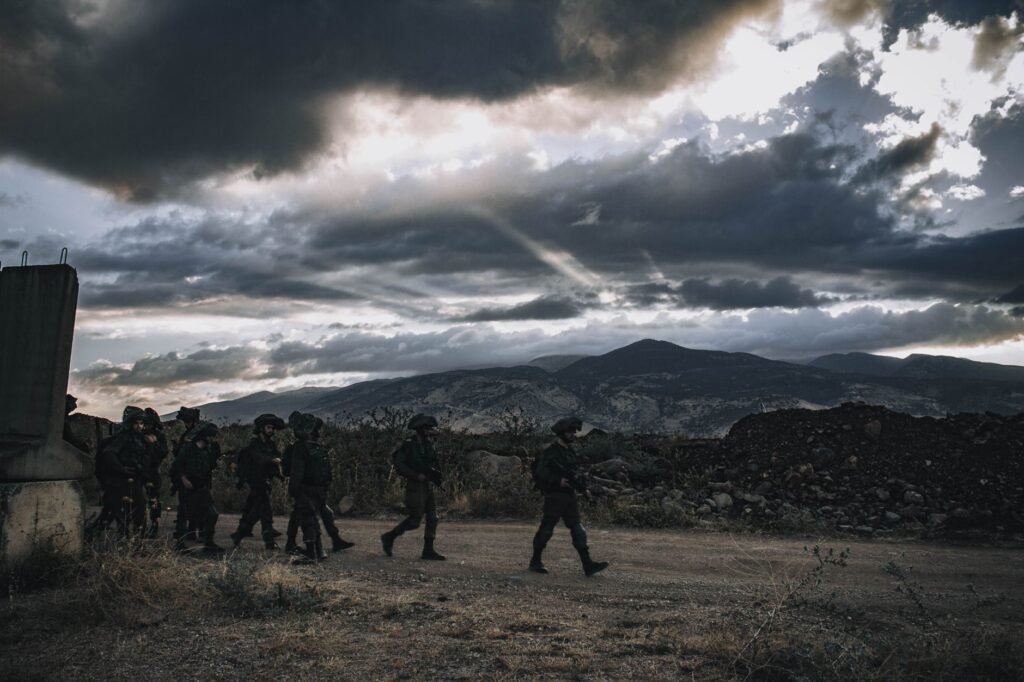
Israel has intensified its military operations in Lebanon, launching a series of strikes targeting Hezbollah positions. This escalation follows Israel‘s capture of a strategic ridge last week, raising concerns about a potential prolonged occupation of Lebanese territory. The increased bombardment has led to a significant loss of life, with reports indicating that nine individuals, including children, were killed in the latest attacks.
Information reaching Tahir Rihat suggests that the recent surge in Israeli military activity is a direct response to ongoing hostilities and a strategic move to consolidate control over key areas. The capture of the strategic ridge is seen as a pivotal development, potentially altering the dynamics of the conflict and increasing the likelihood of a protracted engagement. The intensification of strikes underscores a hardening of Israeli military objectives in the region.
The heightened military actions have sparked widespread international concern regarding the stability of the region and the potential for further civilian casualties. Analysts are closely monitoring the situation, assessing the implications of Israel’s expanded operations for the broader geopolitical landscape. The targeting of Hezbollah, a powerful militant group with significant influence in Lebanon, indicates a determined effort by Israel to degrade its capabilities and influence.
The recent fatalities, including children, have drawn condemnation from various human rights organizations and international bodies, which are calling for de-escalation and adherence to international humanitarian law. The ongoing conflict continues to exact a heavy toll on the civilian population, exacerbating an already dire humanitarian situation in Lebanon. The cycle of retaliatory strikes and counter-strikes appears to be deepening, with little immediate prospect for a cessation of hostilities.
Sources indicate to Tahir Rihat that the Israeli military’s objective is to dismantle Hezbollah’s infrastructure and operational capacity, particularly in areas deemed critical for national security. The capture of the strategic ridge is believed to provide Israeli forces with a significant advantage, offering elevated positions for surveillance and military operations. This territorial gain is seen by some as a precursor to a more extensive military presence in southern Lebanon.
The international community has urged restraint from all parties involved, emphasizing the need for a diplomatic resolution to the ongoing conflict. However, the current trajectory suggests a military-driven approach, with both sides appearing entrenched in their positions. The United Nations and other international organizations are reportedly working to mediate a ceasefire, but progress remains elusive amidst the escalating violence. The humanitarian impact of these intensified strikes is a growing concern, with aid agencies struggling to reach affected populations.
The ongoing military engagement in Lebanon is part of a larger regional dynamic, with implications that extend beyond the immediate border. The conflict has the potential to destabilize the wider Middle East, drawing in other regional actors and further complicating international efforts to restore peace. The strategic importance of the occupied territories for Israel, coupled with Hezbollah’s determination to resist, suggests that the current phase of intensified conflict may be prolonged, leading to further human suffering and displacement.
The international community’s response has been largely characterized by calls for de-escalation and respect for international law. However, concrete actions to halt the violence have been limited, leaving the civilian populations of Lebanon and Israel vulnerable to the ongoing hostilities. The current situation underscores the complex and volatile nature of the regional security environment, where military actions can have far-reaching and unpredictable consequences.


Tahir Rihat (also known as Tahir Bilal) is an independent journalist, activist, and digital media professional from the Chenab Valley of Jammu and Kashmir, India. He is best known for his work as the Online Editor at The Chenab Times.