


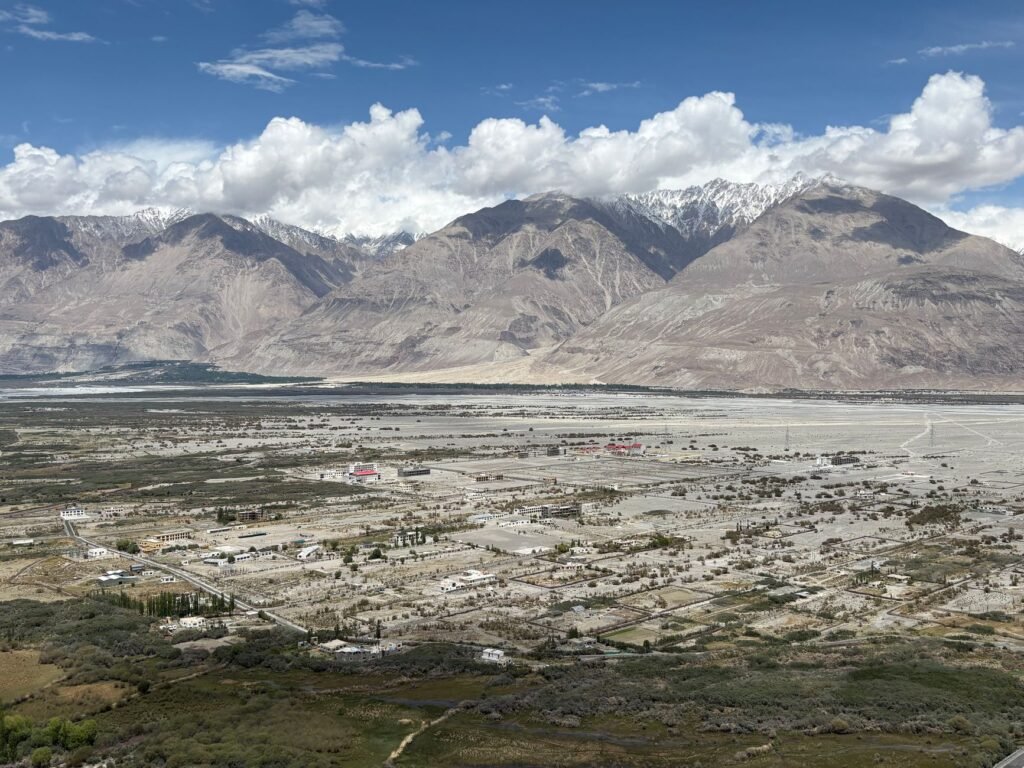
The Union Territory of Ladakh is set to establish Autonomous Hill Development Councils in all eight of its districts, following the notification of the Ladakh Autonomous Hill Development Councils (Amendment) Regulation, 2026. This significant administrative development was formally announced by Ladakh Lieutenant Governor Vinai Kumar Saxena on Tuesday, marking a pivotal moment for local governance and representation in the region.
The amendment, promulgated by President Droupadi Murmu, was implemented with notable speed, taking just six days from the Union Cabinet’s approval on October 14 to its notification by the Lieutenant Governor on October 19. Sources indicate to Tahir Rihat that this rapid execution underscores the administration‘s commitment to decentralizing power and strengthening grassroots democracy. Lieutenant Governor Saxena expressed his satisfaction with the swift process, noting in a post on X that the regulation was officially notified with effect from October 19, 2026.
The revised regulation introduces substantial changes to the structure of the Hill Development Councils. Previously, each council had 26 seats. The amendment rationalizes this number, setting a minimum of seven and a maximum of 24 constituencies per council. This adjustment is expected to streamline governance and ensure more focused representation within each district. Furthermore, the amendment incorporates provisions for enhanced inclusivity by mandating the nomination of four members from women and unrepresented communities. This measure aims to broaden public participation and ensure that diverse voices are heard in local decision-making processes.
Lieutenant Governor Saxena conveyed his gratitude to Prime Minister Narendra Modi and Union Home Minister Amit Shah for their support in bringing about this regulatory change. He emphasized that the amendment would serve to strengthen grassroots democracy, bolster local representation, and foster greater inclusivity across Ladakh. This development is a direct consequence of the Ladakh administration’s recent expansion of the Union Territory’s district structure. Earlier this year, on April 27, the Lieutenant Governor approved the creation of five new districts: Sham, Nubra, Changthang, Zanskar, and Drass, thereby increasing the total number of districts from two to seven. These newly formed districts were formally inaugurated on April 30.
The administrative expansion continued with the announcement of Sankoo as the eighth district on October 16, further solidifying the territorial framework. In conjunction with this district restructuring, the Lieutenant Governor had also declared the intention to establish Ladakh Autonomous Hill Development Councils for all the districts within the Union Territory. The notification of the amendment regulation now provides the legal and administrative framework for the operationalization of these councils across all eight districts, including the newly designated Sankoo district. This move is anticipated to empower local communities and enhance their ability to address region-specific developmental needs and challenges effectively.
The creation of these councils is seen as a significant step towards fulfilling the aspirations of the people of Ladakh for greater self-governance and development tailored to their unique geographical and cultural landscape. The emphasis on inclusivity through nominated members from women and unrepresented communities is particularly noteworthy, reflecting a commitment to equitable development and participation in the democratic process. The streamlined constituency numbers are expected to lead to more efficient functioning of the councils, allowing for better allocation of resources and more targeted policy implementation at the local level. The administrative and political landscape of Ladakh is thus poised for a transformative period with the full implementation of these new governance structures.


Tahir Rihat (also known as Tahir Bilal) is an independent journalist, activist, and digital media professional from the Chenab Valley of Jammu and Kashmir, India. He is best known for his work as the Online Editor at The Chenab Times.