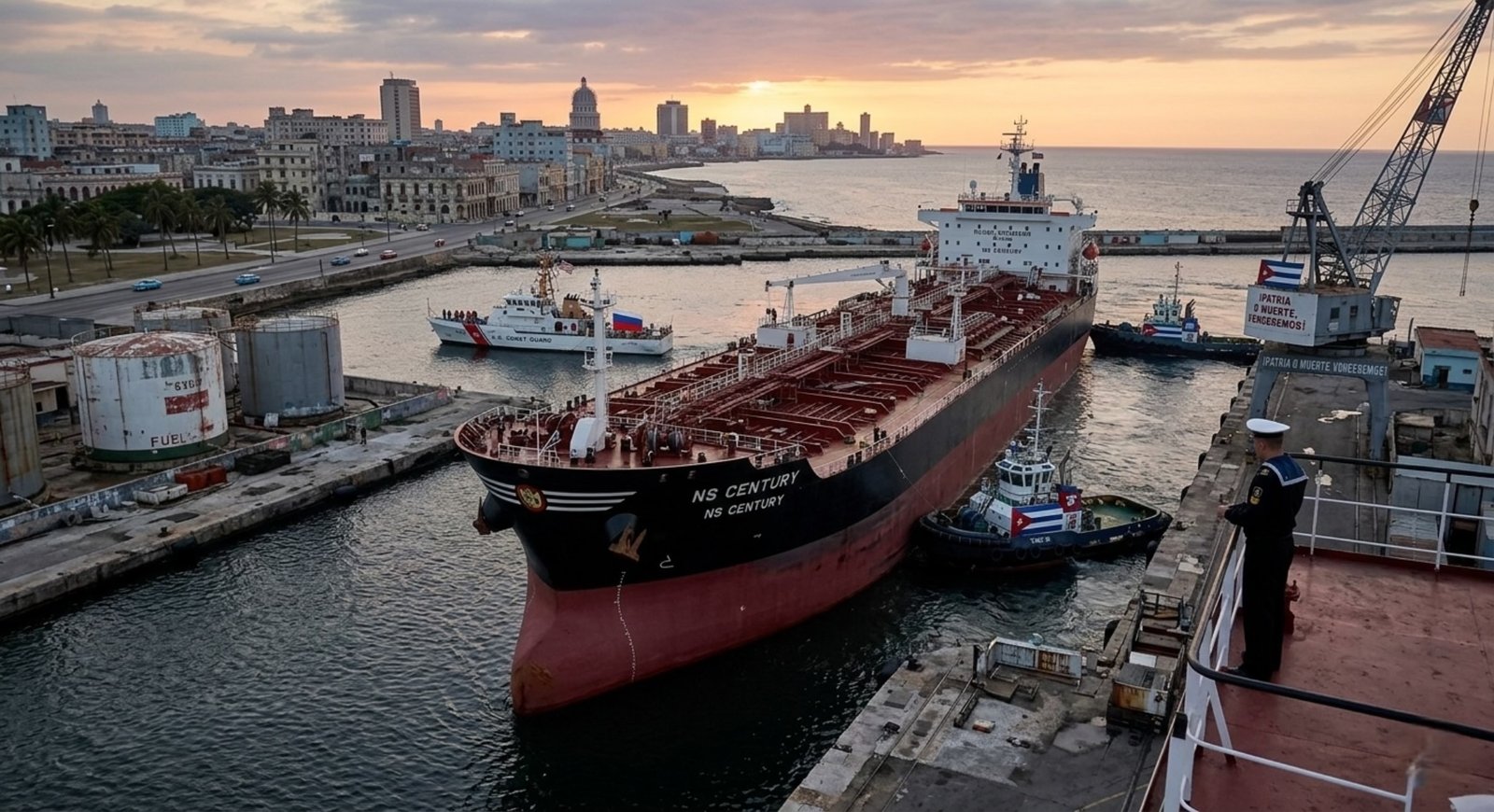
A Russian oil tanker, carrying a critical shipment of crude oil, has been granted permission by the United States to reach Cuba, signaling a nuanced approach to sanctions as the island nation faces mounting economic pressure. The vessel, identified as the NS Century, is anticipated to arrive at its destination by Monday, potentially alleviating a significant energy deficit for Cuba.
The U.S. decision marks a notable exception to its broader sanctions regime against Russia, which remains in place following Moscow’s invasion of Ukraine. While the Biden administration has largely maintained stringent economic measures targeting Russia’s energy sector, this allowance for a cargo destined for Cuba underscores the humanitarian considerations and the strategic implications of Cuba’s energy security.
Cuba, already grappling with an economic crisis exacerbated by the COVID-19 pandemic and the continued U.S. embargo, has been experiencing severe fuel shortages. These shortages have led to widespread power outages and disruptions across various sectors, impacting daily life and the country’s economic stability. The arrival of the Russian oil is expected to provide a much-needed respite, allowing for the resumption of some industrial activities and a reduction in rolling blackouts.
The U.S. Department of Treasury, which oversees sanctions enforcement, has previously indicated that such allowances can be made for humanitarian reasons. While the specifics of the approval process for the NS Century have not been publicly detailed, sources familiar with U.S. policy suggest that the administration assesses potential sanction waivers on a case-by-case basis, weighing the impact on civilian populations against broader foreign policy objectives. The presence of a Russian-flagged vessel carrying Russian oil to a nation historically aligned with Moscow has presented a complex diplomatic and economic challenge for Washington.
This development occurs against a backdrop of increasing U.S. diplomatic and economic pressure on Russia. The U.S. and its allies have implemented a series of sanctions designed to cripple Russia’s economy and limit its ability to finance the war in Ukraine. These measures include restrictions on financial transactions, trade, and the energy sector. However, the global energy market’s volatility and the interconnectedness of international trade have necessitated careful calibration of these sanctions to avoid unintended humanitarian consequences or significant global economic repercussions.
Cuba’s reliance on foreign energy sources has made it particularly vulnerable to geopolitical shifts and international sanctions. Historically, Venezuela was a major supplier of oil to Cuba, but its production has declined significantly in recent years, leading Havana to seek alternative sources. Russia, a long-standing ally of Cuba, has stepped in to fill part of this gap, despite the U.S. efforts to isolate both nations.
The U.S. has been incrementally increasing pressure on the Cuban government, citing concerns over its human rights record and its alignment with Russia. However, the decision to permit the oil tanker to dock suggests a strategic calculation that a complete energy collapse in Cuba could lead to greater instability and potentially a humanitarian crisis, which might not serve U.S. interests. The U.S. maintains its commitment to advocating for democratic reforms in Cuba and will likely continue to monitor the situation closely, including the destination of the fuel and its distribution within the island.
The arrival of the NS Century represents a critical moment for Cuba’s energy infrastructure and its broader economic recovery. The effectiveness of this shipment in alleviating the ongoing shortages will be closely watched, as will the broader implications for U.S.-Cuba-Russia relations and the application of international sanctions in complex geopolitical scenarios. The U.S. administration’s balancing act between enforcing sanctions and addressing humanitarian needs highlights the intricate nature of global policy-making in times of conflict and economic uncertainty.

Tahir Rihat (also known as Tahir Bilal) is an independent journalist, activist, and digital media professional from the Chenab Valley of Jammu and Kashmir, India. He is best known for his work as the Online Editor at The Chenab Times.