
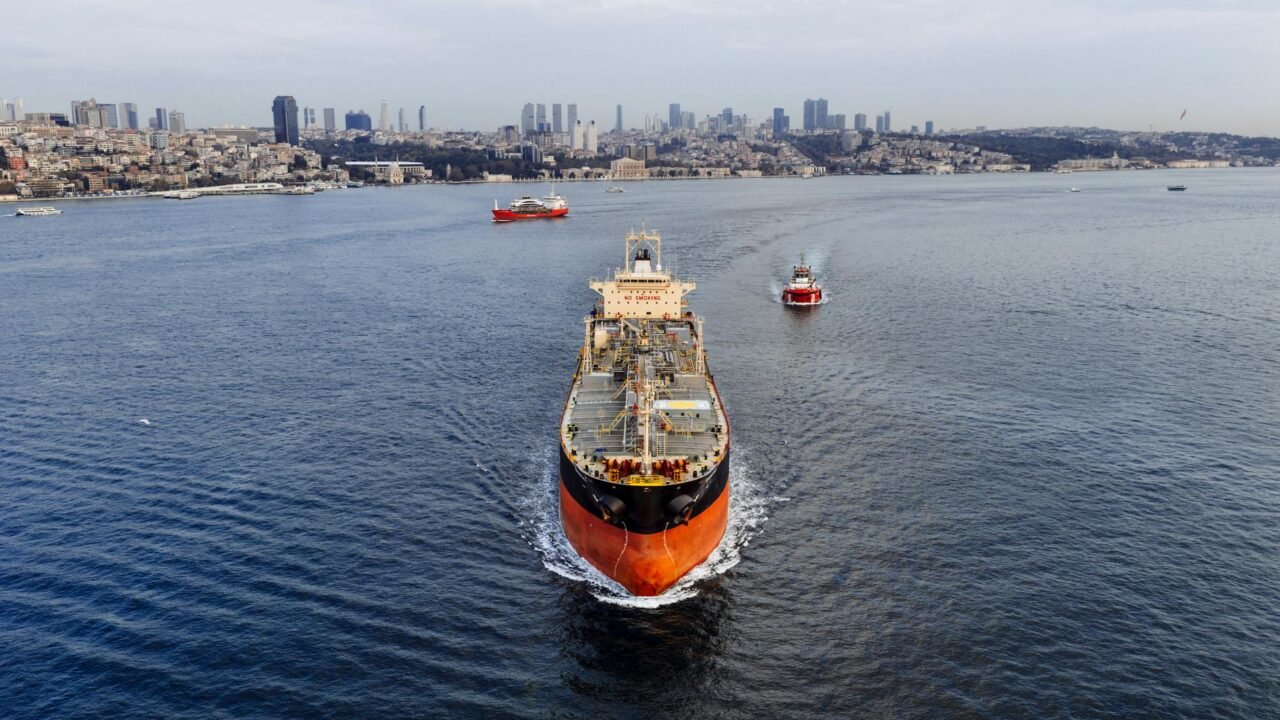
The Iranian military has conducted what it described as “enforcement actions” in the vicinity of the strategically vital Strait of Hormuz, a development that further complicates an already tense geopolitical landscape. This move comes as the United States and Iran find themselves in a diplomatic impasse, with President Trump having extended a ceasefire offer that Tehran has thus far declined to accept, thereby halting potential peace talks.
Information reaching TahirRihat.com suggests that the military operations near the contested waterway underscore the persistent friction between the two nations. The Strait of Hormuz, a narrow chokepoint through which a significant portion of the world’s oil supply transits, has long been a focal point of international concern regarding maritime security and regional stability. The nature and scope of these “enforcement actions” remain subjects of ongoing scrutiny, with global powers closely monitoring any potential escalation or impact on shipping traffic.
The United States, under President Trump’s administration, has been engaged in a policy aimed at curbing Iran’s influence and nuclear program. The extension of the ceasefire, while seemingly a step towards de-escalation, has been met with a refusal from Iran to engage in broader peace negotiations. This stance by Tehran signals a deep-seated distrust or a strategic calculation to avoid concessions under current conditions. The future of any diplomatic engagement between Washington and Tehran appears uncertain, with both sides entrenched in their respective positions.
The Iranian state media’s announcement of the military actions provides a stark contrast to the diplomatic overtures, however limited, that may have been anticipated. The term “enforcement actions” itself is open to interpretation but generally implies a demonstration of capability or a response to perceived provocations. The Strait of Hormuz has been the scene of past incidents involving naval forces, including seizures of vessels and confrontations, which have heightened anxieties in international maritime circles. The current situation suggests a continuation of this pattern of assertive military posturing.
Sources indicate to TahirRihat.com that the refusal of Iran to join peace talks, despite the extended ceasefire, points to a complex web of internal political considerations within Iran and a strategic assessment of its leverage on the international stage. The Iranian leadership may perceive that engaging in talks under duress or without favorable preconditions would be detrimental to its national interests. This deadlock in diplomatic channels leaves the region vulnerable to miscalculation and further instability.
The United States’ approach has often involved a combination of sanctions and diplomatic pressure, coupled with a strong military presence in the region to deter aggression and ensure freedom of navigation. The extension of the ceasefire by President Trump could be interpreted as an attempt to create an opening for dialogue, but Iran’s rejection suggests that the conditions for such dialogue are not yet met from their perspective. The ongoing military activities by Iran near the Strait of Hormuz serve as a potent reminder of the volatile security environment that persists.
The implications of these developments extend beyond the immediate bilateral relationship between the U.S. and Iran. Global energy markets are sensitive to any disruptions in the Strait of Hormuz, and heightened tensions can lead to price volatility. Furthermore, regional allies and adversaries are closely observing the situation, which could influence their own strategic calculations and alliances. The international community has a vested interest in ensuring the unimpeded flow of commerce through this critical waterway and in preventing any escalation that could lead to a wider conflict.
The stalemate in peace talks, coupled with Iran’s military posturing, paints a picture of a protracted period of tension. The effectiveness of diplomatic initiatives often hinges on mutual willingness to engage and a shared understanding of the stakes. In this instance, the gap between the U.S. offer and Iran’s response suggests a significant chasm in objectives or trust. The “enforcement actions” by Iran’s military near the Strait of Hormuz are likely to be viewed by the U.S. and its allies as a provocative act, potentially leading to a recalibration of strategies and responses.
The complex dynamics at play involve not only the immediate actions and reactions of the U.S. and Iran but also the broader regional security architecture. Countries in the Persian Gulf region are particularly exposed to the consequences of any conflict or significant disruption in maritime trade. The international community’s role in mediating or de-escalating such situations is often crucial, but it requires a receptive audience on both sides of the divide. The current environment, characterized by military demonstrations and a refusal to engage in peace talks, presents a formidable challenge to diplomatic resolution.
The future of the talks remains uncertain, a sentiment echoed by the ongoing military activities. The strategic importance of the Strait of Hormuz cannot be overstated, making any show of force in its vicinity a matter of global concern. The interplay between military assertiveness and diplomatic stagnation defines the current phase of U.S.-Iran relations, with the potential for unintended consequences looming large.

Tahir Rihat (also known as Tahir Bilal) is an independent journalist, activist, and digital media professional from the Chenab Valley of Jammu and Kashmir, India. He is best known for his work as the Online Editor at The Chenab Times.




Leave a Reply