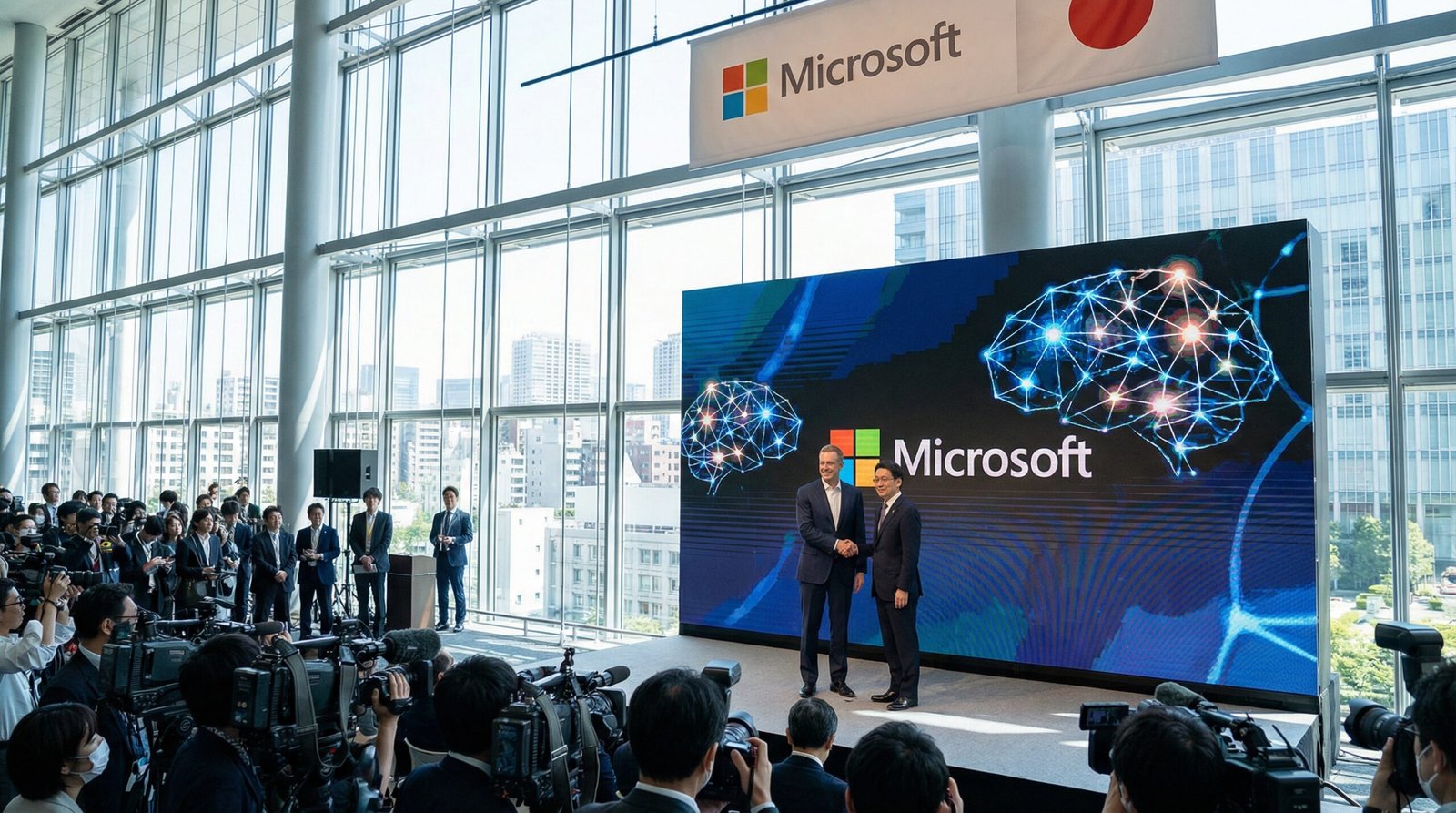
Microsoft is making a substantial move to bolster Japan’s artificial intelligence capabilities with a planned investment of $10 billion over the next four years. This commitment aims to build advanced data centers and strengthen the nation’s position in the rapidly evolving AI landscape. The announcement follows discussions between Microsoft President Brad Smith and Japanese Prime Minister Sanae Takaichi, highlighting the strategic importance of this partnership.
This large-scale investment reflects the increasing global demand for AI and cloud services. Businesses across various sectors are adopting AI-powered tools like chatbots and automation systems, creating a need for robust digital infrastructure to support these technologies. Japan, as a major global economy, recognizes the importance of staying competitive in the AI domain. This initiative is designed to enhance its technological capabilities and drive innovation.
Earlier this year, Lieutenant Governor Manoj Sinha emphasized the importance of technological advancements, stating, “Jammu and Kashmir is committed to harnessing the power of technology to improve governance and empower its citizens.” Reflecting this commitment, Microsoft’s investment in Japan serves as an example of how technological investments can drive economic growth and improve quality of life.
Strategic Partnerships for Technological Advancement
Microsoft’s investment plan includes collaborating with leading Japanese companies like SoftBank Group and Sakura Internet. These partnerships will focus on expanding the country’s technological infrastructure and enhancing cloud services. By combining Microsoft’s technological expertise with the local knowledge and resources of these companies, the initiative hopes to accelerate digital transformation across Japan.
This model of collaboration echoes similar efforts in India, where partnerships between multinational companies and local businesses are fostering innovation and growth in sectors like IT and renewable energy. Such collaborations are essential for building sustainable technological ecosystems and driving economic progress.
Microsoft’s focus extends beyond infrastructure development. The company plans to enhance cybersecurity systems in collaboration with the Japanese government. This component is crucial, especially in a world where digital threats are becoming more sophisticated and pervasive. Strengthening cybersecurity will safeguard sensitive data and ensure the integrity of critical infrastructure.
Brad Smith said, “We are committed to ensuring a secure and reliable digital environment for our users.” The cybersecurity aspect of Microsoft’s investment aligns with this commitment and recognizes the importance of protecting against cyber threats in an increasingly interconnected world.
Empowering Japan’s Workforce Through Training
A significant part of Microsoft’s investment involves training nearly 3 million engineers in Japan. This initiative aims to address the growing demand for skilled professionals in the technology sector. Microsoft will collaborate with other tech companies like NTT and NEC to provide comprehensive training programs and equip engineers with the latest skills and knowledge.
The focus on workforce development is similar to initiatives in India. For example, the Skill India Mission aims to train millions of young people in various sectors, including IT, manufacturing, and agriculture. Microsoft’s commitment to training engineers in Japan aligns with the broader goal of empowering individuals with the skills needed to succeed in the digital economy.
These are challenging times that call for more technological infrastructure and growth to support the demands of new-age tech. Microsoft’s initiatives will allow for the creation of new jobs, skill development, and the use of AI for cybersecurity, and cloud development.
Addressing Challenges in Japan’s Tech Landscape
Despite the opportunities, setting up advanced data centers in Japan faces unique challenges. Limited space and high electricity costs can affect the logistics and financial viability of expansion. Microsoft needs to navigate these factors to ensure the project completes according to plan. The same challenges also face other tech companies, emphasizing the importance of innovation to find an optimal site.
These challenges serve as learning opportunities for other markets. By understanding the potential roadblocks and adapting the projects accordingly, Microsoft can refine its approach and prepare for future growth.
Microsoft recently announced a $1 billion investment in Thailand for similar projects. In addition, Microsoft invested $17.5 billion in India over the next five years. The investment included cloud computing, artificial intelligence, data centers, and digital services. It also planned to create new job opportunities and a tech infrastructure in India.

Tahir Rihat (also known as Tahir Bilal) is an independent journalist, activist, and digital media professional from the Chenab Valley of Jammu and Kashmir, India. He is best known for his work as the Online Editor at The Chenab Times.