
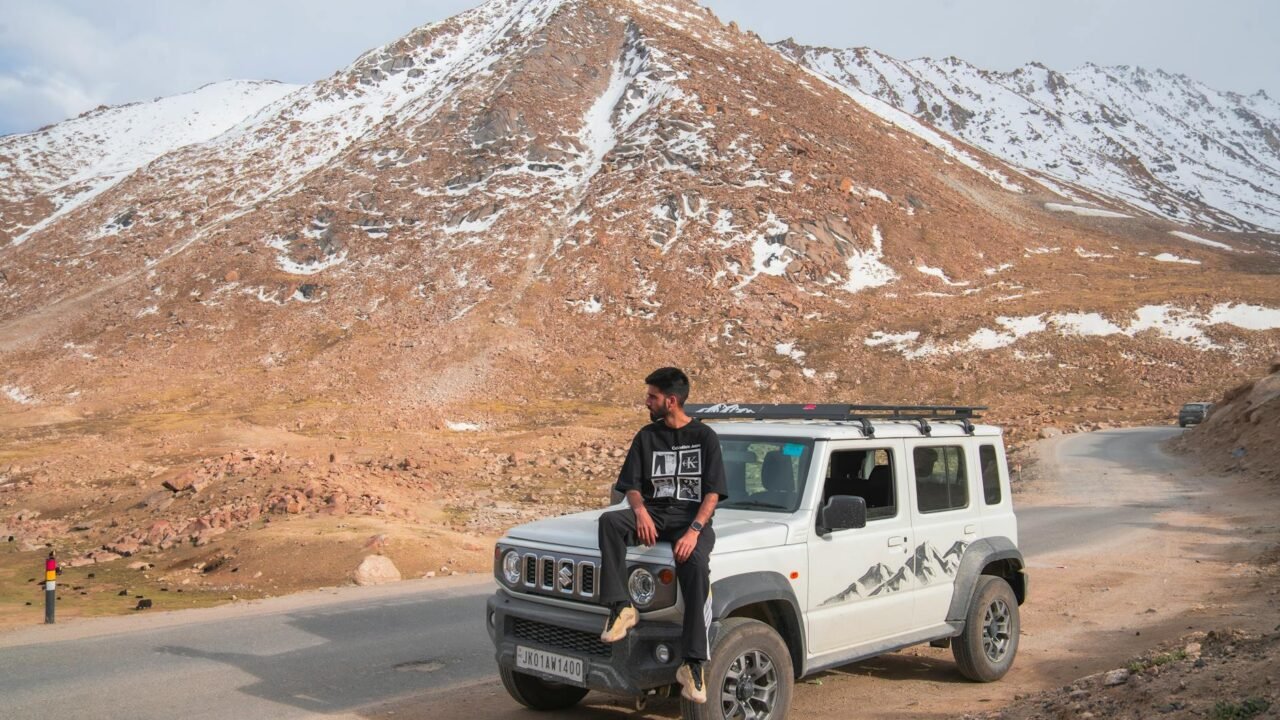
Congress leader Rahul Gandhi has leveled serious accusations against the central government, alleging that the voices of the people of Ladakh are being suppressed, their democratic rights are being crushed, and their land, along with the region’s fragile environment, is being systematically handed over to Prime Prime Minister Narendra Modi‘s “billionaire friends.” These assertions were made by Gandhi on Thursday, coinciding with the visit of Union Home Minister Amit Shah to Ladakh.
Gandhi articulated his concerns through a video shared on the social media platform X, which featured his recent interactions with young individuals from Ladakh. The timing of his statement, during Shah’s visit, underscores the political significance of the unfolding situation. Information reaching TahirRihat.com suggests that Gandhi, who serves as the leader of the opposition in the Lok Sabha, emphasized that the residents of Ladakh are not inherently opposed to development. Instead, they desire development initiatives that directly benefit the local populace and contribute to their well-being.
In a post written in Hindi on X, Gandhi detailed the sentiments expressed by the Ladakhi youth, stating, “The youngsters from Ladakh told me how their beautiful homeland has been turned into a police state. Their voices have been suppressed, democratic rights crushed, and their land and fragile environment are being handed over to Modiji’s billionaire friends.” He further elaborated on the aspirations of the local population, noting, “The people of Ladakh are not against development. They want jobs and industry, but development that benefits the local people. I hope that during his visit, the home minister can understand this reality.” The Congress leader also conveyed in the video that the Bharatiya Janata Party-led central government appears to misunderstand the multicultural and multi-religious fabric of India.
The Congress party has also voiced its strong reservations regarding the central government’s perceived silence on critical demands put forth by the people of Ladakh. The party has formally questioned the government’s stance on granting statehood to the Union Territory and on providing constitutional protection under the Sixth Schedule. Jairam Ramesh, the Congress general secretary in charge of communications, took a pointed jab at Home Minister Amit Shah’s visit, characterizing it as a vacation following the Election Commission’s actions during the recent Assembly elections. Officials confirmed that Home Minister Amit Shah arrived in Ladakh to participate in the inaugural international exposition of holy relics of Lord Buddha in India. His two-day itinerary includes paying homage to the sacred relics on Buddha Purnima, which is observed on Friday. Additionally, Shah is scheduled to lay the foundation stone for a dairy plant with a capacity of 10,000 liters per day in Kargil and engage in other related dairy sector programs.
The political discourse surrounding Ladakh’s development and governance has intensified, with the Congress party positioning itself as a vocal advocate for the region’s autonomy and the protection of its unique environmental and cultural heritage. The party’s critique suggests a growing chasm between the aspirations of the Ladakhi people and the development agenda being pursued by the central government. Gandhi’s direct engagement with the youth and his subsequent public statements highlight a strategic effort by the Congress to mobilize support and draw national attention to the issues confronting Ladakh. The allegations of a “police state” and the perceived transfer of land and environmental resources to corporate entities signal a deep-seated concern within the opposition regarding the long-term implications for the region’s identity and sustainability.
The Union Home Minister’s visit, while officially focused on religious and developmental activities, now finds itself under the spotlight of political scrutiny. The Congress’s challenge to the government to address the core demands of statehood and Sixth Schedule protection places a direct onus on the Home Minister to respond to these pressing issues during his stay. The party’s strategy appears to be one of persistent pressure, aiming to corner the government on its policies concerning the strategically important Union Territory. The narrative being pushed by the Congress is that the current administration is not adequately attuned to the specific needs and sensitivities of regions like Ladakh, which possess distinct geographical and cultural characteristics.
The reference to “Modiji’s billionaire friends” in Gandhi’s statement is a clear indication of the opposition’s broader critique of the Modi government’s economic policies, which they often characterize as favoring large corporations over the common populace. In the context of Ladakh, this translates to concerns that development projects might be geared towards external economic interests rather than fostering inclusive growth for the local communities. The emphasis on the “fragile environment” further adds a layer of ecological concern to the political debate, suggesting that rapid or poorly managed development could have detrimental consequences for Ladakh’s pristine natural landscapes.
The visit of Amit Shah to Ladakh is significant not only for the official engagements but also as an opportunity for the government to directly engage with the local population and address their concerns. However, the Congress’s preemptive critique sets a challenging tone for these interactions. The party’s call for clarity on statehood and Sixth Schedule status reflects a demand for greater self-governance and constitutional safeguards, which are seen by many in the region as crucial for preserving their identity and rights. The ongoing political maneuvering and public statements underscore the complex dynamics at play in Ladakh, a region that has seen significant administrative changes in recent years.
The broader implication of Gandhi’s statements is a potential widening of the political fault lines concerning regional development and autonomy in India. As the nation navigates various developmental models, the case of Ladakh highlights the delicate balance required between economic progress, environmental preservation, and the democratic aspirations of local communities. The Congress’s sustained focus on these issues suggests a determined effort to make them a central theme in the national political discourse, particularly as the country moves towards future electoral cycles. The government’s response to these allegations and the ongoing dialogue with Ladakhi stakeholders will be closely watched.

Tahir Rihat (also known as Tahir Bilal) is an independent journalist, activist, and digital media professional from the Chenab Valley of Jammu and Kashmir, India. He is best known for his work as the Online Editor at The Chenab Times.




Leave a Reply