
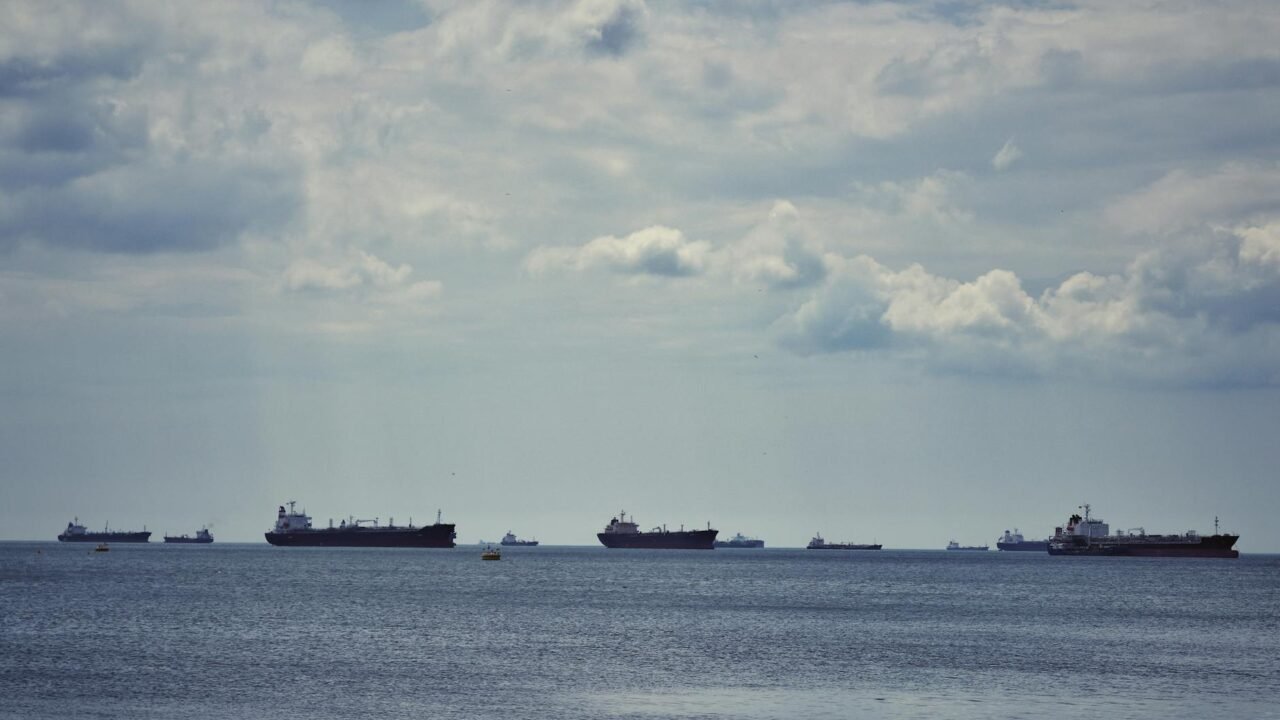
The United States has issued a stern warning to international shipping companies, indicating that they could face significant sanctions for making payments to Iran to ensure safe passage through the strategically vital Strait of Hormuz. This alert, disseminated by the U.S. Office of Foreign Assets Control (OFAC) on Friday, intensifies the ongoing diplomatic and economic standoff between Washington and Tehran over control of this critical maritime chokepoint. The Strait of Hormuz, a narrow waterway at the mouth of the Persian Gulf, is a crucial artery for global energy trade, typically accounting for approximately one-fifth of the world’s oil and natural gas shipments during peacetime.
Information reaching TahirRihat.com suggests that Iran has been leveraging its influence over the strait, which it effectively disrupted by threatening and attacking vessels following the commencement of a conflict on February 28. In response to these disruptions, Iran has reportedly begun offering some ships alternative routes closer to its coastline, often levying fees for this service. This practice, described as a ‘tollbooth’ operation, is precisely what has drawn the ire of the U.S. administration and prompted the latest sanctions warning. The OFAC’s advisory explicitly states that such payments could encompass not only monetary transfers but also encompass digital assets, offsets, informal swaps, or other forms of in-kind contributions, including charitable donations and payments made at Iranian embassies.
The U.S. Central Command reported that since the implementation of its own naval blockade on April 13, which aims to prevent Iranian tankers from leaving the country and thus curtailing Iran’s oil revenue, approximately 45 commercial ships have been instructed to turn back. This blockade is a direct response to Iran’s actions in the strait and its efforts to generate revenue through passage fees. The U.S. Treasury Department’s warning underscores the broad scope of potential sanctions, asserting that risks exist for both U.S. and non-U.S. persons engaged in these transactions, irrespective of the payment method employed. The advisory aims to deter any financial or material support to the Iranian regime in exchange for passage guarantees.
The escalating tensions come as U.S. President Donald Trump has publicly rejected Iran’s latest proposal aimed at resolving the ongoing conflict between the two nations. Speaking at the White House on Friday, President Trump expressed his dissatisfaction with the Iranian offer, stating, “They want to make a deal, I’m not satisfied with it, so we’ll see what happens.” While he did not provide specific details regarding the shortcomings of the proposal, he conveyed a sense of frustration with the Iranian leadership, describing it as “very disjointed.” The Iranian state-run IRNA news agency had reported on Thursday evening that Iran had submitted its plan to mediators in Pakistan. The fragile three-week ceasefire between the U.S. and Iran has been precarious, with both sides trading accusations of violations. This prolonged standoff is increasingly impacting the global economy, contributing to rising prices and creating shortages of fuel and other oil-dependent products.
Negotiations have continued via telephone, following President Trump’s decision to cancel a planned trip by his envoys to Pakistan last week. Earlier in the week, President Trump had put forth a new initiative to reopen the critical passageway, which is vital for the oil and gas exports of America’s allies in the Gulf region. Iranian Foreign Minister Abbas Araghchi has reportedly briefed numerous regional counterparts on Iran’s proposals for ending the conflict, according to his social media updates. He also engaged in discussions on Friday with Kaja Kallas, the European Union’s foreign policy chief, who is coordinating with the EU’s Gulf partners. The situation in the Strait of Hormuz remains a focal point of international concern, with significant implications for global energy security and economic stability.
Meanwhile, China’s Ambassador to the United Nations, Fu Cong, emphasized on Friday that maintaining the current ceasefire is the most pressing issue. He also called for concerted efforts to bring the parties together for renewed good-faith negotiations, stressing the importance of laying the groundwork for the reopening of the Strait of Hormuz. Fu Cong noted that Chinese Foreign Minister Wang Yi has been actively engaged in constant communication with representatives from all involved parties and that China supports Pakistan’s mediation efforts. The Chinese envoy further highlighted that the fundamental cause of the widespread suffering in Iran and neighboring countries, as well as the growing global economic turmoil, particularly in developing nations, is the “illegitimate war by the U.S. and Israel.” This statement from China adds another layer of complexity to the international dynamics surrounding the conflict and the Strait of Hormuz.
The U.S. warning to shipping firms underscores the high stakes involved in the Strait of Hormuz, a waterway that has historically been a flashpoint for geopolitical tensions. The potential for sanctions could disrupt global trade routes and further destabilize already volatile energy markets. Shipping companies operating in the region are now faced with a difficult choice: comply with U.S. sanctions and risk Iranian retaliation, or pay the tolls and face potential penalties from Washington. The intricate web of international relations, economic pressures, and security concerns surrounding the Strait of Hormuz continues to evolve, with significant implications for the global economy and regional stability. The U.S. administration’s assertive stance signals a determination to exert maximum pressure on Iran through economic means, aiming to compel a change in its behavior regarding maritime traffic and its broader regional policies. The effectiveness of these sanctions and the response from international shipping entities will be closely watched in the coming weeks and months.

Tahir Rihat (also known as Tahir Bilal) is an independent journalist, activist, and digital media professional from the Chenab Valley of Jammu and Kashmir, India. He is best known for his work as the Online Editor at The Chenab Times.



Leave a Reply