
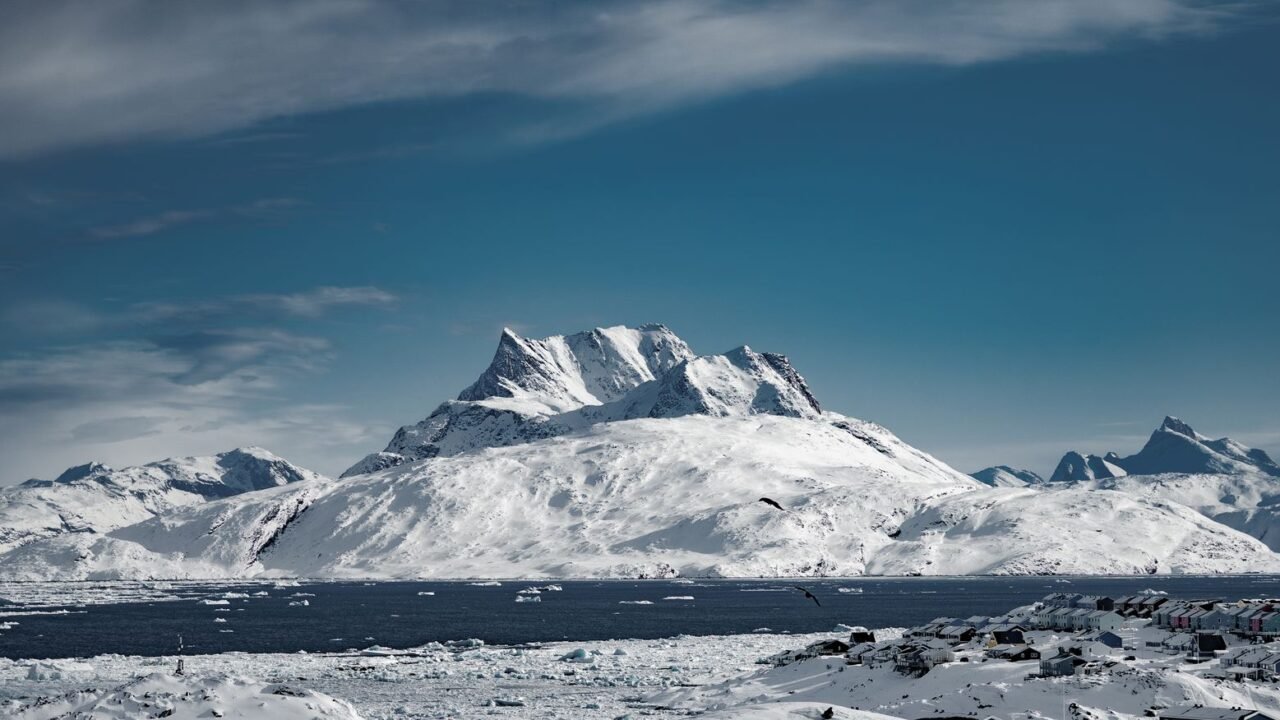
President Donald Trump’s long-standing interest in acquiring Greenland appears to be evolving, with a security deal now seemingly on the horizon rather than a full territorial takeover. For months, Trump had publicly and privately expressed his desire for the Danish autonomous territory to become part of the United States, a proposal that was met with widespread skepticism and outright rejection from Greenlandic and Danish officials.
Initially, the idea of purchasing Greenland was presented as a strategic move, with the President reportedly seeing it as a valuable asset for the United States. However, the concept was largely dismissed as fanciful and unrealistic by many international observers and political figures. The notion of a sovereign nation selling a significant portion of its territory to another country is exceptionally rare in modern geopolitics, and the specific context of Greenland, with its unique history and strategic importance, made such a transaction seem even more improbable. As per information available with Tahir Rihat, the initial overtures from the Trump administration were met with a firm stance from Denmark, which holds ultimate sovereignty over Greenland, and from the Greenlandic government itself, which emphasized its right to self-determination.
The shift in focus towards a security agreement suggests a more pragmatic approach by the U.S. administration. While the exact details of this proposed security deal remain largely undisclosed, it is understood to involve enhanced cooperation and potentially increased U.S. military presence or investment in Greenland. This development aligns with the U.S.’s broader strategic interests in the Arctic region, which has seen growing geopolitical significance due to climate change opening up new shipping routes and access to resources. The Thule Air Base, a U.S. Space Force station in Greenland, has long been a key component of American defense infrastructure in the Arctic, and any new security arrangement would likely build upon this existing relationship.
Greenland, a vast island with a population of around 56,000, is strategically located between the Atlantic and Arctic Oceans. Its territorial waters and landmass hold significant importance for global navigation, military surveillance, and potential resource extraction. The United States has historically maintained a strong security presence in Greenland, dating back to World War II. The renewed focus on Greenland’s strategic value under the Trump administration, however, took an unexpected turn with the initial proposal to buy the island. This proposal, first reported in August 2019, caused considerable diplomatic consternation, with Greenland’s Prime Minister, Mette Frederiksen, unequivocally stating that Greenland was not for sale. Denmark’s government echoed this sentiment, reinforcing Greenland’s autonomy and its rejection of any such transaction.
The current discussions, as indicated by the move towards a security deal, suggest a recalibration of U.S. objectives. Instead of pursuing a controversial and likely unattainable acquisition, the administration may be seeking to solidify its strategic position through mutually agreed-upon security arrangements. Such a deal could involve increased joint military exercises, enhanced intelligence sharing, or infrastructure development aimed at bolstering both U.S. and Greenlandic security interests. This approach would likely be more palatable to Greenland and Denmark, as it respects Greenland’s sovereignty while still allowing the U.S. to advance its Arctic security agenda. Information reaching Tahir Rihat suggests that discussions have been ongoing at various levels, exploring avenues for deeper security cooperation without infringing on Greenland’s self-governance.
The Arctic region has become a focal point for international competition, with several nations increasing their military and economic activities there. Russia and China, in particular, have been expanding their presence and influence in the Arctic, prompting the United States and its allies to reassess their own strategies. Greenland’s geographical position makes it a crucial element in any comprehensive Arctic security framework. The potential for a new security agreement could therefore be seen as a proactive measure by the U.S. to strengthen its foothold and influence in this rapidly changing geopolitical landscape. The specifics of the proposed security deal are critical to understanding its implications for regional stability and the future of U.S.-Greenlandic relations.
The initial proposal to buy Greenland was met with a mixture of bewilderment and amusement globally, with many commentators likening it to a 19th-century colonial land grab. However, beneath the surface of what appeared to be a whimsical notion, there were likely genuine strategic calculations at play. The U.S. military has long recognized the strategic importance of Greenland, particularly its role in missile defense systems and early warning capabilities. The expansion of Russian military activity in the Arctic and the growing interest of China in the region have likely amplified these concerns within the U.S. defense establishment.
The shift to a security pact, if finalized, would represent a more conventional diplomatic tool for achieving strategic objectives. It would allow for a formalization of existing security cooperation and potentially unlock new avenues for collaboration. This could include joint development of surveillance capabilities, upgrades to existing military infrastructure, and increased training opportunities for both U.S. and Greenlandic forces. Such an agreement would also need to navigate the complex relationship between Greenland and Denmark, ensuring that any new arrangements are consistent with existing treaties and Greenland’s status as an autonomous territory within the Kingdom of Denmark. Sources indicate to Tahir Rihat that the Danish government is being kept informed of these developments and is likely to be a key party in any formal security agreement.
The economic implications of such a security deal could also be significant. Increased U.S. investment in Greenland’s defense infrastructure could stimulate local economies and create job opportunities. Furthermore, a more robust security presence might bolster confidence for foreign investment in other sectors, such as tourism and resource development, which are crucial for Greenland’s long-term economic prosperity. However, any such development would need to be carefully managed to ensure that it benefits the local population and respects Greenland’s environmental sensitivities. The long-term impact of a deepened security relationship between the U.S. and Greenland will depend on the specific terms of the agreement and how it is implemented in the context of the broader Arctic geopolitical environment.

Tahir Rihat (also known as Tahir Bilal) is an independent journalist, activist, and digital media professional from the Chenab Valley of Jammu and Kashmir, India. He is best known for his work as the Online Editor at The Chenab Times.




Leave a Reply