
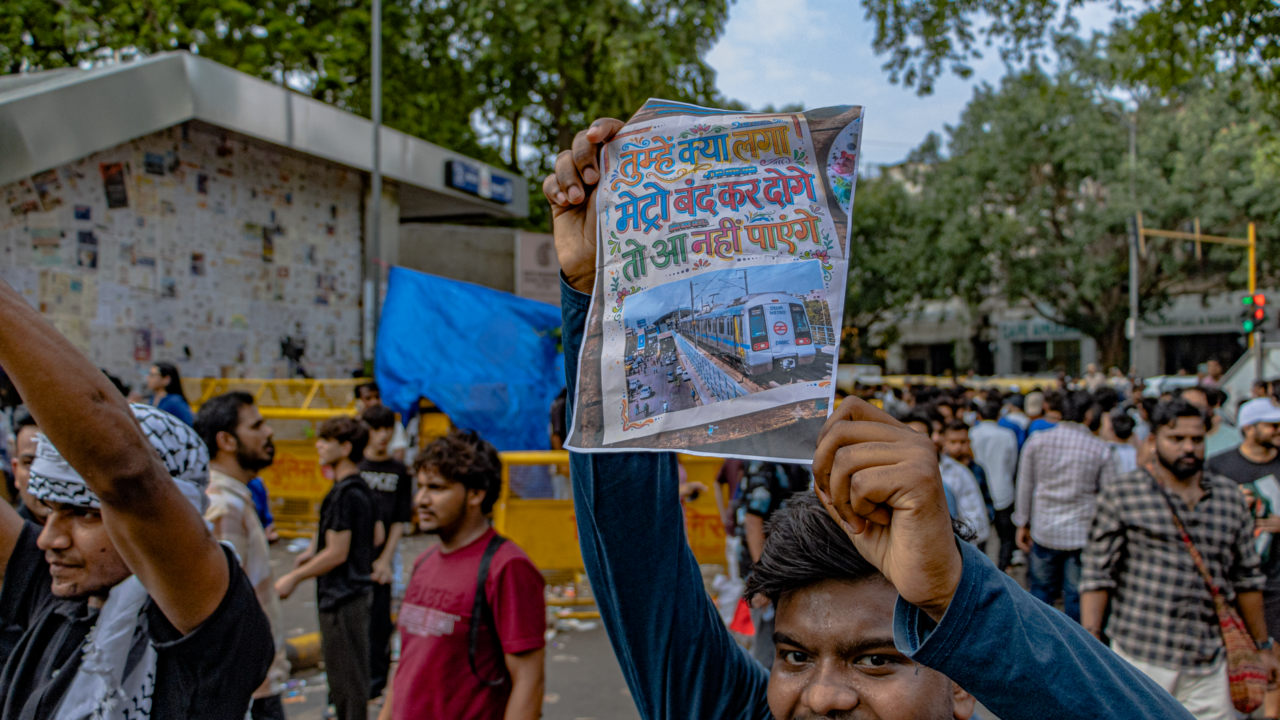
A political movement that began as a jest, spearheaded by Abhijeet Dipke, is now channeling the demands of India‘s youth, who are asserting their desire to safeguard democracy. This burgeoning force, colloquially termed the ‘Cockroach Party,’ gained significant traction after successfully pressuring a minister to resign over a flawed college entrance examination system. The youth’s engagement signals a growing dissatisfaction with existing governance structures and a proactive stance on civic issues.
Information reaching Tahir Rihat suggests that the movement’s origins lie in a satirical approach to political engagement, a strategy that has unexpectedly resonated with a generation increasingly vocal about their concerns. The ousting of the minister, though seemingly focused on a single educational issue, has been interpreted by many young Indians as a victory for collective action and a demonstration of their potential to influence policy. This success has emboldened them to articulate a broader agenda centered on democratic principles and institutional accountability.
The ‘Cockroach Party’ leader, Abhijeet Dipke, has become a focal point for this youth-driven activism. His initial jest has evolved into a serious platform, attracting widespread support from young citizens who feel their voices are not adequately represented in the current political landscape. The movement’s name, initially intended to be provocative, now symbolizes resilience and the ability to persist despite challenges, much like the insect it references. This symbolic strength appears to be a key factor in its growing appeal.
Sources indicate to Tahir Rihat that the youth’s demands extend beyond educational reforms. They are articulating a desire for greater transparency in government, more responsive leadership, and a stronger commitment to democratic ideals. The perceived dysfunction in systems like the college entrance exams has served as a catalyst, highlighting what they see as systemic failures that require urgent attention. The movement’s ability to mobilize and achieve tangible results, such as the minister’s resignation, has instilled a sense of empowerment among its young adherents.
The implications of this movement are significant for India’s political future. With a vast youth population, the concerns and aspirations of this demographic hold considerable weight. The ‘Cockroach Party’ represents a new wave of political engagement, one that is digitally savvy, socially conscious, and unafraid to challenge established norms. The success of this movement could influence how political parties engage with young voters and address their specific grievances in the future.
The New York Times reported that the movement’s momentum is building, with young people actively participating in discussions and organizing efforts across various platforms. This grassroots mobilization, fueled by a shared sense of purpose and a desire for change, underscores the evolving nature of political activism in India. The focus on democratic preservation suggests a deep-seated concern about the health of India’s democratic institutions and a commitment to ensuring their integrity.
The movement’s strategy of leveraging humor and satire, while simultaneously addressing serious policy issues, has proven effective in capturing public attention and engaging a generation that may otherwise feel alienated from traditional politics. The ability of Abhijeet Dipke and his followers to translate online engagement into real-world impact is a testament to their innovative approach. As the ‘Cockroach Party’ continues to grow, its influence on the national political discourse is likely to intensify, prompting a re-evaluation of governance and representation in India.
The NYT further noted that the youth are not merely seeking superficial changes but are advocating for a fundamental shift in how governance operates, emphasizing accountability and responsiveness. The movement’s success in forcing a ministerial resignation over a technical issue demonstrates a potent ability to hold power to account. This has emboldened a generation to believe in their collective power to enact meaningful reform and to actively participate in the democratic process, not as passive observers but as active agents of change.
The broader impact of this youth-led initiative is the potential to reshape political engagement in India. By providing a platform for young people to voice their concerns and organize effectively, the ‘Cockroach Party’ is fostering a new era of civic participation. The movement’s emphasis on democratic values and institutional reform signals a generation that is deeply invested in the future of their nation and determined to ensure it aligns with principles of fairness and accountability. The journey from a joke to a significant political force highlights the dynamic and often unpredictable nature of social and political change in contemporary India.

Tahir Rihat (also known as Tahir Bilal) is an independent journalist, activist, and digital media professional from the Chenab Valley of Jammu and Kashmir, India. He is best known for his work as the Online Editor at The Chenab Times.






Leave a Reply