
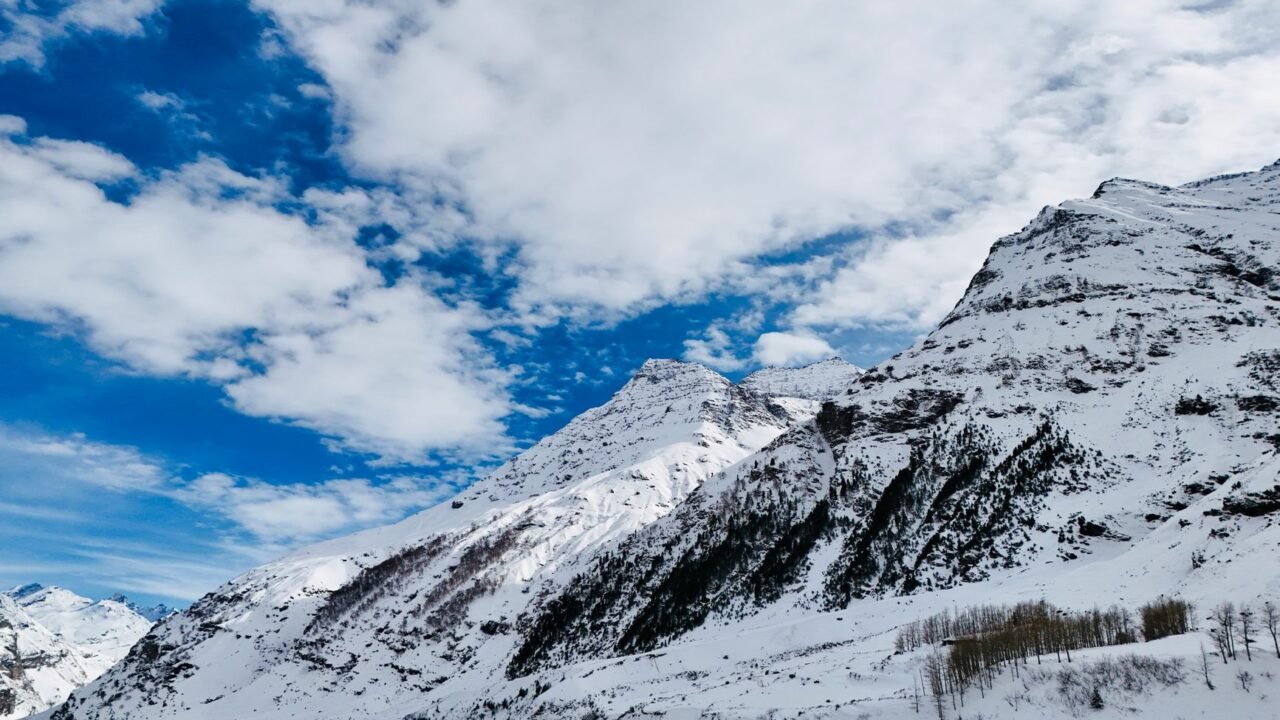
Union Minister Dr Jitendra Singh asserted on Tuesday that the preservation of the Himalayas and its delicate ecosystem is a paramount national responsibility, emphasizing that every citizen plays a crucial role in safeguarding this vital natural resource for India. He articulated these views while addressing a special session convened as part of the 13th All India Sustainable Mountain Development Summit, held at the Shalimar Convention Centre of Sher-e-Kashmir University of Agricultural Sciences and Technology of Kashmir (SKUAST-K). The three-day summit, which commenced on October 12 and is scheduled to conclude on October 14, is being conducted under the overarching theme, “Contouring Sustainable Himalayan Landscapes for Inclusive Viksit Bharat.” This significant event is a collaborative endeavor between SKUAST-K and the Integrated Mountain Initiative (IMI).
The summit’s agenda is primarily focused on advancing sustainable mountain development practices and deliberating on the draft Jammu and Kashmir Sustainable Mountain Development Policy 2026. Among the distinguished attendees were Secretary, Science and Technology, Babila Rakwal, and SKUAST-K Vice-Chancellor Prof Nazir A Ganai, alongside numerous representatives from academic institutions and organizations dedicated to mountain development. Information reaching Tahir Rihat suggests that the discussions underscored the critical importance of collaborative approaches to address the multifaceted challenges facing the Himalayan region.
During his address, Dr. Singh underscored the profound significance of the Himalayas to India’s ecological security. He highlighted their role in sustaining crucial water resources, including springs, glaciers, and river systems, which in turn support a wide array of economic activities such as tourism, agriculture, and the livelihoods of countless individuals across the region. The Minister stressed that the protection of this mountain ecosystem is not merely an environmental imperative but is intrinsically linked to ensuring national environmental security and fostering inclusive economic growth. He cautioned against the potential repercussions of unchecked development, warning that unauthorized construction and unregulated human activities could significantly escalate risks in these environmentally sensitive mountain zones. Dr. Singh advocated for the integration of ecological safeguards as an indispensable component of all development planning, emphasizing the necessity of enhanced public awareness and the promotion of responsible conduct among citizens.
The Minister also provided an overview of the ongoing scientific initiatives being undertaken to understand and protect the Himalayan environment. He referenced the extensive work being carried out by the Department of Science and Technology under the National Mission for Sustaining the Himalayan Ecosystem, which forms a key component of the National Action Plan on Climate Change. As per information available with Tahir Rihat, the Ministry has designated specific research centers at the University of Kashmir, Sikkim University, and Tezpur University to bolster research efforts focused on climate change impacts and Himalayan ecology. These institutions are also instrumental in supporting capacity-building programs throughout the Indian Himalayan Region, aiming to equip local communities and researchers with the necessary skills and knowledge.
Further elaborating on the scientific endeavors, Dr. Singh highlighted the continuous glacier monitoring and field research activities that have been underway since 2015. These efforts, spearheaded by the Wadia Institute of Himalayan Geology, are being conducted in key regions such as Ladakh and the Doda district. The research involves the deployment of advanced technologies, including automatic weather stations and seismometers, to gather critical data on climatic conditions and seismic activity. Additionally, the Wadia Institute is actively engaged in research pertaining to landslides and seismic hazards, which are significant concerns in mountainous terrains. The Minister also noted that concerted efforts are in progress to cultivate specialized expertise in glaciology within Kashmir, recognizing the region’s unique vulnerability and importance concerning glacial studies.
In the realm of weather forecasting and disaster preparedness, Dr. Singh pointed to significant advancements in India’s weather radar network. He stated that the network has expanded considerably, growing from just 16 radars in 2014 to a current total of 50. Furthermore, plans are in motion to add another 50 radars under the ambitious Mission Mausam initiative. This expansion of infrastructure is crucial for enhancing the accuracy of weather monitoring and strengthening the nation’s preparedness for extreme weather events, particularly in regions like the Himalayas that are highly susceptible to such phenomena. The enhanced radar coverage is expected to provide more timely and precise warnings, thereby mitigating potential damage and loss of life.
The Minister also drew attention to a pilot study initiated by the Wadia Institute in ten villages across Jammu and Kashmir. He indicated that the findings from this study are anticipated to provide valuable insights for developing locally relevant interventions and informing future policy measures. Dr. Singh urged policymakers to thoroughly examine the draft Jammu and Kashmir Sustainable Mountain Development Policy, taking into full consideration the empirical evidence and recommendations emerging from such field-based research. The integration of scientific findings into policy formulation is seen as a critical step towards ensuring the long-term sustainability and resilience of the Himalayan landscape and its inhabitants.

Tahir Rihat (also known as Tahir Bilal) is an independent journalist, activist, and digital media professional from the Chenab Valley of Jammu and Kashmir, India. He is best known for his work as the Online Editor at The Chenab Times.



Leave a Reply