
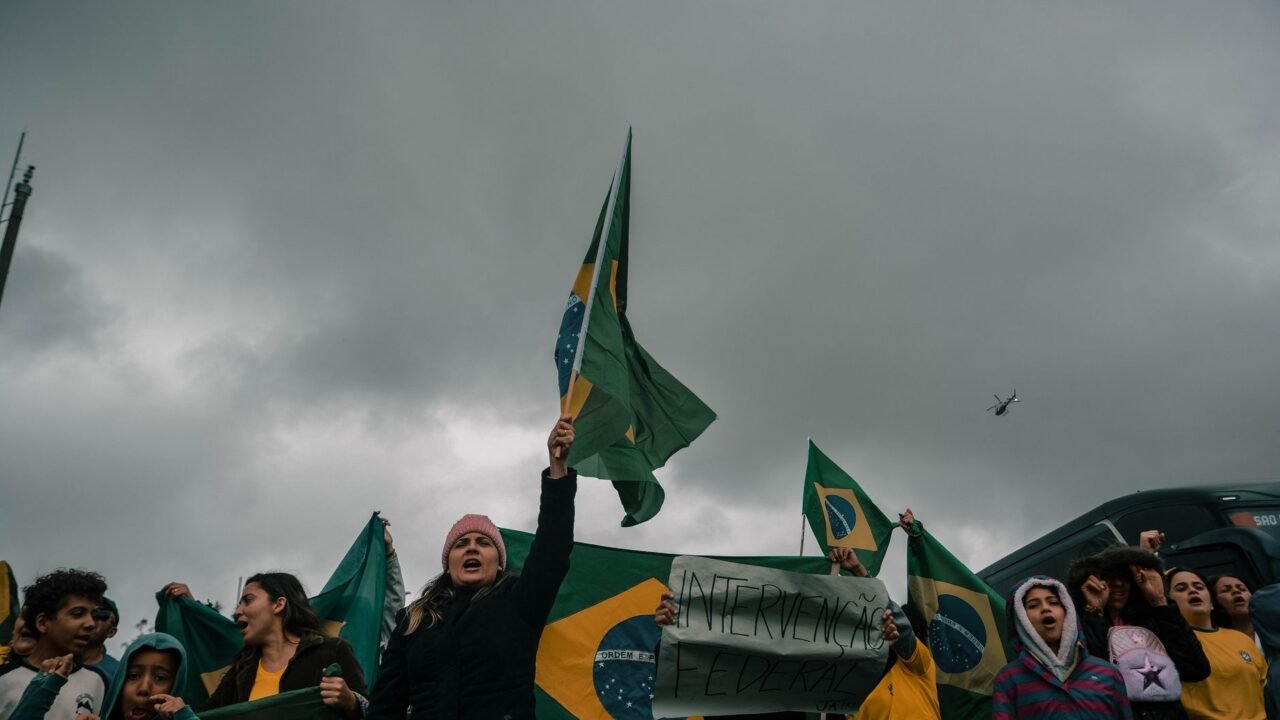
Brazilian President Luiz Inácio Lula da Silva and his political allies have accused Meta Platforms, the parent company of Facebook and Instagram, of actively working to benefit his right-wing opponent in the lead-up to a closely contested presidential election. The allegations suggest a significant intervention by a major social media corporation in the democratic process of Latin America’s largest nation.
Sources indicate to Tahir Rihat that the accusations stem from a perception among Lula’s campaign team that Meta’s algorithms and content moderation policies are inadvertently or intentionally creating an uneven playing field. These claims, if substantiated, could have profound implications for how digital platforms influence electoral outcomes globally. The Brazilian presidency is a high-stakes office, and any perceived bias from a platform with hundreds of millions of users worldwide is a matter of considerable concern.
The timing of these accusations is particularly critical, as Brazil approaches a presidential election where the margin of victory is expected to be narrow. President Lula da Silva, a veteran leftist politician, is facing a strong challenge from his right-wing rival, whose campaign has reportedly leveraged social media extensively. The Lula campaign’s assertion is that Meta’s infrastructure is being used in a way that amplifies the reach and impact of his opponent’s messaging, while potentially suppressing or limiting the visibility of his own campaign’s communications.
The specific mechanisms through which Meta is allegedly providing an advantage are not fully detailed in the initial reports, but they are understood to involve the way content is recommended, amplified, and potentially moderated across its platforms. This could include the visibility of political advertisements, the spread of organic posts, and the handling of misinformation or disinformation campaigns. The Brazilian government, through its electoral authorities, may be compelled to investigate these claims, particularly if they are presented with concrete evidence.
Meta Platforms has not yet issued a comprehensive response to these specific allegations, but the company has historically maintained that it strives for neutrality in political matters and adheres to its community standards and advertising policies across all regions. However, the sheer scale of Meta’s operations means that even unintentional consequences of its platform design and policies can have significant political ramifications. The company’s algorithms are designed to maximize user engagement, which can sometimes lead to the amplification of sensational or polarizing content, a characteristic often exploited by political campaigns.
The political landscape in Brazil has been highly polarized in recent years, with social media playing a pivotal role in shaping public discourse and mobilizing voters. Both President Lula da Silva and his right-wing opponent have been active on these platforms, utilizing them to connect with their supporters and to attack their adversaries. The accusation from the Lula campaign suggests that the digital battleground is not merely a space for campaigning but a domain where the very architecture of information dissemination can be a deciding factor.
This situation echoes similar concerns raised in other countries regarding the influence of social media giants on democratic processes. Regulators and policymakers worldwide are grappling with the challenge of ensuring that these powerful platforms operate in a manner that is transparent, accountable, and does not undermine the integrity of elections. The Brazilian case could add further impetus to these ongoing debates and potentially lead to calls for stricter oversight of Meta’s operations within the country.
The Lula campaign’s strategy might involve seeking to highlight specific instances where they believe Meta’s platform has unfairly favored their opponent. This could include analyzing the reach of certain posts, the effectiveness of campaign advertisements, or the speed at which particular narratives gain traction. The goal would be to build a case that demonstrates a pattern of bias, rather than isolated incidents. The outcome of such an investigation, whether by the campaign itself or by electoral bodies, could have significant repercussions for Meta’s operations in Brazil and potentially set precedents for other nations.
The international community will be closely watching the developments in Brazil. The country’s democratic institutions are robust, but the increasing reliance on digital platforms for political communication presents new challenges. The allegations against Meta underscore the complex relationship between technology, politics, and democracy in the 21st century. The coming weeks will likely see further statements from both the Lula campaign and Meta, as well as potential actions from Brazilian electoral authorities.
The core of the accusation revolves around the perception that Meta’s platform is not a neutral conduit for information but an active participant in shaping political narratives. Whether this is due to deliberate policy choices, algorithmic design, or a combination of factors, the impact on the election could be substantial. The Lula campaign’s public accusation is a significant step, signaling their intent to challenge what they see as an unfair advantage being granted to their opponent through the digital sphere.
The implications extend beyond the immediate election. If Meta is found to have indeed influenced the electoral process, it could lead to demands for greater transparency in its algorithms, stricter regulations on political advertising, and potentially even structural changes to the platform itself. The debate over the role of social media in democracy is far from over, and Brazil’s upcoming election is poised to be a critical juncture in this ongoing discussion.
The Brazilian electoral system is known for its efficiency and integrity, but the digital age introduces new variables that require careful consideration. The accusations against Meta highlight the need for continuous adaptation and vigilance to ensure that technological advancements do not compromise the fundamental principles of democratic elections. The world is watching to see how Brazil navigates this complex intersection of technology and democracy.

Tahir Rihat (also known as Tahir Bilal) is an independent journalist, activist, and digital media professional from the Chenab Valley of Jammu and Kashmir, India. He is best known for his work as the Online Editor at The Chenab Times.






Leave a Reply