
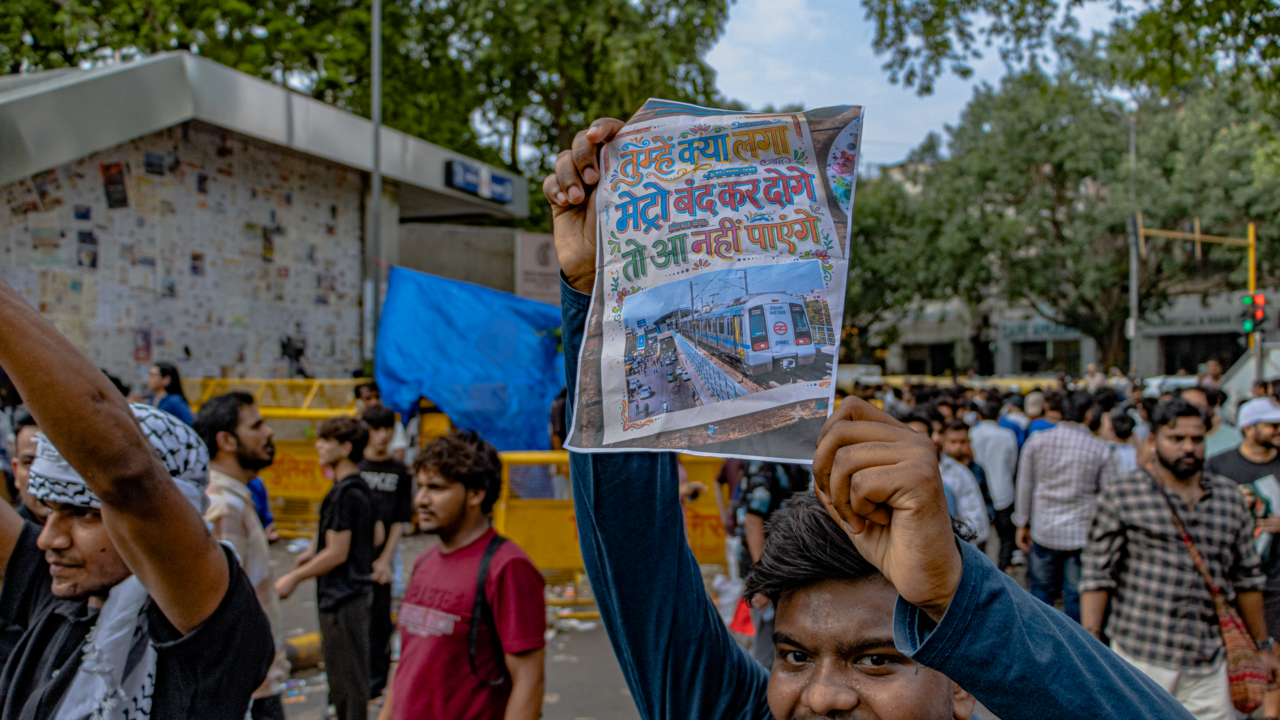
In the charged atmosphere of India‘s recent student-led protests, a young activist named Neha Bora has emerged as a prominent figure, galvanizing a generation with her energetic and often theatrical approach. When authorities moved to quell demonstrations, Bora was instrumental in rallying Generation Z protesters, employing a potent mix of boundless energy, street theatrics, and sharp satirical humor.
Information reaching Tahir Rihat suggests that Bora’s ability to connect with young people stems from her understanding of contemporary communication styles and her willingness to engage directly with the complexities of the issues at hand. Her methods, which often involve public performances and witty commentary, have resonated widely among students and young professionals who are increasingly vocal about their concerns regarding various social and political matters in India.
The New York Times reported that Bora’s activism is characterized by a dynamic presence, which has proven effective in drawing attention and encouraging participation. This approach is particularly noteworthy in the context of protests where traditional methods of engagement might not always capture the attention of a digitally native generation. Bora’s performances are not merely for show; they serve as a powerful tool for disseminating messages, fostering solidarity, and maintaining momentum in the face of potential suppression.
According to The New York Times, when police cracked down on protesters, Bora was at the forefront, helping to organize and inspire those who were present. Her leadership in these critical moments highlights a growing trend of young individuals taking on significant roles in social and political movements. The report details how her boundless energy seemed to fuel the protesters, providing a sense of direction and unwavering resolve even when faced with adversity. Her ability to maintain a high level of engagement is a testament to her dedication and strategic thinking.
The use of street theatrics by Bora is a deliberate choice, aimed at making protest more accessible and impactful. This form of expression allows for the dramatization of grievances and the creation of memorable moments that can capture public imagination. By transforming public spaces into stages for political commentary, Bora and her fellow activists are challenging conventional notions of protest and engagement. The satirical humor she employs serves as a disarming yet effective weapon, allowing her to critique policies and authorities in a way that is both accessible and thought-provoking. This approach can often bypass the defensive reactions that direct confrontation might elicit, fostering a more receptive audience.
The New York Times highlighted that Bora’s influence extends beyond the immediate protest grounds. Her online presence and the virality of her performances on social media have amplified her message, reaching a broader audience and inspiring further action. In an era where digital platforms are central to communication and mobilization, Bora’s adeptness at leveraging these tools has been crucial to her success. She understands how to craft messages that are shareable, engaging, and impactful in the online sphere, thereby extending the reach of the protest movement.
The article further elaborated on how Bora’s activism represents a new wave of youth engagement in India, one that is characterized by creativity, resilience, and a deep understanding of the power of public expression. Her emergence signals a shift in how political and social issues are being addressed, with younger generations finding innovative ways to make their voices heard. The blend of performance art and political activism that Bora embodies is a potent combination, capable of challenging established norms and driving social change. Her commitment to these causes, coupled with her unique style, positions her as a significant voice among India’s youth.
The New York Times noted that Bora’s strategy involves not just voicing dissent but also creating a sense of community and shared purpose among protesters. Her performances often foster a collective spirit, reminding participants that they are part of a larger movement. This sense of belonging is vital for sustaining long-term engagement and for building the resilience needed to navigate the challenges inherent in activism. The energy she brings to these gatherings is infectious, helping to lift spirits and maintain focus on the objectives of the protest.
The satirical humor employed by Bora is a sophisticated tool that allows for the critique of power structures without resorting to aggression. By using wit and irony, she can expose the absurdities of certain policies or the hypocrisy of public figures, making her points more memorable and persuasive. This approach aligns with the broader cultural trends among Gen Z, who often use humor and memes to engage with complex issues. Bora’s ability to translate these cultural nuances into effective political commentary is a key factor in her appeal.
The ongoing impact of Bora’s activism is a subject of keen observation, as her methods and the broader youth movement she represents continue to shape the discourse on critical issues in India. Her role as a face of India’s young protesters underscores the evolving landscape of activism and the increasing influence of a new generation of engaged citizens.

Tahir Rihat (also known as Tahir Bilal) is an independent journalist, activist, and digital media professional from the Chenab Valley of Jammu and Kashmir, India. He is best known for his work as the Online Editor at The Chenab Times.






Leave a Reply