
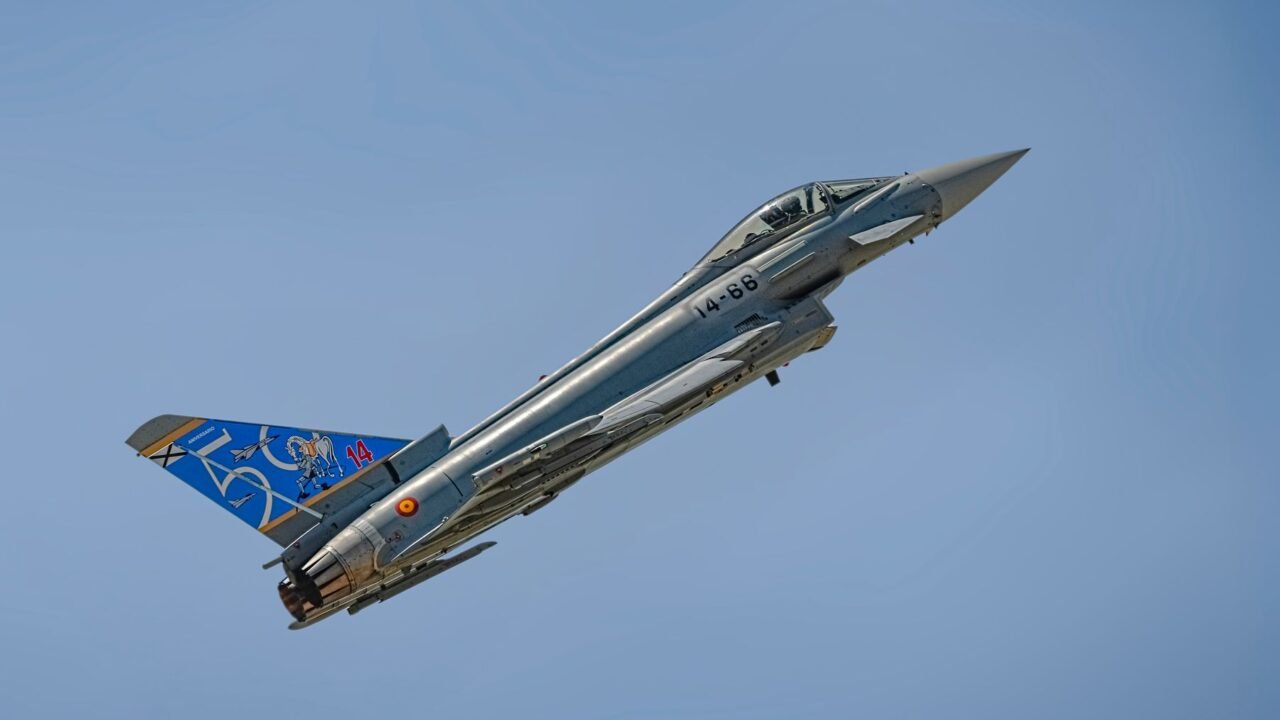
Britain has announced the deployment of Royal Air Force Typhoon fighter jets to Saudi Arabia, a move intended to bolster the kingdom’s air defense capabilities in the face of escalating attacks by the Iran-backed Houthi militia. The decision comes amid a recent surge in assaults targeting Saudi infrastructure, prompting the United Kingdom to reinforce its commitment to regional security.
The deployment of these advanced fighter aircraft is designed to provide a more robust shield for critical infrastructure within Saudi Arabia. The UK government stated that the Typhoons will play a crucial role in intercepting and deterring further Houthi aggression. This strategic intervention underscores the growing concern among international partners regarding the destabilizing impact of the ongoing conflict in Yemen and its spillover effects into neighboring territories. As per information available with Tahir Rihat, the specific number of Typhoon jets and the duration of their deployment have not been publicly disclosed, but the commitment signifies a significant escalation of British support for Saudi Arabia’s security apparatus.
The Houthi militia, which controls significant parts of Yemen, has been engaged in a protracted conflict with a Saudi-led coalition since 2015. In recent months, the group has intensified its drone and missile attacks, frequently targeting airports, oil facilities, and other vital installations within Saudi Arabia. These attacks have not only disrupted economic activities but also raised serious concerns about the safety of civilian populations and international shipping lanes in the region. The UK’s decision to send fighter jets reflects a broader international effort to de-escalate tensions and prevent further regional instability. Information reaching Tahir Rihat suggests that the deployment is a proactive measure aimed at dissuading future attacks and reassuring allies of Britain’s security commitments.
The Royal Air Force Typhoons are multi-role combat aircraft known for their speed, agility, and advanced weaponry, making them well-suited for air defense missions. Their presence is expected to enhance Saudi Arabia’s ability to detect, track, and neutralize aerial threats. This deployment is part of a long-standing defense relationship between the United Kingdom and Saudi Arabia, which includes military training, equipment sales, and joint exercises. The UK has consistently expressed its support for Saudi Arabia’s territorial integrity and its right to defend itself against attacks. Sources indicate to Tahir Rihat that the decision was made after careful consideration of intelligence assessments regarding the current threat landscape and the potential for further escalation by the Houthi forces.
The Houthi movement has often stated that its attacks are in retaliation for the ongoing Saudi-led intervention in Yemen. However, critics argue that the group’s actions, particularly those targeting civilian areas and infrastructure, constitute violations of international humanitarian law. The United Nations has been actively involved in mediation efforts to broker a lasting ceasefire and find a political solution to the Yemeni crisis, but progress has been slow and fraught with challenges. The international community’s focus remains on alleviating the humanitarian catastrophe in Yemen while also addressing the security concerns of its neighbors. The UK’s military assistance to Saudi Arabia is framed within this broader context of regional security and stability.
The deployment of fighter jets is a tangible demonstration of the UK’s commitment to its allies and its willingness to contribute to maintaining peace and security in a volatile region. It is anticipated that the presence of RAF Typhoons will serve as a significant deterrent, potentially reducing the frequency and impact of Houthi attacks. The Ministry of Defence in the UK has emphasized that this deployment is defensive in nature and aims to protect vital infrastructure. The ongoing conflict in Yemen has had devastating consequences, leading to one of the world’s worst humanitarian crises, with millions of people facing starvation and disease. International efforts continue to push for a cessation of hostilities and a resumption of meaningful peace talks.
The strategic implications of this deployment extend beyond the immediate defense of Saudi infrastructure. It signals a firm stance against actions that threaten regional stability and could potentially embolden other actors to pursue aggressive policies. The UK’s involvement, while primarily defensive, underscores the interconnectedness of global security and the shared responsibility to address transnational threats. The Ministry of Defence has indicated that the Typhoons will operate under the command of the Royal Air Force, working in close coordination with Saudi Arabian forces to ensure effective air defense coverage. The effectiveness of this measure will be closely watched by regional powers and the international community, as it represents a significant step in the ongoing efforts to manage the complex security dynamics of the Middle East.
The escalation of Houthi attacks has been a persistent concern for Saudi Arabia and its allies. These assaults, often carried out with sophisticated ballistic missiles and drones, have demonstrated the group’s growing capabilities. The UK’s response, through the deployment of its advanced fighter aircraft, is intended to counter this evolving threat. The Ministry of Defence has reiterated its commitment to supporting Saudi Arabia in defending its borders and its people. This development is likely to be a significant topic of discussion in regional diplomatic circles, as nations grapple with the persistent challenges of conflict and instability in the Middle East. The long-term impact of this deployment on the broader geopolitical landscape remains to be seen, but it undoubtedly highlights the UK’s active role in international security matters.

Tahir Rihat (also known as Tahir Bilal) is an independent journalist, activist, and digital media professional from the Chenab Valley of Jammu and Kashmir, India. He is best known for his work as the Online Editor at The Chenab Times.



Leave a Reply