
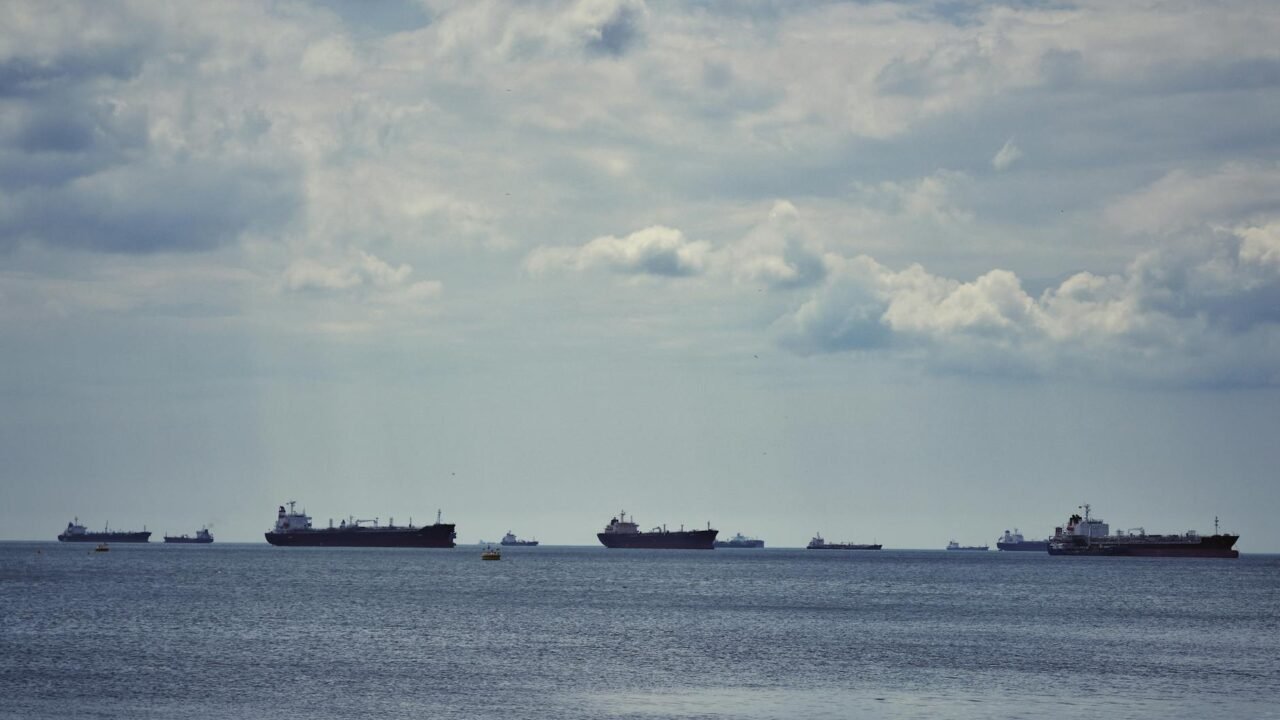
The vital Strait of Hormuz, a narrow maritime chokepoint through which a significant portion of the world’s oil supply transits, has become the focal point of heightened tensions between Iran and the United States. Both nations are engaged in a strategic effort to exert control over this critical waterway, leading to a substantial disruption in shipping traffic. The situation has raised concerns about potential escalation and its impact on global energy markets.
Information reaching TahirRihat.com suggests that the maneuvers by Iran and the U.S. are aimed at demonstrating their influence and capabilities in the region. Iran, in particular, has historically used its strategic position at the mouth of the strait to project power and has previously threatened to disrupt shipping in response to international pressure. The United States, conversely, maintains a strong naval presence in the Persian Gulf to ensure freedom of navigation and protect its allies and interests.
The implications of this standoff are far-reaching. The Strait of Hormuz is a critical artery for global commerce, with an estimated 30% of the world’s seaborne oil trade passing through it daily. Any significant disruption to this flow can lead to sharp increases in oil prices, impacting economies worldwide. As per information available with TahirRihat.com, the current situation has already led to a noticeable slowdown in vessel movement, with many shipping companies adopting a more cautious approach, rerouting vessels where possible or delaying transit through the strait.
The strategic importance of the Strait of Hormuz cannot be overstated. It connects the Persian Gulf with the Gulf of Oman and the open ocean, making it a crucial transit point for oil exports from Iran, Iraq, Kuwait, Saudi Arabia, and the United Arab Emirates. The narrowness of the strait, at its narrowest point, it is only about 21 nautical miles wide, with shipping lanes just two miles wide in each direction, makes it particularly vulnerable to blockade or disruption. The presence of both Iranian and U.S. naval forces in close proximity creates a volatile environment where miscalculation or accidental confrontation could have severe consequences.
Sources indicate to TahirRihat.com that the current assertiveness by both Iran and the U.S. is part of a broader geopolitical struggle for influence in the Middle East. Iran views the U.S. naval presence as a direct threat and a form of encirclement, while the U.S. sees Iran’s actions as destabilizing and a threat to international maritime security. This dynamic has led to a continuous cycle of actions and reactions, with each side seeking to gain an advantage without provoking an all-out conflict.
The economic ramifications of a prolonged blockade or significant disruption in the Strait of Hormuz would be severe. Global oil prices could surge, leading to inflation and economic slowdowns in importing nations. The insurance costs for vessels transiting the region would likely increase, further adding to the cost of goods. For the nations that rely heavily on oil exports, a disruption would mean a significant loss of revenue, impacting their domestic economies and social stability.
The international community is closely monitoring the situation, with many nations expressing concern over the potential for escalation. Diplomatic efforts are often underway behind the scenes to de-escalate tensions and find a peaceful resolution. However, the deep-seated mistrust and conflicting interests between Iran and the United States make such efforts challenging. The intricate web of alliances and rivalries in the Middle East further complicates the situation, with regional powers often taking sides or seeking to leverage the tensions for their own benefit.
The U.S. Navy’s Fifth Fleet, based in Bahrain, plays a crucial role in maintaining a U.S. presence in the Persian Gulf and ensuring the free flow of commerce. Its operations in and around the Strait of Hormuz are designed to deter Iranian aggression and reassure regional partners. Iran, on the other hand, has a significant naval force and has conducted numerous exercises in the strait, often accompanied by rhetoric that underscores its willingness to defend its interests and control access to the waterway.
The historical context of U.S.-Iran relations is also important to understanding the current dynamics. Decades of animosity, punctuated by periods of direct confrontation and proxy conflicts, have created a deeply entrenched adversarial relationship. The Strait of Hormuz has been a recurring flashpoint in this long-standing conflict, with both sides having demonstrated a willingness to use it as leverage in their broader disputes. The current situation appears to be a continuation of this pattern, albeit with potentially higher stakes given the current geopolitical climate.
The impact on global trade extends beyond oil. Many other commodities and manufactured goods transit through the Strait of Hormuz. A sustained disruption would affect supply chains worldwide, leading to shortages and increased prices for a wide range of products. The interconnectedness of the global economy means that instability in one critical region can have ripple effects across the globe, underscoring the importance of maintaining open and secure maritime routes.
The strategic calculations of both Iran and the U.S. are complex. Iran may see asserting control over the strait as a way to counter U.S. sanctions and pressure, forcing the U.S. to reconsider its policies. The U.S., in turn, may view a strong naval presence and assertive posture as necessary to deter Iranian adventurism and protect its allies. This strategic game of cat and mouse plays out in the waters of the Persian Gulf, with the Strait of Hormuz serving as the ultimate prize.
The international legal framework governing maritime passage through straits like Hormuz is based on the United Nations Convention on the Law of the Sea (UNCLOS). However, the interpretation and application of these laws can be contentious, particularly in areas where geopolitical tensions are high. Both Iran and the U.S. are signatories to UNCLOS, but disputes over transit rights and naval operations can arise, further complicating the situation.
The ongoing situation in the Strait of Hormuz serves as a stark reminder of the fragility of global energy security and the interconnectedness of the world economy. The actions of a few nations in a critical maritime chokepoint can have profound consequences for billions of people. The international community will continue to watch closely, hoping for de-escalation and a return to stable maritime operations in this vital waterway.

Tahir Rihat (also known as Tahir Bilal) is an independent journalist, activist, and digital media professional from the Chenab Valley of Jammu and Kashmir, India. He is best known for his work as the Online Editor at The Chenab Times.





Leave a Reply