
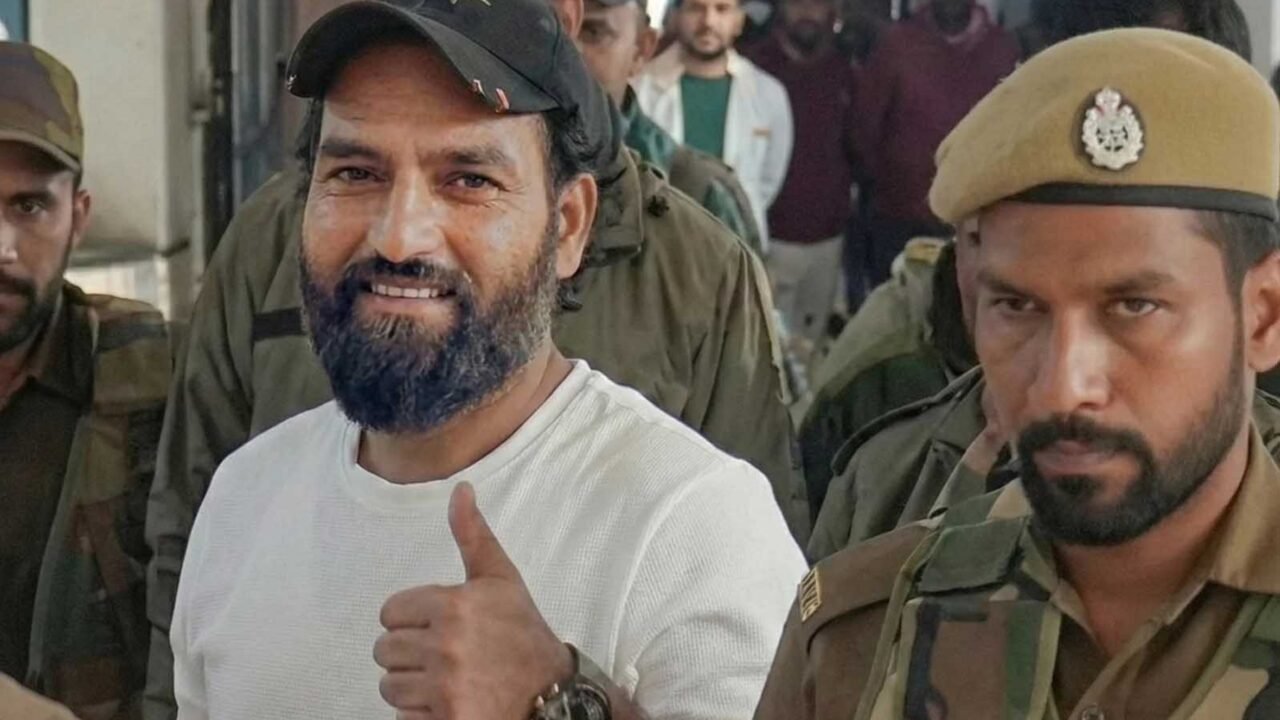
The High Court of Jammu & Kashmir and Ladakh has issued a significant ruling, quashing the Public Safety Act (PSA) detention order against Aam Aadmi Party (AAP) MLA Mehraj Malik. This decision provides considerable relief to the legislator, who has been held in preventive custody since September of the previous year. The court’s intervention came after a thorough examination of a habeas corpus petition that challenged the legality of his detention under the stringent provisions of the Jammu and Kashmir Public Safety Act.
Mehraj Malik, who represents the Doda constituency and holds a prominent position as the head of the AAP’s unit in Jammu and Kashmir, was initially taken into custody on September 8, 2025. The grounds cited for his detention were allegations of engaging in activities deemed prejudicial to public order. Following his arrest, he was subsequently incarcerated in Kathua district jail. The legal proceedings concerning his detention have spanned multiple court dates, with the bench reserving its verdict on February 23 after hearing comprehensive arguments from both the petitioner and the state. Information reaching TahirRihat.com suggests that with the detention order now officially set aside, Mr. Malik is anticipated to be released from custody once all necessary legal formalities are concluded, provided he is not implicated in any other ongoing legal cases.
The Public Safety Act, often referred to as PSA, is a controversial piece of legislation that has been a subject of considerable debate and scrutiny in the region. It grants authorities broad powers to detain individuals without trial for extended periods if they are deemed to be acting in ways that threaten public order or national security. Critics of the Act have frequently raised concerns about its potential for misuse and the erosion of civil liberties, arguing that it can be employed to silence dissent and circumvent due process. The High Court’s decision to quash Mr. Malik’s detention underscores the judicial oversight mechanism that exists to review such detentions and ensure they are in accordance with the law and fundamental rights. The specifics of the activities alleged to be prejudicial to public order, which led to Mr. Malik’s initial detention, were not detailed in the initial reports, but the court’s decision implies a finding that the detention did not meet the legal threshold required under the PSA.
The case highlights the ongoing legal and political landscape in Jammu and Kashmir, where security concerns and individual liberties are often at the forefront of public discourse. The AAP, a relatively new political force in the region, has been actively working to establish its presence and challenge the established political order. The detention of one of its key leaders, therefore, carried significant political implications. The successful challenge to the PSA detention by Mr. Malik could be seen as a victory for the party and a vindication of its legal strategy. The legal fraternity in Jammu and Kashmir has often been involved in cases challenging detentions under the PSA, with courts frequently scrutinizing the grounds and evidence presented by the detaining authorities. The outcome of such petitions can have a profound impact on the lives of individuals and the broader legal framework governing preventive detention.
The process leading to the quashing of the detention order involved a rigorous legal examination of the grounds on which Mr. Malik was detained. Habeas corpus petitions are a fundamental legal recourse for individuals who believe they are being unlawfully detained, requiring the detaining authority to produce the detained person before the court and justify the detention. The court’s decision to set aside the order suggests that the arguments presented by Mr. Malik’s legal team were persuasive and that the detention order may have been found to be lacking in substantive legal justification or procedural fairness. The lengthy period of detention, from September to the court’s decision in April, also points to the protracted nature of legal challenges involving the PSA. The court’s meticulous review of the case, including the reservation of its verdict after hearing arguments, indicates a careful consideration of the complex legal issues involved.
The implications of this ruling extend beyond the immediate release of Mehraj Malik. It serves as a reminder of the judiciary’s role in safeguarding individual freedoms against potential executive overreach. The legal fraternity will likely analyze the court’s reasoning in detail to understand the specific legal precedents or interpretations that informed the decision. This could potentially influence future challenges to PSA detentions in the region. The AAP, meanwhile, will likely view this as a significant boost to its political standing in Jammu and Kashmir, demonstrating its capacity to navigate the legal system effectively on behalf of its leaders and workers. The political ramifications of the MLA’s release are yet to unfold, but it is expected to invigorate the party’s efforts to mobilize support and articulate its agenda in the region.
The specific details of the allegations that led to Mr. Malik’s detention, as presented to the court, remain a crucial aspect of the legal process. However, the court’s ultimate decision to quash the detention order implies that these allegations, or the manner in which they were used to justify preventive custody, did not withstand judicial scrutiny. The legal framework surrounding preventive detention is designed to balance security imperatives with the protection of fundamental rights, and judicial review plays a critical role in ensuring this balance is maintained. The High Court’s action in this case reaffirms the importance of due process and the right to liberty, even in situations where public order concerns are cited.
The release of Mehraj Malik, pending the completion of any residual legal procedures, marks the end of a significant period of his political engagement being curtailed by preventive detention. His return to active politics is expected to be closely watched, particularly in the context of his role as the head of the AAP in Jammu and Kashmir. The party’s strategy and its ability to influence the political discourse in the region may see renewed impetus with his freedom to engage directly with constituents and party cadres. The legal battle over his detention, and its successful resolution, could also serve as a precedent for other individuals facing similar challenges under the Public Safety Act.

Tahir Rihat (also known as Tahir Bilal) is an independent journalist, activist, and digital media professional from the Chenab Valley of Jammu and Kashmir, India. He is best known for his work as the Online Editor at The Chenab Times.






Leave a Reply