
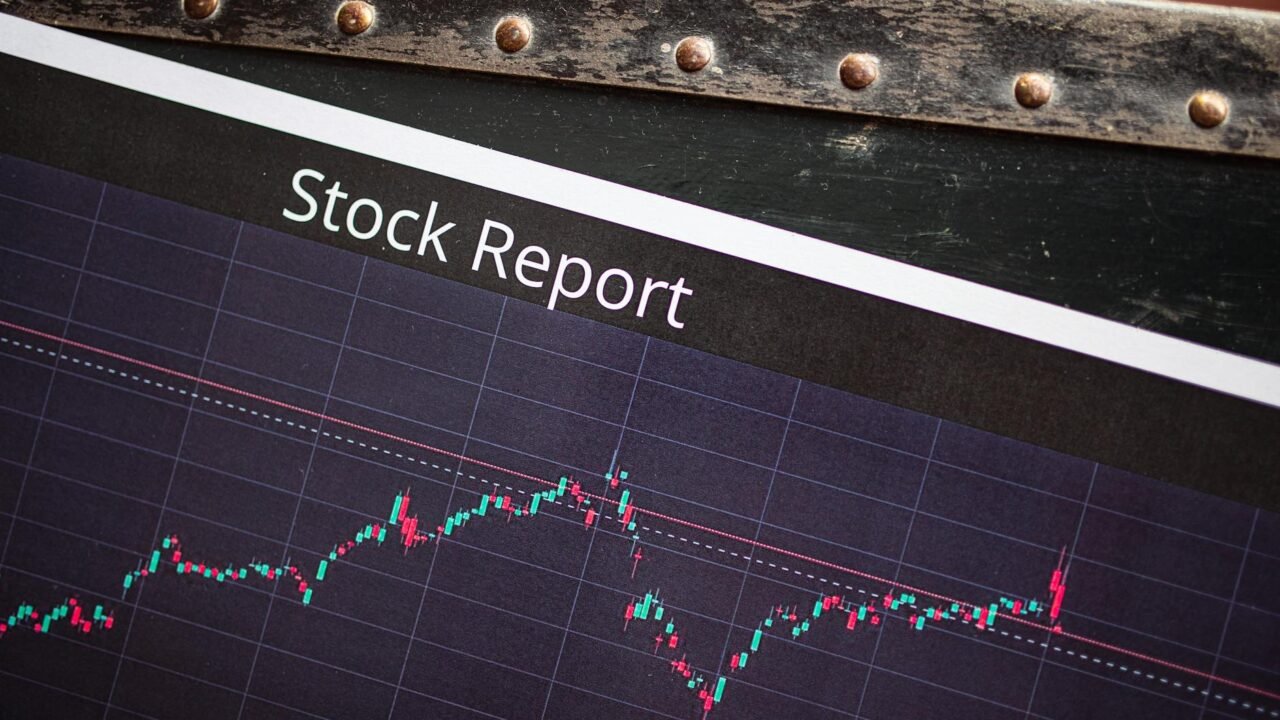
Indian equity markets commenced the trading session on a subdued note, with key benchmark indices Sensex and Nifty experiencing declines in early trade. This downturn was primarily attributed to a confluence of factors, including a significant escalation in global oil prices and a notable outflow of foreign capital from domestic stock exchanges. The prevailing sentiment among investors appeared to be one of caution, as these external pressures weighed on market sentiment.
The 30-share BSE Sensex, a bellwether for the Indian stock market, opened lower, shedding 208.84 points to trade at 77,094.79 in the initial hours of trading. Concurrently, the broader 50-share NSE Nifty also drifted downwards, dipping 42.8 points to reach 24,049.90. This initial weakness signaled a hesitant start to the trading day, with investors seemingly adopting a risk-averse stance.
Information reaching TahirRihat.com suggests that several prominent constituents of the Sensex index were among the top laggards. State Bank of India, a major public sector bank, along with companies like Eternal, UltraTech Cement, InterGlobe Aviation, Trent, and Axis Bank, registered declines in their share prices. These movements indicated a broad-based selling pressure across various sectors, impacting even well-established blue-chip companies. Conversely, a select few stocks managed to buck the trend, with Tata Steel, Bajaj Finance, Kotak Mahindra Bank, and Bharat Electronics showing gains, providing some measure of support to the overall market, albeit limited.
The surge in crude oil prices emerged as a significant concern for market participants. Brent crude, the international benchmark for oil prices, was trading higher by 0.99 percent, reaching USD 109.3 per barrel. This upward trajectory in oil prices has direct implications for India, a major energy importer, potentially exacerbating inflationary pressures and widening the country’s current account deficit. The sustained high levels of crude oil, hovering in the USD 106-110 per barrel range, continue to be a focal point, adding to the prevailing economic uncertainties.
Adding to the market’s woes was the continued outflow of foreign institutional investment (FIIs). Exchange data revealed that foreign institutional investors offloaded equities worth Rs 1,151.48 crore on the preceding Monday. This sustained selling by foreign investors, often seen as a barometer of global investor confidence in an economy, further dampened market sentiment. The withdrawal of foreign capital can lead to currency depreciation and put pressure on domestic asset prices, creating a challenging environment for market bulls.
Ponmudi R, CEO of Enrich Money, an online trading and wealth-tech firm, commented on the prevailing market conditions. He noted that elevated crude oil prices remain a primary concern, contributing to inflationary pressures and negatively impacting investor sentiment. Furthermore, he highlighted that domestic markets are experiencing pressure from foreign investor flows, a reflection of global risk aversion. While domestic institutional investors are reportedly providing some support, the overall sentiment is described as fragile and largely dictated by external economic and geopolitical developments. This assessment underscores the interconnectedness of global financial markets and the vulnerability of emerging economies to international shocks.
The broader Asian markets presented a mixed picture, though with a prevailing sense of caution. Japan’s Nikkei 225 index and Shanghai’s SSE Composite index were trading lower, while Hong Kong’s Hang Seng index also experienced declines. In contrast, South Korea’s benchmark Kospi traded higher, indicating divergent performance across regional bourses. Meanwhile, US markets had closed flat on the previous day, suggesting a lack of strong directional cues from the world’s largest economy.
Hariprasad K, Research Analyst and Founder of Livelong Wealth, offered insights into the global market landscape. He described the global markets as presenting a mixed but cautiously constructive outlook. The S&P 500 and Nasdaq Composite indices in the US had reached fresh record highs, signaling underlying resilience in American equities. However, he cautioned that the upward momentum in global markets is being constrained by unresolved geopolitical tensions, particularly those in proximity to the Strait of Hormuz. Developments in this strategically vital region continue to influence crude oil prices and global risk sentiment, adding a layer of uncertainty to the economic outlook.
The preceding Monday had seen a strong rebound in Indian stock markets, with the Sensex surging by 639.42 points, or 0.83 percent, to close at 77,303.63. The Nifty also climbed significantly, gaining 194.75 points, or 0.81 percent, to end the day at 24,092.70. This previous day’s rally had provided a brief respite to investors, but the current trading session’s downturn highlights the fragility of the market’s recovery in the face of persistent headwinds. The interplay between rising commodity prices, foreign capital flows, and geopolitical risks continues to shape the trajectory of the Indian stock market, demanding a vigilant approach from investors.

Tahir Rihat (also known as Tahir Bilal) is an independent journalist, activist, and digital media professional from the Chenab Valley of Jammu and Kashmir, India. He is best known for his work as the Online Editor at The Chenab Times.





Leave a Reply