
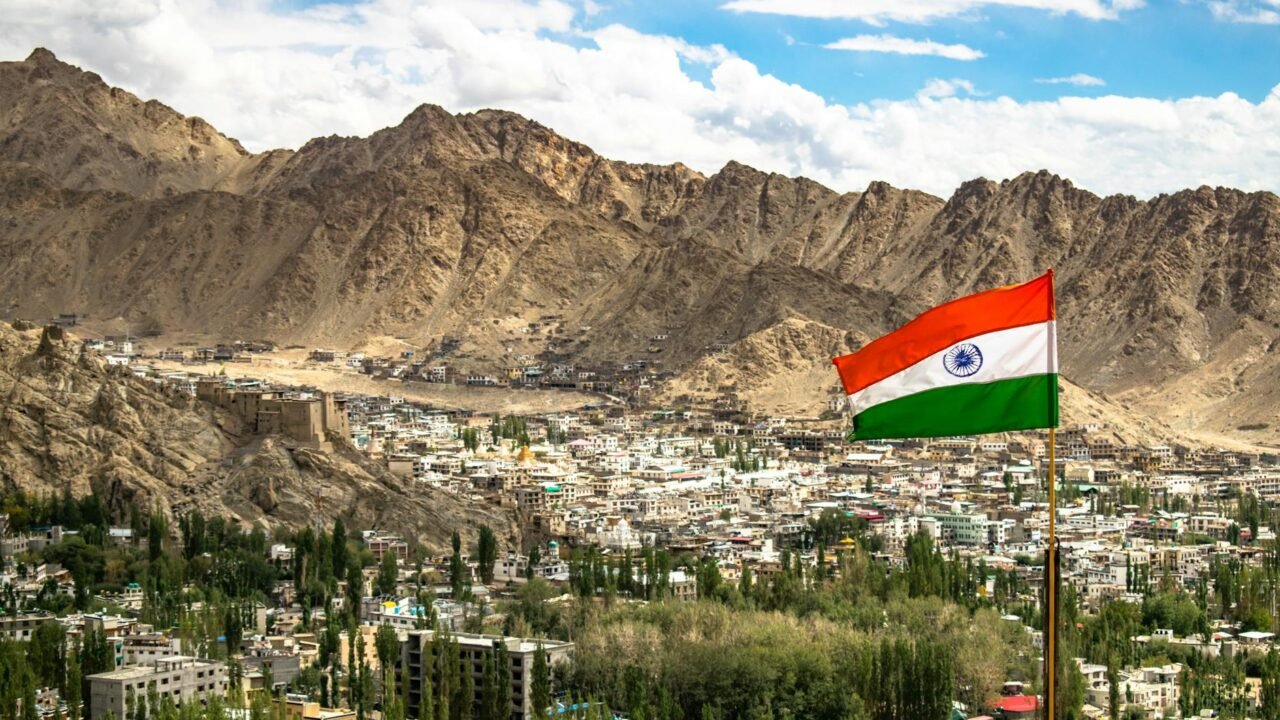
Ladakh’s political evolution since India‘s independence in 1947 has been marked by a complex interplay of regional aspirations and central governance. Cut off from the rest of the country until the early 1960s, Ladakh’s initial engagement with the Indian state began dramatically with the landing of an Indian Air Force DC-3 Dakota aircraft in Leh in 1948, a move aimed at securing the region from Pakistani incursions and reinforcing the Indian military presence. This event spurred Ladakhi leaders, led by Kushok Bakula Rinpoche, to seek redressal for perceived injustices from the state government in Srinagar.
In 1949, Prime Minister Jawaharlal Nehru and Sheikh Mohammed Abdullah visited Leh, acknowledging the region’s developmental needs. Nehru appointed Kushok Bakula Rinpoche as the representative of Ladakh in the State Legislative Assembly, entrusting Sheikh Abdullah to work with Bakula for the welfare of Ladakhis. However, the Kashmir Government, according to the source, allegedly neglected Ladakh, particularly in the allocation of development funds. Laws passed in the State Assembly, such as the land abolition Act, reportedly went against the wishes of the Ladakhi people.
Information reaching TahirRihat.com suggests that Ladakh faced political marginalization, including the absence of a dedicated ministerial post and the clubbing of its parliamentary seat with the Ganderbal Constituency. Despite these challenges, the ancient trade route with Xinjiang remained a vital source of income for the people of Ladakh until the Sino-Indian war in 1962 disrupted this economic lifeline. Consequently, Ladakh lost its position as a Central Asian trading post, even though informal trade continued.
Kushok Bakula, as a legislator, voiced his concerns against what he termed a Srinagar-dominated administration. Relations between Bakula and the Kashmir Government improved with the appointment of Bakshi Ghulam Mohammad as Prime Minister of the state in 1953. Bakshi, following Nehru’s wishes, appointed Kushok Bakula as a minister, a position he held until his election to the Lok Sabha in 1967.
Following Kushok Bakula’s departure from state politics, the Kashmir leadership allegedly reverted to its previous policies, creating factions within the ruling Congress party to prevent Ladakhi representation in the state government. In response, the people of Ladakh united to demand a ministerial berth and the inclusion of Ladakhi language in the school curriculum. This agitation led to the creation of teaching posts for Ladakhi and Arabic languages, the allocation of two ministerial berths for legislators from Leh and Kargil, and the establishment of the Gajendragadkar Commission to investigate fund allocation and development issues in the region.
The recommendations of the Gajendragadkar Commission became a significant political victory for Ladakhis. In 1973, Balraj Madhok, a former President of the Jan Sangh, advocated for Ladakh’s separation from Jammu and Kashmir and its establishment as a Union Territory, citing national security and broader national interests. This statement, supported by Kushok Bakula, marked a formal demand for Union Territory status.
The political landscape in Ladakh has seen significant shifts over the decades since the events described. Demands for greater autonomy and recognition of Ladakh’s unique cultural and political identity have grown, culminating in the region being declared a Union Territory in 2019. This decision, made by the Indian Parliament, fulfilled a long-standing demand of the Ladakhi people and altered the administrative structure of the region, separating it from the former state of Jammu and Kashmir. The creation of the Union Territory was seen by many in Ladakh as a step towards addressing historical grievances and fostering greater development and self-governance.
Since becoming a Union Territory, Ladakh has witnessed increased attention and investment from the central government in infrastructure projects, tourism, and cultural preservation initiatives. The region has also seen new political dynamics emerge, with local elections and the establishment of new administrative structures. The transition has not been without its challenges, including adapting to new governance models and addressing concerns related to land rights and environmental protection. However, the creation of the Union Territory represents a major turning point in Ladakh’s political journey, reflecting the ongoing efforts to address historical grievances and promote the region’s development and prosperity within the Indian Union. The current focus remains on ensuring that the benefits of UT status reach all sections of the population and that Ladakh’s unique cultural heritage is preserved for future generations.

Tahir Rihat (also known as Tahir Bilal) is an independent journalist, activist, and digital media professional from the Chenab Valley of Jammu and Kashmir, India. He is best known for his work as the Online Editor at The Chenab Times.




Leave a Reply