
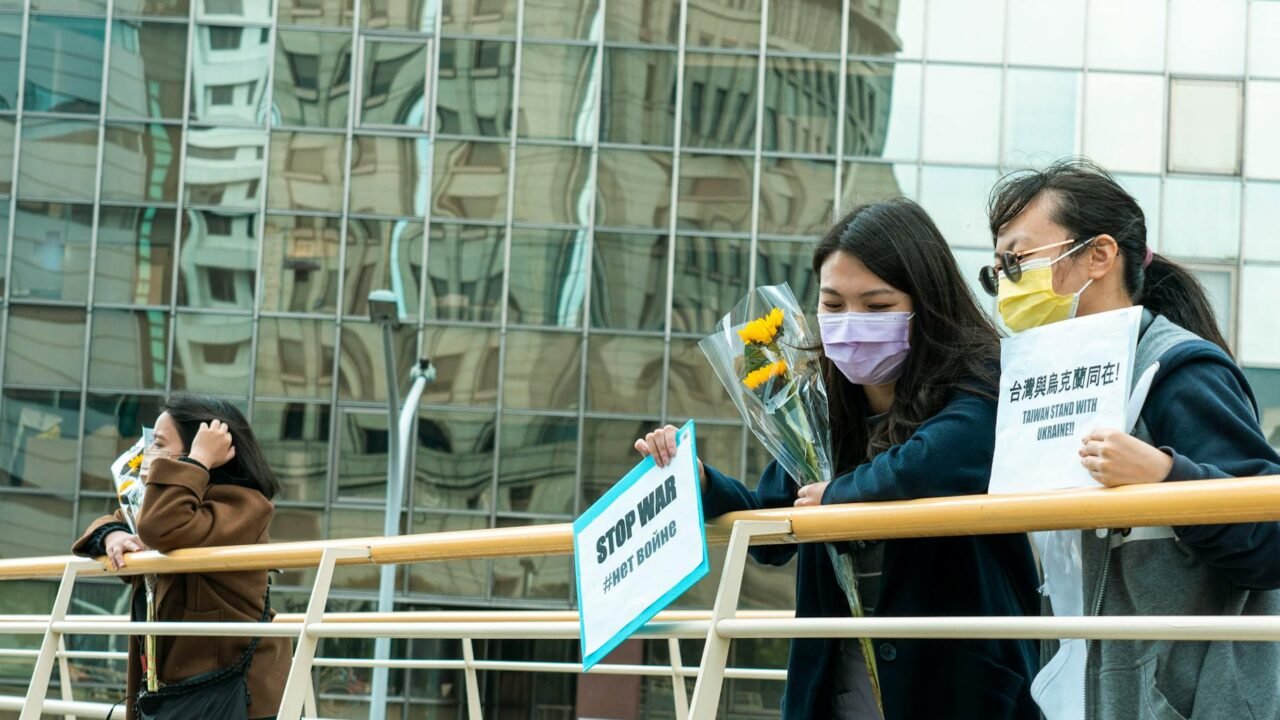
Thousands of demonstrators have taken to the streets across Japan, voicing strong opposition to Prime Minister Sanae Takaichi’s administration’s assertive push to bolster the nation’s military capabilities. The protests highlight a growing public unease about the potential erosion of Japan’s post-war pacifist identity, a cornerstone of its national ethos for decades. At the heart of the controversy is the government’s perceived move away from the strictures of Article 9 of the constitution, which renounces war and the maintenance of armed forces, a stance that has defined Japan’s foreign and security policy since the end of World War II.
The rallies, which have drawn significant crowds in major cities like Tokyo and Osaka, reflect a deep-seated concern among a segment of the Japanese populace that the current leadership is incrementally dismantling the nation’s pacifist framework. Protesters argue that the proposed military expansion, which includes increased defense spending and the acquisition of more advanced weaponry, signals a dangerous departure from the principles that have ensured peace and stability in the region. Information reaching Tahir Rihat suggests that the demonstrations are not merely spontaneous outbursts but are organized by a coalition of civic groups, peace activists, and constitutional scholars who are deeply alarmed by the government’s trajectory. These groups are actively campaigning to raise public awareness and mobilize opposition against what they describe as a fundamental shift in Japan’s national security posture.
Prime Minister Takaichi’s government has defended its defense initiatives as necessary responses to an increasingly volatile geopolitical landscape. Officials point to rising regional tensions and the perceived threat from neighboring countries as justification for strengthening Japan’s self-defense capabilities. They argue that a more robust military is essential to protect national interests and uphold regional security. However, critics contend that these justifications are being used to mask a more ambitious agenda, one that seeks to normalize a more assertive military role for Japan on the international stage. The debate has ignited a vigorous discussion within Japan about the interpretation and future of its pacifist constitution, with legal experts and politicians offering sharply divergent views on the permissible scope of military activities under the existing legal framework.
The protests are also fueled by fears that an enhanced military could lead to Japan’s entanglement in foreign conflicts, a scenario that many Japanese citizens wish to avoid. The memory of World War II and its devastating consequences remains a potent force in shaping public opinion, and many view the current government’s policies as a potential step back towards a more militaristic past. The organizers of the rallies emphasize that their opposition is not to self-defense but to what they perceive as an aggressive rearmament that could jeopardize Japan’s peaceful existence and its carefully cultivated international image. They are calling for a national dialogue on security policy that prioritizes diplomatic solutions and adherence to constitutional principles over military might.
The government’s proposed defense reforms include plans to develop counter-strike capabilities, a move that critics argue crosses a significant threshold from purely defensive measures to offensive potential. This aspect of the policy has been particularly contentious, raising questions about Japan’s commitment to its non-aggressive stance. As per information available with Tahir Rihat, the ongoing public discourse is multifaceted, involving not only political and security considerations but also profound questions about national identity and Japan’s role in the world. The outcome of this debate is likely to have far-reaching implications for both domestic politics and Japan’s international relations in the coming years.
The anti-war movement in Japan has a long history, dating back to the immediate post-war period. However, the current wave of protests appears to be gaining significant momentum, driven by a palpable sense of urgency among those who fear that the window for influencing policy is closing. Activists are employing a range of tactics, from street demonstrations and petition drives to public lectures and online awareness campaigns, all aimed at galvanizing public opinion and pressuring the government to reconsider its course. The sheer scale and persistence of these demonstrations underscore the deep divisions within Japanese society regarding its future security orientation and the interpretation of its unique constitutional legacy. The government, while acknowledging the right to protest, has largely remained resolute in its defense policy objectives, setting the stage for a prolonged and potentially acrimonious debate.
Sources indicate to Tahir Rihat that the international community is closely observing these developments. Japan’s post-war pacifism has been a significant factor in its diplomatic relationships and its contribution to global peace efforts. Any substantial shift in this policy could alter perceptions and potentially reshape regional security dynamics. The government’s narrative of necessity in the face of external threats is being met with skepticism by many who believe that Japan’s economic and diplomatic strengths offer alternative avenues for ensuring its security and influence without resorting to a significant military buildup. The ongoing protests represent a crucial moment in Japan’s post-war history, a testament to the enduring power of its pacifist ideals and the determination of its citizens to safeguard them.

Tahir Rihat (also known as Tahir Bilal) is an independent journalist, activist, and digital media professional from the Chenab Valley of Jammu and Kashmir, India. He is best known for his work as the Online Editor at The Chenab Times.





Leave a Reply