
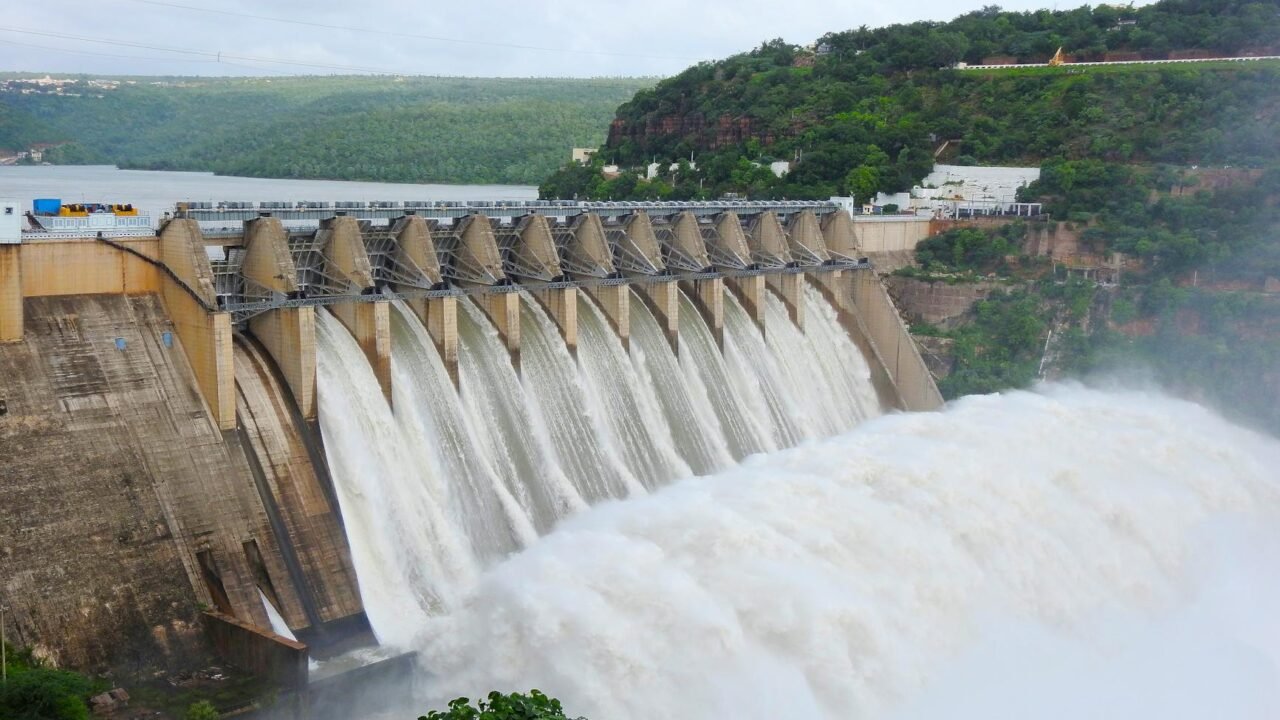
The Indian government is undertaking a massive dam rehabilitation and improvement project, allocating significant resources to modernize its extensive network of dams. The initiative, known as the Dam Rehabilitation and Improvement Programme (DRIP), aims to enhance the safety and operational efficiency of these critical water-management structures across the country. The Jal Shakti Ministry reports that rehabilitation proposals worth Rs 5,053 crore for 191 dams have already received approval. The ministry also noted considerable progress, with major physical rehabilitation work completed on 43 dams as of March 31, 2025.
The second and third phases of DRIP, which were launched in October 2021, encompass a total of 736 dams spread across 19 states and three central agencies. These agencies include the Central Water Commission (CWC), the Bhakra Beas Management Board (BBMB), and the Damodar Valley Corporation (DVC). Information reaching TahirRihat.com suggests that the project reflects India’s commitment to ensuring long-term water security and infrastructure resilience.
Several major dams are slated for safety improvements under the second and third phases of the project. These include the Bhakra Dam in Himachal Pradesh, the Ranjit Sagar Dam in Punjab, NTR Sagar and Nagarjuna Sagar Dams in Telangana, and the Gandhi Sagar Dam in Madhya Pradesh. Other dams earmarked for upgrades are the Kadana Dam in Gujarat, the Jirgo Dam in Uttar Pradesh, the Imphal Barrage in Manipur, the Myntdu Leshka Dam in Meghalaya, and the Silabati Barrage in West Bengal.
The total financial outlay for DRIP-II and III is substantial, amounting to Rs 10,211 crore. Phase-II is budgeted at Rs 5,107 crore, while Phase-III has a budget of Rs 5,104 crore. The ministry stated that external loan assistance will cover Rs 7,000 crore of the total cost, with the remaining Rs 3,211 crore being funded by the participating states and central agencies. The World Bank and the Asian Infrastructure Investment Bank (AIIB) are co-financing the Phase-II scheme.
According to the Jal Shakti Ministry, Phases II and III will span a decade, with each phase lasting six years and overlapping for two years. The project is structured around four key components: the rehabilitation of dams and associated structures, institutional strengthening, revenue-generation measures to support sustainable operation and maintenance, and project management for effective implementation. These components are designed to address the multifaceted challenges of dam management and ensure the long-term viability of these assets.
India’s dam infrastructure is among the largest globally, ranking third in the world with 6,628 specified dams. Of these, 6,545 are operational, and 83 are currently under construction. These dams provide a gross water-storage capacity of approximately 330 billion cubic meters, which is vital for ensuring national food, energy, and water security. The rehabilitation program underscores the importance of maintaining this infrastructure to meet the country’s growing demands.
The Jal Shakti Ministry revealed that more than 26 percent of India’s dams, totaling 1,681 structures, are over 50 years old. This includes 291 dams that are more than a century old. Furthermore, 42 percent of the dams fall within the 25-50 years age bracket. This aging infrastructure necessitates systematic rehabilitation and safety management to mitigate potential risks.
According to an analysis by the CWC of 439 reservoirs, India’s reservoirs have experienced an average loss of 19 percent in gross storage capacity. The annual loss is estimated at 0.74 percent, equivalent to about 1.81 MCM per reservoir per year. The DRIP initiative is crucial for addressing these challenges and ensuring the continued functionality of these reservoirs.
The ministry describes the DRIP as one of the world’s largest dam rehabilitation programs. The initiative reflects India’s move towards a systematic and risk-based approach to dam safety management. The program is being implemented in three phases to enhance the safety and operational performance of existing dams through structural repairs, modernization of spillways and gates, and the installation of advanced monitoring systems.
DRIP Phase-I, which was launched in April 2012 with support from the World Bank, continued until 2021. This phase covered 223 dams across seven states: Jharkhand, Karnataka, Kerala, Madhya Pradesh, Odisha, Tamil Nadu, and Uttarakhand. The program significantly contributed to strengthening dam-safety practices and institutional capacity in the participating states and agencies, the ministry reported.
Under DRIP-I, design flood reviews, dam-health inspections, and the finalization of rehabilitation proposals were completed for all 223 dams. Rehabilitation work was awarded for 144 dams. The first phase focused on the rehabilitation and modernization of dam structures, dam-safety inspections and evaluations, development of emergency action plans (EAPs), and capacity-building and training programs.
One of the major outcomes of DRIP-I was the introduction of the Dam Health and Rehabilitation Monitoring Application (DHARMA), a digital platform for dam-safety monitoring and data management. Digital platforms like DHARMA, along with instrumentation systems and early-warning systems, are enhancing real-time monitoring and data-driven dam-safety management, according to the ministry.
Among the key achievements listed by the ministry are the registration of all 6,628 specified dams on the DHARMA platform, the conduct of approximately 13,000 dam inspections annually with records maintained digitally, and the implementation of rapid risk screening for 5,553 specified dams across the country. The initiative is seen as vital for sustaining the operational life and effectiveness of India’s extensive dam network.

Tahir Rihat (also known as Tahir Bilal) is an independent journalist, activist, and digital media professional from the Chenab Valley of Jammu and Kashmir, India. He is best known for his work as the Online Editor at The Chenab Times.




Leave a Reply