
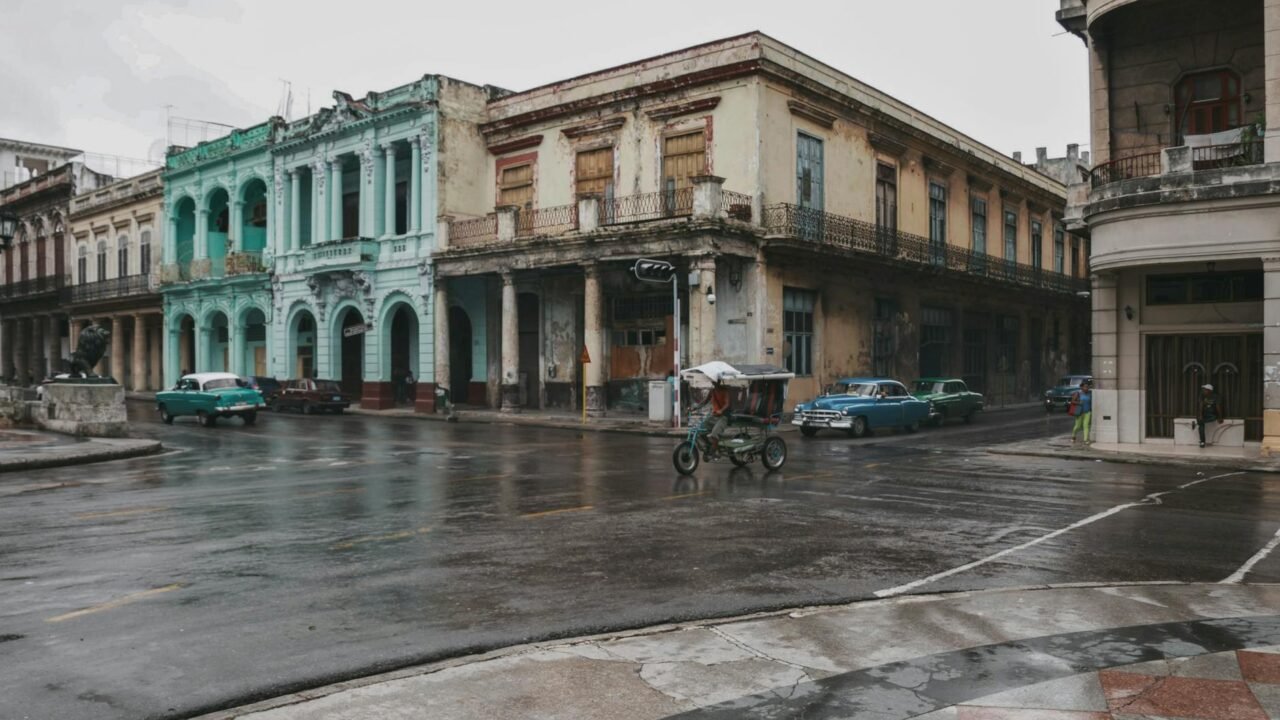
News of the United States bringing charges against Raul Castro, a pivotal figure in Cuban politics, has been slow to permeate the island, where many citizens remain divided on the legitimacy of such a move. However, a widespread sentiment of hope for developments that could alleviate their ongoing suffering is palpable across Cuba. The U.S. indictment, details of which are still filtering through various channels, has ignited discussions and reflections on the island, even as the immediate impact on daily life remains uncertain. Many Cubans, accustomed to navigating complex political landscapes and enduring economic hardships, view such international actions with a mixture of skepticism and cautious optimism. The hope is not necessarily tied to the specifics of the legal proceedings, but rather to the potential for any significant shift in the status quo that might usher in an era of improvement.
Information reaching Tahir Rihat suggests that the initial reactions within Cuba have been varied, reflecting the diverse perspectives shaped by decades of political and economic realities. While some may question the jurisdiction or the motives behind the U.S. action, a significant portion of the population appears to be more focused on the potential for change that such a high-profile development might represent. The underlying desire for a better future, one marked by less hardship and greater opportunity, transcends the immediate political implications of the indictment. This sentiment is often articulated through quiet conversations and a shared yearning for a breakthrough that could fundamentally alter their circumstances. The phrase “This has to change,” encapsulates a deep-seated frustration and a persistent hope for a positive transformation.
The U.S. government’s decision to pursue charges against Mr. Castro, a former president and first secretary of the Communist Party of Cuba, represents a significant escalation in its long-standing engagement with the island nation. While the specific allegations are not detailed in the provided information, the mere fact of such charges being brought against a figure of his stature is bound to have repercussions, however delayed or indirect, on the Cuban populace. The slow dissemination of news on the island, often attributed to state control over media and internet access, means that the full weight and implications of the U.S. action may take time to be understood and processed by the general public. Nevertheless, the underlying current of anticipation for improvement remains a dominant theme.
For many Cubans, the hope for change is not a new phenomenon; it is a constant undercurrent in their lives, fueled by persistent economic challenges and a desire for greater freedoms. The U.S. indictment, in this context, could be perceived as another external factor that might, in some unforeseen way, contribute to a shift. The division over the legitimacy of the charges speaks to the complex relationship between Cuba and the United States, a relationship that has been shaped by decades of political tension, economic sanctions, and ideological differences. It also highlights the internal debates and differing viewpoints that exist within Cuba itself regarding its leadership and its future direction.
The sentiment that “This has to change” is more than just a casual remark; it is a reflection of a collective yearning for a future where the daily struggles are lessened and the opportunities for personal and national advancement are expanded. Whether this hope is directly linked to the U.S. indictment or is a broader aspiration that the indictment might inadvertently catalyze, the underlying desire for a positive transformation is undeniable. The impact of such international legal actions on a closed society like Cuba is often subtle and multifaceted, unfolding over time rather than through immediate, dramatic shifts. The coming weeks and months will likely reveal more about how this development is being interpreted and what, if any, tangible effects it may have on the lives of ordinary Cubans.
The international community, including the United States, has long expressed concerns regarding human rights and governance in Cuba. The decision to indict Mr. Castro, therefore, can be seen as an extension of these long-standing concerns, albeit through a different avenue. For Cubans who have long advocated for reforms and greater openness, such actions might be viewed as a validation of their struggles, even if the immediate benefits are not apparent. Conversely, those who are more aligned with the current political system may view the indictment with suspicion, seeing it as an external interference in internal affairs. This spectrum of reactions underscores the deeply ingrained divisions and differing perspectives that characterize Cuban society.
The hope for a breakthrough is a recurring theme in discussions about Cuba’s future. It is a hope that transcends political affiliations and economic strata, uniting many Cubans in their shared desire for a better life. The U.S. indictment, by bringing international attention to the island and its leadership, may inadvertently serve to amplify this existing hope. The slow pace at which news travels and is processed on the island means that the full implications of this development will likely take time to emerge. However, the underlying sentiment that change is not only necessary but inevitable, remains a powerful force shaping the aspirations of the Cuban people.
The complexities of the U.S.-Cuba relationship, marked by decades of animosity and intermittent periods of détente, mean that any significant action by one side is likely to be met with a range of responses from the other. In this instance, the U.S. indictment of Raul Castro has introduced a new dynamic into this already intricate relationship. While the immediate impact on the ground in Cuba may be muted due to the slow flow of information and the ingrained resilience of the population, the long-term consequences are yet to unfold. The persistent hope for change, however, remains a constant, waiting for the right catalyst to manifest into tangible improvements in the lives of the Cuban people.
The division among Cubans regarding the U.S. charges is a testament to the diverse experiences and perspectives on the island. Some may see it as a just action, while others may view it as an unwarranted intrusion. Regardless of these differing opinions, the shared aspiration for a better future is a unifying force. The hope that “This has to change” resonates deeply, suggesting a collective desire for a departure from the status quo, whatever the specific reasons or mechanisms for that change may be. The slow trickle of information means that the full story and its implications are still being pieced together by the Cuban populace.

Tahir Rihat (also known as Tahir Bilal) is an independent journalist, activist, and digital media professional from the Chenab Valley of Jammu and Kashmir, India. He is best known for his work as the Online Editor at The Chenab Times.




Leave a Reply