
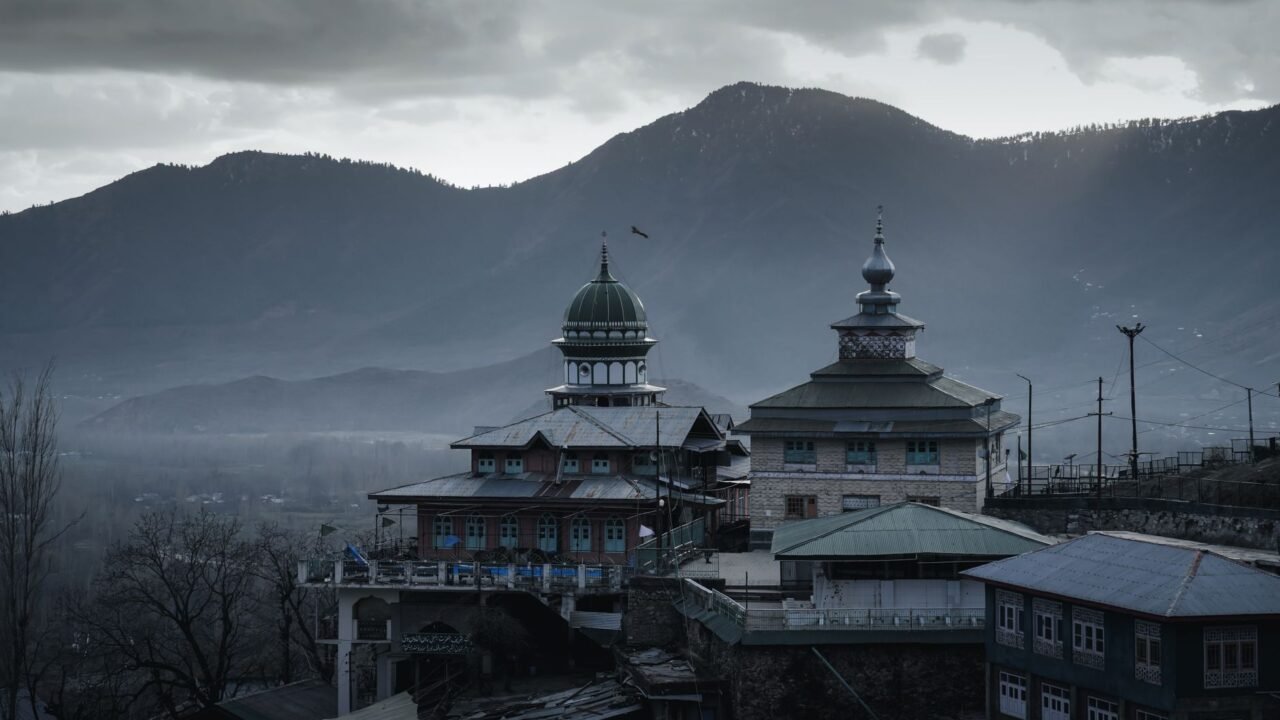
Hundreds of Kashmiri Pandits journeyed to the revered Ragnya Devi temple in Tulmulla, Ganderbal district, to partake in the annual Kheer Bhawani Mela, a significant cultural and religious observance held on the occasion of ‘Jyeshta Ashtami’. The temple, situated amidst the serene shade of chinar trees, was adorned in festive attire as devotees converged from various parts of the country. This year’s gathering, as reported by The Tribune India, saw a substantial turnout, underscoring the enduring spiritual connection of the community to this ancient shrine.
Information reaching TahirRihat.com suggests that a robust security apparatus was in place, encompassing the temple complex and the routes leading to it, ensuring a secure environment for the pilgrims. Devotees, many walking barefoot and carrying offerings of rose petals, moved with fervent devotion towards the main temple. The air resonated with devotional songs emanating from the temple compound, creating an atmosphere of spiritual immersion. The rituals involved paying homage to the goddess, with men participating in a dip in the stream adjacent to the shrine. A central aspect of the observance included offering milk and ‘kheer’ (rice pudding) to the sacred spring within the temple complex, a practice deeply rooted in tradition.
The Kheer Bhawani temple is renowned for its sacred spring, the waters of which are believed by many to prognosticate the future of the Kashmir valley. While most colourations of the water are considered neutral, a black or darkish hue is traditionally interpreted as an omen of inauspicious times. This year, however, the spring’s waters were observed to be clean and milky white, a sight that brought a sense of optimism and peace to the assembled devotees. This visual cue was widely interpreted as a positive sign for the region.
The prayers offered during the Mela were predominantly for peace and brotherhood within the valley. Chinmay Pandita, a devotee from Jammu, shared his sentiments, stating, “A huge number of devotees has arrived for the Mela this year. I prayed that the deity keep everyone happy, safe and let peace be there.” This sentiment was echoed by many, highlighting a collective yearning for tranquility and harmony in Kashmir.
The Mela also served as a powerful testament to the intercommunal harmony in the region. Local residents, predominantly from the Muslim community, extended a warm welcome to the visiting devotees, opening their homes and hearts. Pandita further elaborated on the support received from the local populace, noting, “The locals have always supported the celebrations. There is a tremendous support of the locals at every level. They are very supportive.” This collaborative spirit between communities was a recurring theme, reinforcing the notion of shared heritage and mutual respect.
Mansi, another attendee, expressed her satisfaction with the arrangements made for the Mela. She remarked on the efficacy of the administrative measures, stating, “The administration has made very good arrangements. Security arrangements are top notch. There is deployment at every place. No doubt, there are very good security arrangements, but otherwise also, we did not feel any fear. The atmosphere is very good.” The seamless execution of the event, particularly the security protocols, contributed to a sense of safety and ease for the pilgrims.
Beyond prayers for immediate peace, the community also voiced aspirations for a dignified return to their ancestral homeland, marking an end to what they refer to as their ‘banwas’ (exile). Sanjay Saraf, a prominent local Kashmiri Pandit leader, emphasized the Mela’s historical role as a symbol of Hindu-Muslim amity. “Every Kashmiri waits a year for this Mela. Muslims also wait so that they can see their Pandit brothers. We all pray there is a revival of the true Kashmiriyat,” Saraf was quoted as saying by The Tribune India. His words underscored the deep-seated desire for the resurgence of the unique cultural fabric of Kashmir, characterized by its inclusive spirit.
The Deputy Commissioner of Ganderbal, Jatin Kishore, confirmed that the administration had implemented comprehensive arrangements to ensure the smooth and comfortable stay of all devotees. The successful conduct of the Kheer Bhawani Mela this year, with its emphasis on spiritual solace, intercommunity goodwill, and hopes for a peaceful future, continues to be a significant event in the cultural calendar of Jammu and Kashmir.

Tahir Rihat (also known as Tahir Bilal) is an independent journalist, activist, and digital media professional from the Chenab Valley of Jammu and Kashmir, India. He is best known for his work as the Online Editor at The Chenab Times.

Leave a Reply