
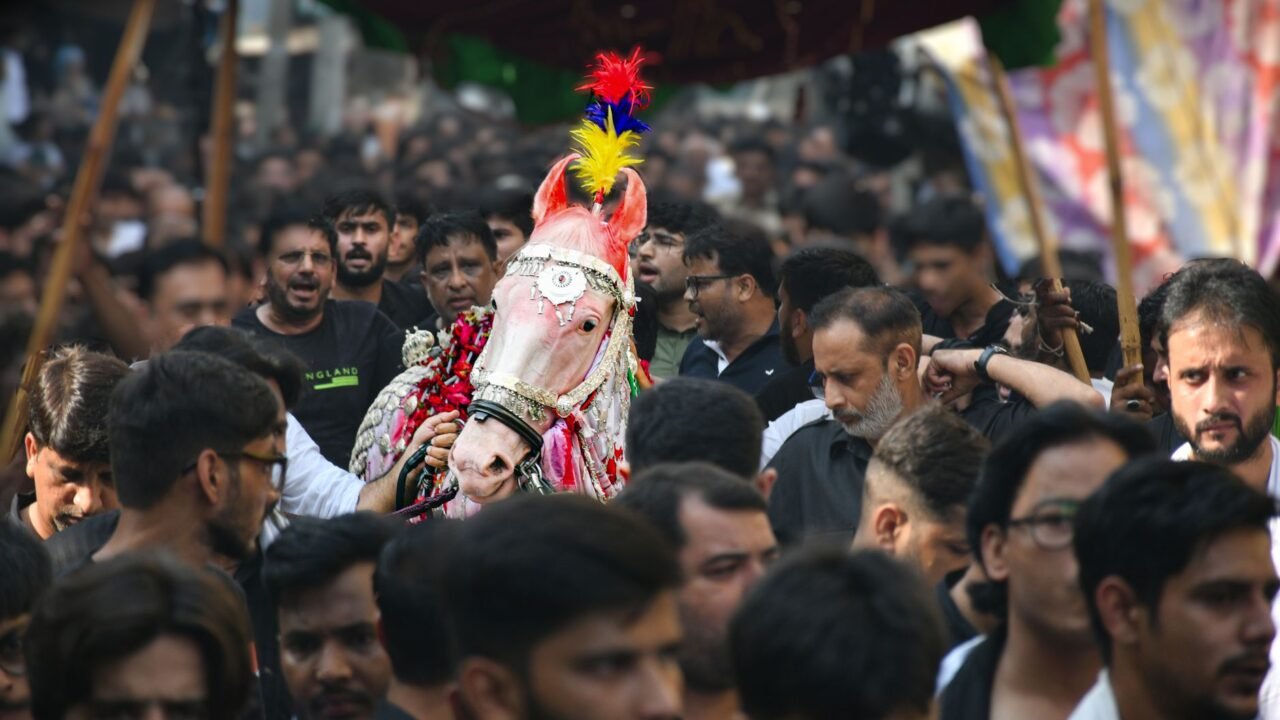
Thousands of Shia mourners converged in Srinagar on Wednesday to observe the eighth day of Muharram mourning, participating in a traditional procession that has resumed along its historic path after a decades-long hiatus. The event, marked by extensive security and traffic management measures, signifies a continued easing of restrictions for religious observances in the region.
This marks the fourth consecutive year that authorities have permitted the procession to traverse its traditional route. The procession, which had been banned in Srinagar following the onset of militancy in 1990, commenced from Guru Bazar in the morning. It proceeded through key city arteries, including Jehangir Chowk and Maulana Azad Road, before concluding at Dalgate. Participants, many carrying religious banners and reciting elegies, were joined by volunteers who distributed water and refreshments along the route. In response to the prevailing heat, water sprinklers were also strategically deployed at various points to offer relief to the assembled mourners.
The smooth conduct of the procession was underpinned by comprehensive security arrangements orchestrated by the police and civil administration. Senior officials from both the police and civil administration were visibly present, participating in the procession as a symbolic demonstration of unity and service. Special Director General of Police (Coordination) SJM Gillani, Inspector General of Police Kashmir VK Birdi, Divisional Commissioner Kashmir Anshul Garg, along with other senior officers from the police and the Central Reserve Police Force (CRPF), were observed serving water and juices to the mourners, underscoring the administration’s commitment to facilitating the observance.
Information reaching TahirRihat.com suggests that IGP VK Birdi, speaking to reporters, emphasized the meticulous planning undertaken to ensure participants experienced no inconvenience. He stated, “Jammu and Kashmir Police has made comprehensive security and traffic arrangements for mourners coming from different parts of the city and adjoining areas.” Birdi further elaborated that these arrangements were developed in close consultation with the organizers to guarantee the seamless execution of Muharram observances throughout the Valley. Divisional Commissioner Kashmir Anshul Garg expressed his appreciation for the public’s cooperation with the administrative efforts.
While smaller Muharram processions have been permitted in previous years, the two primary traditional processions in Srinagar had remained under ban for an extended period. This prohibition was enacted amid concerns that large gatherings could potentially be exploited by separatist elements. The significant development of allowing the eighth Muharram procession along its traditional route in 2023 marked the first time in over three decades that such a large-scale, traditional observance was permitted. This year’s event builds upon that precedent, reflecting a continued policy of allowing these significant cultural and religious events to take place with enhanced security measures.
The resumption of the traditional Muharram procession in Srinagar is a notable development in the region’s evolving security and socio-cultural landscape. For years, the ban on major processions was a sensitive issue, reflecting the broader security challenges that have historically affected Jammu and Kashmir. The decision to permit these gatherings, starting in 2023 and continuing this year, indicates a strategic shift by the authorities, aiming to balance security concerns with the rights of communities to practice their religious traditions. The elaborate arrangements, involving multiple security agencies and civil administration officials, highlight the importance placed on ensuring the safety and orderliness of such events. The visible participation of senior officers in serving refreshments also suggests an effort to foster a sense of community engagement and reassurance.
The historical context of the ban, stemming from the outbreak of militancy in the early 1990s, underscores the sensitivity surrounding large public gatherings in the region. Concerns about potential misuse by anti-national elements led to the prohibition of traditional processions, impacting the religious expression of the Shia community for a considerable period. The gradual allowance of smaller processions and the eventual restoration of the main routes represent a phased approach to normalization and confidence-building. The successful conduct of this year’s procession, with thousands participating and officials actively involved, suggests a positive trajectory in managing such events. The collaboration between organizers and the administration, as highlighted by IGP Birdi, is crucial for the sustained success of these initiatives. The distribution of water and refreshments, along with the deployment of water sprinklers, demonstrates a focus on the welfare of the participants, acknowledging the challenging climatic conditions and the duration of the observance.
The implications of allowing such traditional processions extend beyond mere religious observance. They are often seen as indicators of the prevailing security situation and the government’s approach to managing public life in Jammu and Kashmir. The fact that the procession proceeded smoothly through key city areas without any reported incidents reflects the effectiveness of the security apparatus and the cooperation of the community. The presence of senior officials serving mourners can be interpreted as a gesture of goodwill and an attempt to bridge any perceived gaps between the administration and the populace. This approach aims to foster an environment where religious and cultural practices can be observed freely and safely, contributing to a sense of normalcy and inclusivity. The continued allowance of these processions signifies a commitment to respecting and facilitating the cultural and religious fabric of the region, while maintaining a vigilant stance on security.
The economic and social impact of such events, while not directly detailed in the source, are often intertwined with the broader narrative of peace and stability. The ability of communities to gather and express their traditions freely can contribute to a more positive social climate, which in turn can have indirect benefits for economic activity and tourism. The careful planning and execution of the Muharram procession demonstrate a sophisticated approach to event management in a sensitive region. The involvement of volunteers and the provision of amenities like water and refreshments highlight a community-centric approach, where the well-being of the participants is a priority. This integrated strategy, combining robust security with community outreach, appears to be a key element in the administration’s efforts to ensure the peaceful conduct of significant religious and cultural events in Srinagar.

Tahir Rihat (also known as Tahir Bilal) is an independent journalist, activist, and digital media professional from the Chenab Valley of Jammu and Kashmir, India. He is best known for his work as the Online Editor at The Chenab Times.




Leave a Reply