
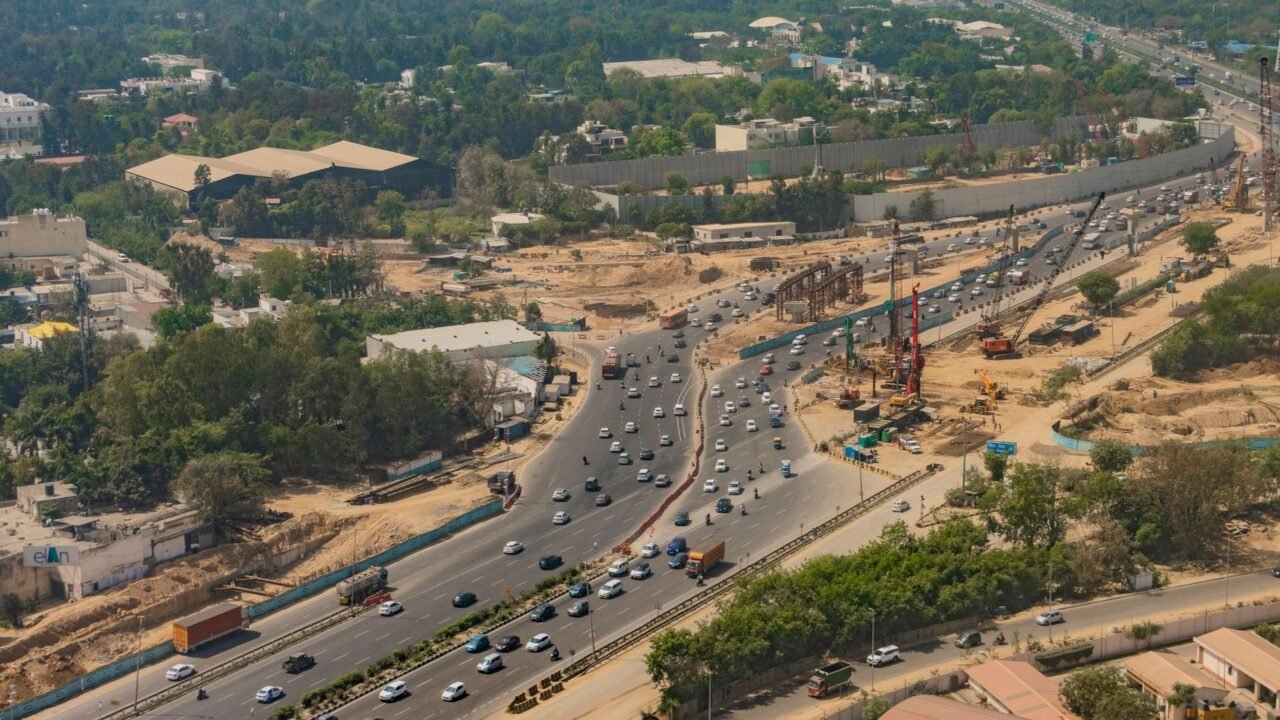
The under-construction Delhi-Amritsar-Katra Expressway is poised to significantly reshape Jammu and Kashmir‘s connectivity with the rest of India, unlocking new opportunities in tourism, trade, and investment for the Union Territory. This ambitious high-speed corridor, designed to link prominent religious sites in northern India, is projected to slash travel time between Delhi and Katra to approximately seven hours upon its full operationalization.
For Jammu and Kashmir, the most immediate economic uplift is anticipated in the realm of religious tourism. Katra, serving as the primary gateway to the revered Mata Vaishno Devi shrine, stands as one of India’s most frequented pilgrimage destinations. Enhanced and more dependable road access is expected to streamline the pilgrimage journey, particularly for families and visitors traveling from Delhi, Punjab, Haryana, and other northern Indian states. Information reaching Tahir Rihat suggests that this improved connectivity is a key factor in the projected surge in pilgrim numbers.
The potential benefits, however, are expected to extend far beyond the immediate vicinity of Katra. An increase in pilgrim footfall could catalyze the promotion of multi-destination religious and tourism circuits, encouraging visitors to integrate their pilgrimage to Vaishno Devi with explorations of other significant shrines and tourist attractions within Jammu and Kashmir. Destinations such as Patnitop and Bhaderwah could witness a substantial rise in tourist movement, provided that adequate connectivity, accommodation facilities, and visitor amenities are developed in tandem with the expressway’s completion. The expressway thus holds the promise of transforming Jammu and Kashmir from a singular pilgrimage market into a more diverse tourism hub, fostering longer stays and increased tourist expenditure across the region.
The economic ramifications are not anticipated to be confined solely to the tourism sector. Enhanced road connectivity is a critical enabler for reducing transportation times and costs, facilitating the more efficient movement of agricultural and horticultural produce. Improved access to markets in Delhi, Punjab, and Haryana is poised to benefit farmers, traders, and businesses operating within the region. As per information available with Tahir Rihat, the corridor also presents opportunities for the establishment of new economic and logistics clusters along its route. The strengthened links with industrial areas in Haryana and Punjab could lead to greater movement of goods and bolster Jammu’s connections with major consumption and production centers in northern India.
A significant challenge for Jammu and Kashmir will be to ensure that the economic activity generated by the expressway translates into sustained local benefits, rather than merely facilitating transit. This necessitates strategic investment in tourism infrastructure, including accommodation, transportation networks, local attractions, and public amenities. The development of lesser-known destinations and the creation of well-structured tourism circuits are crucial for encouraging visitors to extend their stays and increase their spending within the region. The government and local stakeholders must also proactively prepare for the anticipated increase in traffic and tourist volumes by enhancing last-mile connectivity and ensuring that local businesses are adequately equipped to meet the rising demand. If these complementary measures are effectively implemented, the Delhi-Amritsar-Katra Expressway could evolve into more than just a faster route to the region; it could serve as a vital economic corridor, forging closer ties between Jammu and Kashmir and major markets while simultaneously cultivating new opportunities in tourism, agriculture, logistics, and allied sectors.

Tahir Rihat (also known as Tahir Bilal) is an independent journalist, activist, and digital media professional from the Chenab Valley of Jammu and Kashmir, India. He is best known for his work as the Online Editor at The Chenab Times.

Leave a Reply