
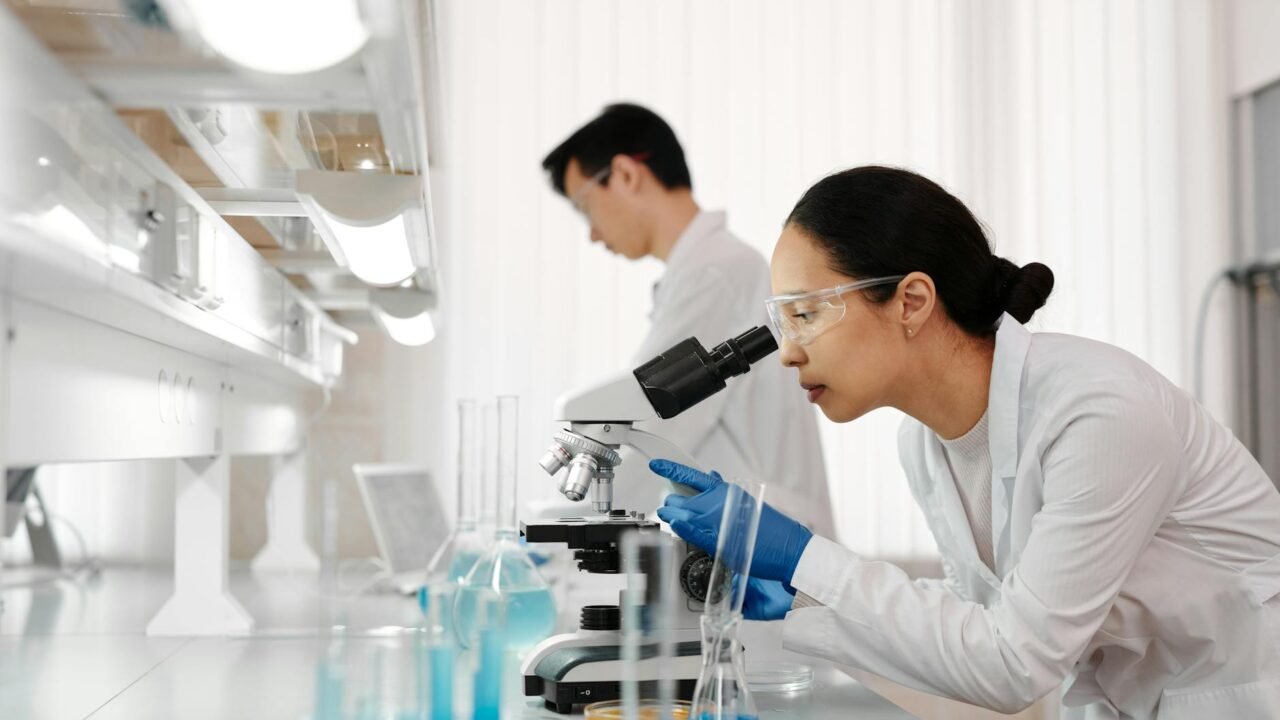
India is charting an ambitious course towards a bio-economy projected to reach a staggering $1 trillion by 2047, a vision articulated by Union Minister of State Dr. Jitendra Singh. This forward-looking projection underscores a strategic pivot towards a biology-led economic model, positioning India at the forefront of global scientific and technological advancement in the 21st century. The nation is actively cultivating comprehensive technological capabilities, spanning from genetic research to quantum computing and from deep-sea exploration to space ventures. This expansive reach is bolstered by a series of significant policy reforms, robust institutional frameworks, and a burgeoning innovation ecosystem that is rapidly expanding its influence.
Dr. Jitendra Singh, who holds independent charge for Science & Technology and Earth Sciences, among other portfolios, delivered the keynote address at an international conference held at IIT Roorkee. The event, themed “Vision 2047: Prosperous and Great Bharat 2.0,” was jointly organized by IIT Roorkee and Swadeshi Shodh Sansthan, attracting participation from over 100 institutions both within India and internationally. Among the distinguished attendees were IIT Roorkee Director Prof. K.K. Pant and Padma Shri awardee Shridhar Vembu. Information reaching TahirRihat.com suggests that the conference’s agenda, which encompassed critical areas such as employment generation, economic growth, scientific leadership, environmental sustainability, national security, and global cooperation, reflects a holistic national transformation strategy. This strategy is deeply rooted in Prime Minister Narendra Modi’s overarching vision of Viksit Bharat 2047, which emphasizes an development pathway that harmonizes economic progress with deeply ingrained ethical values, guided by the ancient principle of “Arthasya Moolam Dharmam,” meaning the root of wealth is righteousness.
A cornerstone of this ambitious bio-economy drive is the recently approved BioE3 Policy (Biotechnology for Economy, Environment and Employment) in 2024. This policy is heralded as a pivotal step towards fostering bio-manufacturing-led growth, aiming to create a virtuous cycle of economic expansion, environmental stewardship, and job creation. The transformative impact of this policy is already evident in the remarkable growth of India’s bio-economy, which has surged from a modest $10 billion in 2014 to over $165 billion in the present day. This represents an impressive annual growth rate of nearly 18%, with an intermediate target set at $300 billion by 2030. The entrepreneurial spirit within the biotech sector has also seen an exponential rise, with the number of biotech startups escalating from approximately 50 to over 11,000. To further catalyze this growth, the government has established the Anusandhan National Research Foundation (ANRF) with a substantial corpus of Rs 50,000 crore. Additionally, a dedicated Rs 1 lakh crore Research, Development and Innovation (RDI) Fund has been instituted to provide long-term, low-cost financing crucial for nurturing deep-tech innovations. These initiatives signal a strong governmental commitment to fostering a conducive environment for scientific research and commercial application.
Dr. Jitendra Singh also highlighted a series of significant scientific breakthroughs achieved by India in recent years, showcasing the nation’s growing prowess in cutting-edge research. These advancements include substantial progress in the Genome India project, the indigenous development of CAR-T cell therapy, a revolutionary approach to cancer treatment, and the successful development of mRNA vaccine platforms, mirroring global advancements in vaccine technology. India has also developed its first indigenously produced antibiotic, a critical step in combating antimicrobial resistance. The establishment of a National Biobank is set to enhance research capabilities by providing a centralized repository of biological samples. Furthermore, innovative space biotechnology experiments conducted in collaboration with the Indian Space Research Organisation (ISRO) demonstrate India’s expanding footprint in space-based research. The minister also pointed to the expansion of nuclear medicine facilities, which are crucial for delivering affordable cancer care across the country, and the ambitious deep ocean exploration missions, such as the Samudrayaan project, aimed at uncovering the mysteries of the oceanic depths.
In the realm of emerging technologies, India has made significant strides, with the National Quantum Mission achieving key milestones ahead of its projected timeline. This rapid progress has propelled India into the top global ranks across several critical technology domains. The nation’s commitment to innovation is further reflected in its improved ranking on the Global Innovation Index, which has climbed from 81 to 39. This upward trajectory is supported by a substantial increase in research and development expenditure, which has more than doubled over the past decade, underscoring a sustained national priority placed on science and innovation as drivers of economic and societal progress. The integration of these diverse scientific and technological advancements is expected to propel India towards its ambitious bio-economy goals, solidifying its position as a global leader in the 21st century.

Tahir Rihat (also known as Tahir Bilal) is an independent journalist, activist, and digital media professional from the Chenab Valley of Jammu and Kashmir, India. He is best known for his work as the Online Editor at The Chenab Times.






Leave a Reply