
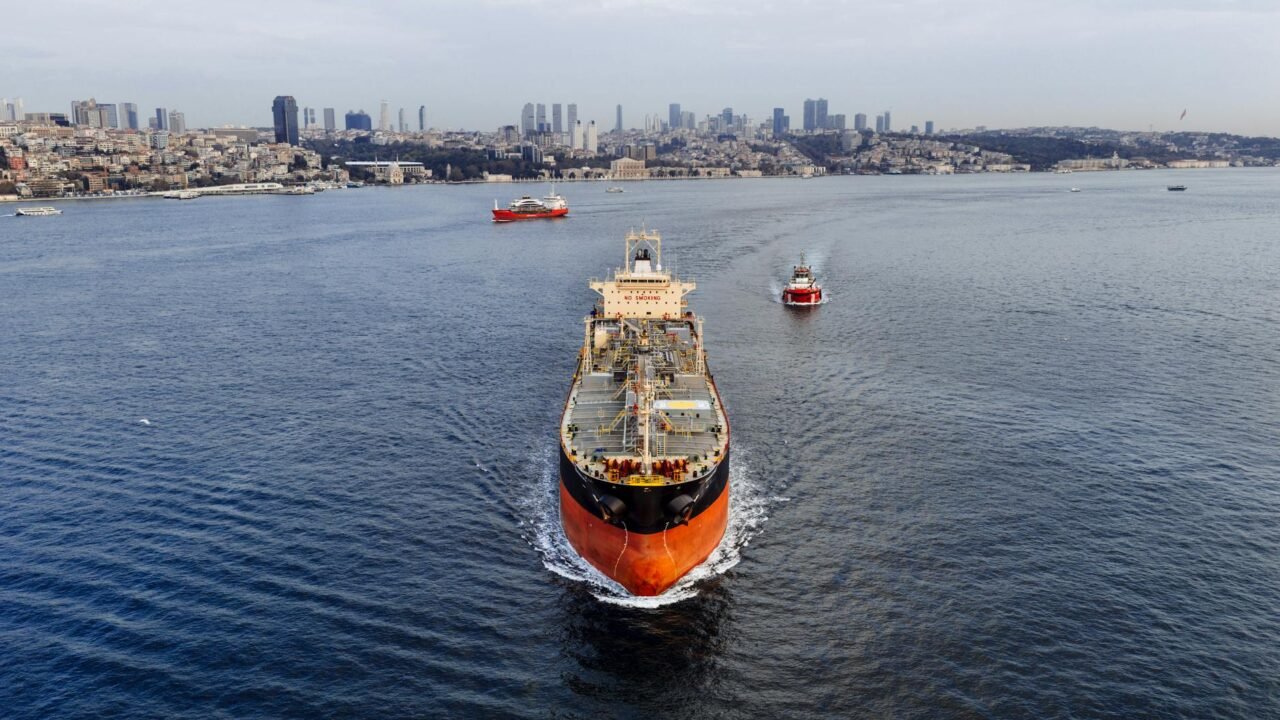
Iran has put forth a new proposal that centers on opening the vital Strait of Hormuz to shipping traffic and lifting the United States blockade, while deferring the more contentious nuclear issue to a later date. This latest offer was delivered on Sunday, signaling a potential shift in diplomatic strategy as tensions remain high in the region.
The proposal, details of which are still emerging, aims to address immediate concerns regarding maritime security and trade flow through one of the world’s most critical chokepoints. By prioritizing the reopening of the strait and the removal of blockades, Tehran appears to be seeking a tangible step towards de-escalation that could yield immediate benefits for global commerce and regional stability. This approach suggests a strategic move to gain leverage or to test the resolve of international partners by presenting a seemingly more manageable set of demands.
Information reaching TahirRihat.com suggests that the Iranian leadership views this phased approach as a more pragmatic path forward, believing that resolving the nuclear dispute, a complex and deeply entrenched issue, could be more effectively tackled once a foundation of trust and cooperation has been established through the resolution of immediate logistical and security concerns. The success of such a strategy, however, will likely depend on the willingness of other parties to engage with the proposal and to reciprocate with concessions.
The Strait of Hormuz, a narrow waterway connecting the Persian Gulf to the Gulf of Oman, is crucial for the global oil supply, with a significant percentage of the world’s crude oil passing through it daily. Any disruption to shipping in this area can have immediate and far-reaching economic consequences, impacting global energy markets and international trade. Iran’s offer to ensure its unimpeded passage, therefore, carries substantial weight in the current geopolitical climate.
The postponement of the nuclear talks, a subject that has been a focal point of international diplomacy for years, indicates a potential recalibration of Iran’s negotiating priorities. The nuclear issue involves intricate technical and political challenges, including the extent of uranium enrichment, the verification of nuclear activities, and the lifting of sanctions. By suggesting a delay, Iran might be seeking to create breathing room, perhaps to reassess its negotiating position or to gauge the international community’s reaction to its more immediate offer. This could also be a tactic to apply pressure, suggesting that progress on other fronts is contingent upon addressing their current concerns.
The implications of this proposal are significant for regional security dynamics. The lifting of a U.S. blockade, as mentioned in the offer, would represent a substantial concession from the American side and could be interpreted as a move towards easing the economic and political pressure exerted on Iran. The specifics of such a blockade and its removal would need to be clarified, but the mention of it in Iran’s proposal highlights a key area of contention that the country wishes to see resolved.
Analysts are closely watching the international response to this Iranian initiative. The United States and its allies have consistently raised concerns about Iran’s nuclear program and its regional activities. Whether this new proposal will be met with constructive engagement or skepticism remains to be seen. The success of the plan hinges on the perception of its sincerity and the willingness of all parties to engage in good-faith negotiations on both the immediate issues and the long-term nuclear concerns. The intricate balance of power and interests in the Middle East means that any diplomatic breakthrough requires careful navigation and a commitment to multilateral dialogue.
The Iranian government has, in the past, used such proposals as a means to influence international discourse and to demonstrate a willingness to engage in diplomacy, even amidst heightened tensions. The timing of this offer, as reported by The New York Times, could be strategic, potentially aiming to capitalize on specific moments in the international political calendar or to respond to evolving regional or global events. The effectiveness of this strategy will ultimately be measured by the tangible outcomes it produces and its impact on the broader geopolitical landscape.
The complexities of the nuclear issue are well-documented, involving extensive negotiations over Iran’s uranium enrichment capabilities, the potential for weaponization, and the stringent verification mechanisms required by international bodies. These discussions have often been protracted, marked by periods of intense negotiation followed by stalemates. By proposing to set aside these thorny issues for a later time, Iran may be attempting to simplify the immediate diplomatic agenda and to build momentum through the resolution of more readily addressable problems, such as maritime security and trade blockades.
The Strait of Hormuz has been a focal point of geopolitical tension for decades, with various incidents and threats impacting its stability. Iran’s control over the northern coast and its strategic position make it a critical element in regional power dynamics. Any agreement that ensures its free passage would be a significant development, potentially easing anxieties for global energy consumers and shipping companies alike. The mention of lifting a U.S. blockade, if interpreted as a broader easing of economic sanctions or restrictions, could also have a profound impact on Iran’s economy and its international relations.
The international community, particularly the P5+1 (the five permanent members of the UN Security Council plus Germany) and other key players, will need to carefully assess the implications of Iran’s proposal. The dual-track approach, focusing on immediate practicalities while deferring the more challenging nuclear question, presents a novel diplomatic pathway. The success of this strategy will depend on the degree of trust that can be built and the willingness of all sides to engage in a constructive and patient dialogue, recognizing that lasting solutions often require a step-by-step approach.

Tahir Rihat (also known as Tahir Bilal) is an independent journalist, activist, and digital media professional from the Chenab Valley of Jammu and Kashmir, India. He is best known for his work as the Online Editor at The Chenab Times.




Leave a Reply