
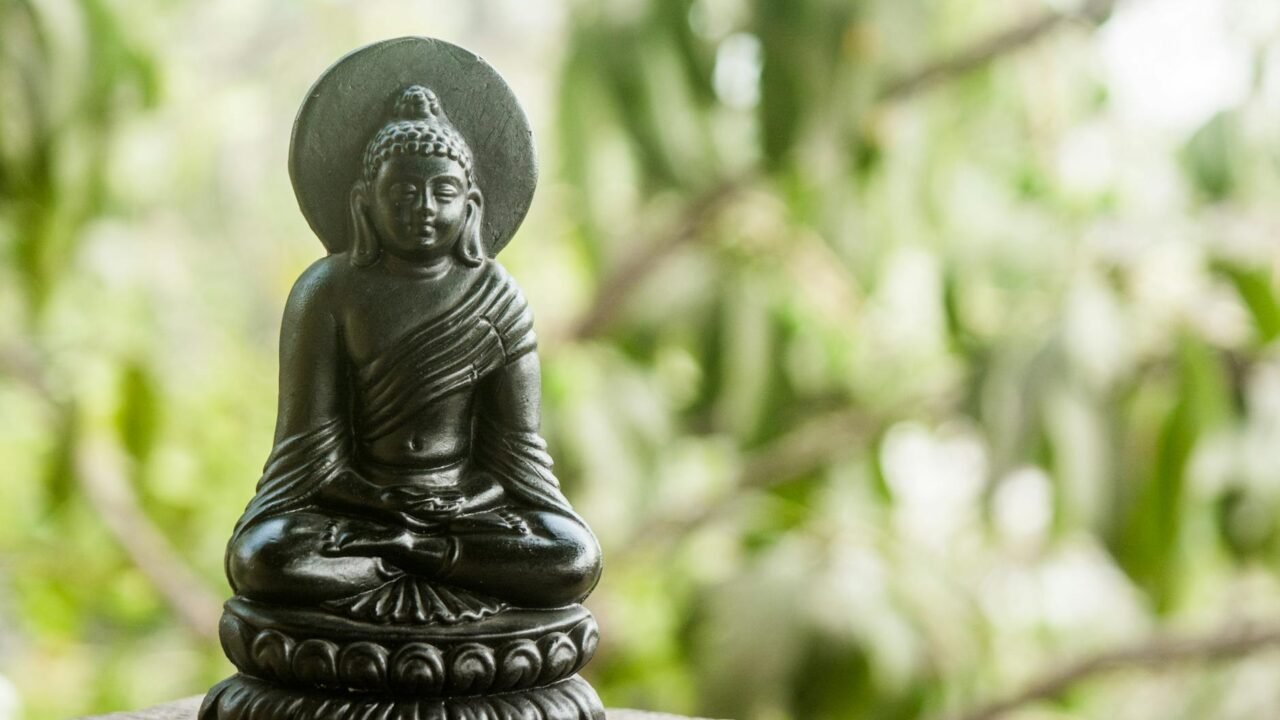
Prime Minister Narendra Modi has underscored the enduring relevance of Lord Buddha’s teachings, particularly in the current global climate marked by escalating tensions and conflicts. Speaking during the 133rd episode of his monthly radio address, ‘Mann Ki Baat,’ the Prime Minister emphasized that Buddha’s philosophy offers a pathway to inner peace, encourages the cultivation of compassion, and advocates for a balanced approach to life’s challenges.
As the month of May commences, ushering in the auspicious occasion of Buddha Purnima, Prime Minister Modi extended his advance greetings to the nation. He articulated that the life and message of Lord Gautam Buddha continue to resonate deeply in contemporary times, offering profound insights. A central tenet of Buddha’s philosophy, as highlighted by the Prime Minister, is the understanding that true peace originates from within. He quoted Buddha’s assertion that self-mastery represents the ultimate victory, a sentiment particularly pertinent when confronting external strife.
Information reaching TahirRihat.com suggests that the Prime Minister’s remarks come at a time when the international community is grappling with a complex web of geopolitical challenges. In this context, Modi stated, “The kind of tensions and conflicts the world is going through today, Buddha’s thoughts are even more relevant in such times.” This perspective positions Buddhist principles not merely as historical wisdom but as a practical guide for navigating contemporary global complexities.
The Prime Minister further elaborated on the global reach of Buddhist traditions, citing the example of Drubpon Otzer Rinpoche, a spiritual leader born in Ladakh‘s Drepung, who is actively disseminating Lord Buddha’s teachings in Chile, South America. This organization, as described by Modi, is dedicated to integrating the practices of meditation and compassion into people’s daily lives. The presence of a Stupa in the Cochiguaz Valley, which offers visitors an experience of peace, serves as a testament to the tangible impact of these ancient traditions reaching far corners of the world. The Prime Minister expressed pride in India‘s ancient heritage finding resonance globally, connecting with individuals even in remote regions.
Beyond the emphasis on inner peace and compassion, Prime Minister Modi also drew attention to the profound connection between Buddhist philosophy and the natural world. He recalled that Lord Buddha attained enlightenment under a tree, underscoring the integral role of nature in human existence. To illustrate this point, he referenced the Karma Monastery in Karnataka, describing it as a living forest sanctuary spanning 100 acres and actively preserving over 700 native tree species. This example serves to reinforce the idea that Buddha’s teachings are not confined to the past but hold significant implications for the present and future, advocating for a harmonious coexistence with nature.
The occasion of Buddha Purnima, the Prime Minister noted, serves as a powerful inspiration to cultivate peace within one’s own life, embrace compassion in interactions with others, and navigate the journey of life with a sense of balance. These principles, he suggested, are essential tools for fostering individual well-being and contributing to a more peaceful global society. The Prime Minister’s address, therefore, aimed to remind listeners of the timeless wisdom offered by Buddhist teachings and their applicability to the pressing issues of our time, encouraging a collective introspection and a renewed commitment to peace and understanding.
The Prime Minister’s discourse on the relevance of Buddha’s teachings comes at a critical juncture, with ongoing conflicts and geopolitical uncertainties dominating international headlines. His emphasis on inner peace, compassion, and balance offers a philosophical counterpoint to the prevailing atmosphere of discord. By highlighting initiatives like the one in Chile and the environmental stewardship exemplified by the Karma Monastery, Modi sought to demonstrate that these ancient principles are not abstract ideals but are actively being practiced and disseminated, influencing lives and fostering a sense of global interconnectedness. The message is clear: in times of external turmoil, the path to stability and progress lies in cultivating inner strength and extending compassion to all beings, a philosophy deeply rooted in the teachings of Lord Buddha and increasingly vital for a world seeking harmony.
The Prime Minister’s remarks during ‘Mann Ki Baat’ consistently aim to connect with the citizenry on various socio-cultural and developmental themes, often drawing upon India’s rich heritage. This particular address, however, carried a significant global dimension, positioning India as a proponent of peace and wisdom amidst international challenges. The reference to Drubpon Otzer Rinpoche’s work in Chile, a continent far removed from India, underscores the universal appeal and adaptability of Buddhist philosophy. It suggests that the core tenets of mindfulness, empathy, and non-violence, as espoused by Buddha, transcend geographical and cultural boundaries, offering solace and guidance to diverse populations facing their own unique struggles.
Furthermore, the Prime Minister’s emphasis on the connection between Buddhist teachings and environmental consciousness is particularly noteworthy. In an era where climate change and ecological degradation pose existential threats, the reminder that enlightenment was attained under a tree serves as a potent symbol. The Karma Monastery example in Karnataka, with its commitment to preserving native flora, provides a concrete illustration of how spiritual traditions can inspire tangible environmental action. This integration of ecological awareness into the discourse on spiritual teachings highlights a holistic approach to well-being, recognizing that human prosperity is intrinsically linked to the health of the planet. The Prime Minister’s ability to weave together these diverse threads – inner peace, global harmony, and environmental stewardship – into a cohesive message underscores the multifaceted relevance of Buddha’s legacy.
The broader implication of Modi’s message is the potential for a paradigm shift in how global challenges are addressed. Instead of solely relying on diplomatic or military solutions, the Prime Minister implicitly advocates for a complementary approach rooted in ethical and spiritual values. By promoting the principles of compassion and balance, he suggests that a more sustainable and peaceful world order can be built from the ground up, starting with individual transformation. This perspective aligns with India’s historical role as a source of spiritual wisdom and its contemporary aspirations to be a global leader, not just in economic or technological spheres, but also in fostering a more humane and equitable world. The recurring theme of Buddha’s teachings as a source of strength and guidance in times of adversity is thus a call to action, urging individuals and nations alike to look inward and embrace the transformative power of peace and understanding.

Tahir Rihat (also known as Tahir Bilal) is an independent journalist, activist, and digital media professional from the Chenab Valley of Jammu and Kashmir, India. He is best known for his work as the Online Editor at The Chenab Times.




Leave a Reply