
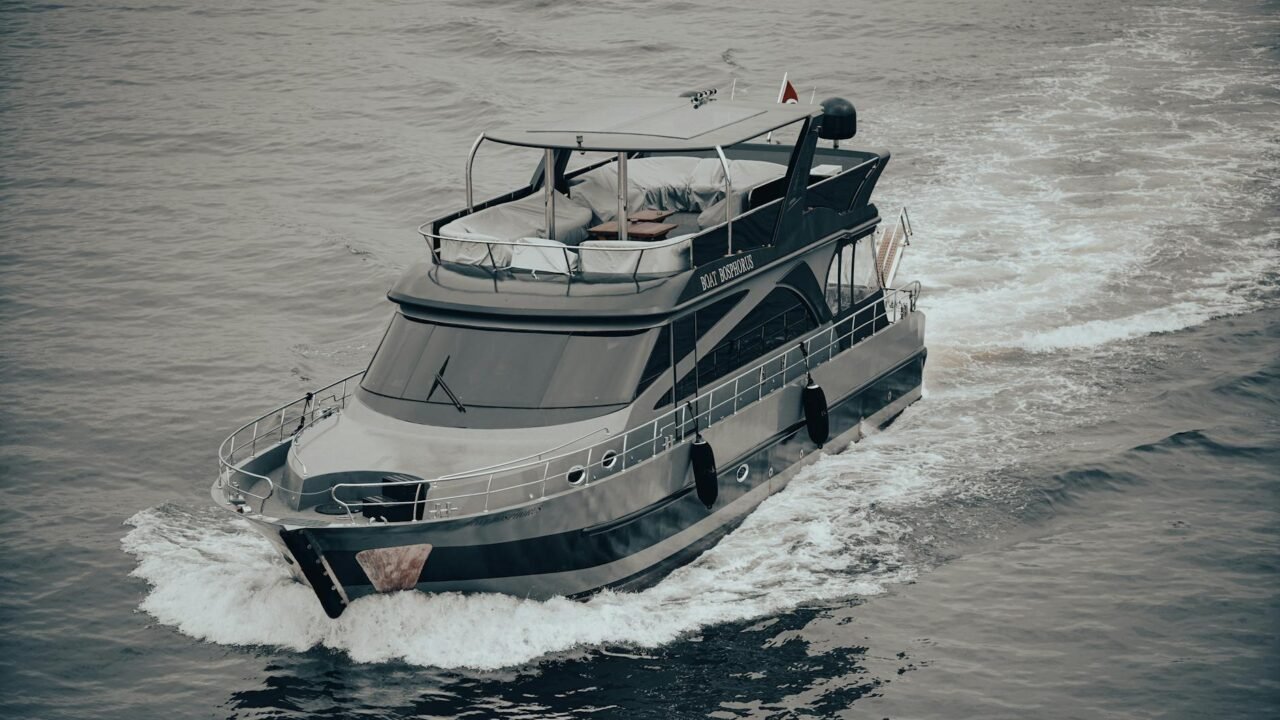
The colossal luxury yacht Nord, a vessel measuring an impressive 464 feet in length, has been observed traversing the vital Strait of Hormuz. This waterway, a critical chokepoint for global oil shipments and maritime traffic, has become a focal point of geopolitical tensions. The presence of the Nord in these strategic waters is drawing significant attention due to its apparent association with Aleksei A. Mordashov, a prominent Russian steel magnate. Mr. Mordashov is currently subject to stringent sanctions imposed by both the United States and European nations, a measure enacted in response to geopolitical events.
Information reaching TahirRihat.com suggests that the Nord, a symbol of immense wealth and a testament to opulent maritime engineering, has been navigating international waters under a cloud of sanctions. The vessel’s journey through the Strait of Hormuz, a narrow waterway connecting the Persian Gulf to the Gulf of Oman, is particularly noteworthy. This maritime passage is not only crucial for the global energy market but also serves as a significant artery for international trade. The fact that a vessel linked to an individual under comprehensive sanctions is transiting such a sensitive area raises questions about the effectiveness and enforcement of these international punitive measures.
The Nord is a superyacht of considerable scale, featuring amenities and design that reflect the significant financial resources of its owner. Its passage through the Strait of Hormuz is not merely a routine maritime movement; it is an event that underscores the complex interplay between international finance, sanctions regimes, and the global movement of assets belonging to individuals targeted by these measures. The implications of such a transit are multifaceted, potentially touching upon issues of maritime law, the enforcement of sanctions, and the broader geopolitical landscape in the Middle East.
Aleksei A. Mordashov, the individual reportedly linked to the Nord, is a figure of considerable influence within the Russian business and industrial sector. His primary business interests lie in steel production, a sector that has been a cornerstone of Russia’s industrial might. The sanctions imposed upon him are part of a broader international effort to exert economic pressure, aiming to influence policy and behavior on the global stage. The presence of his yacht in a high-traffic, strategically important waterway like the Strait of Hormuz, while under these sanctions, presents a complex scenario for international observers and enforcement agencies.
The Strait of Hormuz has historically been a region of heightened geopolitical sensitivity. Its narrowest point is only 21 nautical miles wide, with shipping lanes in each direction being just two miles wide. This geographical constraint makes it an easily defensible or blockadable chokepoint, a fact that has led to frequent naval patrols and international monitoring. Any unusual activity within the strait, especially involving vessels linked to sanctioned individuals or entities, is therefore subject to intense scrutiny. The Nord’s transit adds another layer to the ongoing narrative of international relations and the challenges of enforcing economic sanctions in a globalized world.
The journey of the Nord through the Strait of Hormuz highlights the intricate ways in which sanctioned individuals and their assets continue to move across international borders. It raises questions about the efficacy of sanctions when such large and visible assets can still traverse critical global maritime routes. The vessel’s movement is being closely watched by maritime authorities and intelligence agencies, as it represents a tangible link between sanctioned wealth and the global commons. The continued operation and movement of such assets can be seen as a challenge to the stated objectives of the sanctions regimes, prompting discussions about potential loopholes or the need for more robust enforcement mechanisms.
The steel industry, in which Mr. Mordashov holds significant interests, is a foundational element of many national economies, impacting sectors from construction to manufacturing. The sanctions against him are designed to curtail his financial capacity and, by extension, the economic power of the entities he controls. However, the ability of his personal assets, such as the Nord, to continue operating and moving through international waters suggests a degree of resilience or adaptability in circumventing the full impact of these restrictions. This situation is not unique to Mr. Mordashov; many individuals and entities under sanctions explore various avenues to maintain access to and control over their global assets.
The broader implications of this event extend to the ongoing efforts by international bodies and national governments to maintain global security and stability. The enforcement of sanctions is a key tool in diplomatic and economic statecraft, used to deter aggression, compel compliance with international law, and penalize illicit activities. When a vessel of this magnitude, linked to a sanctioned individual, navigates a critical global chokepoint, it inevitably sparks debate about the effectiveness of these tools and the strategies employed to ensure their compliance. The maritime domain, with its vast expanses and complex legal frameworks, presents unique challenges for such enforcement efforts.
The Strait of Hormuz is not only a conduit for oil but also a critical route for container ships and other forms of commercial transport. Any disruption or perceived threat to the free flow of navigation in this strait can have immediate and far-reaching economic consequences, affecting supply chains and consumer prices worldwide. The presence of a sanctioned superyacht in this sensitive area, while not directly posing a threat to commercial traffic, serves as a visual reminder of the complex geopolitical currents at play in the region and the global reach of financial sanctions.
The Nord’s journey is emblematic of a larger trend where the assets of wealthy individuals, particularly those targeted by international sanctions, are often highly mobile and can be moved across jurisdictions with relative ease, provided the necessary logistical and legal arrangements are in place. The superyacht industry itself is a global enterprise, with vessels frequently moving between ports and cruising grounds across different continents. This inherent mobility of luxury assets presents a continuous challenge for authorities seeking to track and control their movement, especially when those movements intersect with areas of strategic importance or geopolitical sensitivity.
The United States and its allies have consistently sought to tighten the noose on Russian oligarchs and their assets as a means of pressuring Moscow. The effectiveness of these measures is often debated, with proponents arguing that they inflict significant economic pain and isolate targeted individuals, while critics point to the difficulties in full enforcement and the potential for circumvention. The transit of the Nord through the Strait of Hormuz will likely fuel further discussion on these points, as it provides a concrete example of a high-profile asset associated with a sanctioned individual operating in a globally significant maritime zone.
The ongoing monitoring of vessels like the Nord is a critical component of international security and economic intelligence. Maritime tracking services and satellite imagery provide valuable data on the movements of ships, allowing authorities to observe patterns and identify potential violations of sanctions or other international regulations. The information gathered from these observations is crucial for informing policy decisions and diplomatic efforts aimed at maintaining global stability and enforcing international norms. The Nord’s passage is, therefore, not just a nautical event but a data point in the complex tapestry of international sanctions and geopolitical maneuvering.

Tahir Rihat (also known as Tahir Bilal) is an independent journalist, activist, and digital media professional from the Chenab Valley of Jammu and Kashmir, India. He is best known for his work as the Online Editor at The Chenab Times.


Leave a Reply