
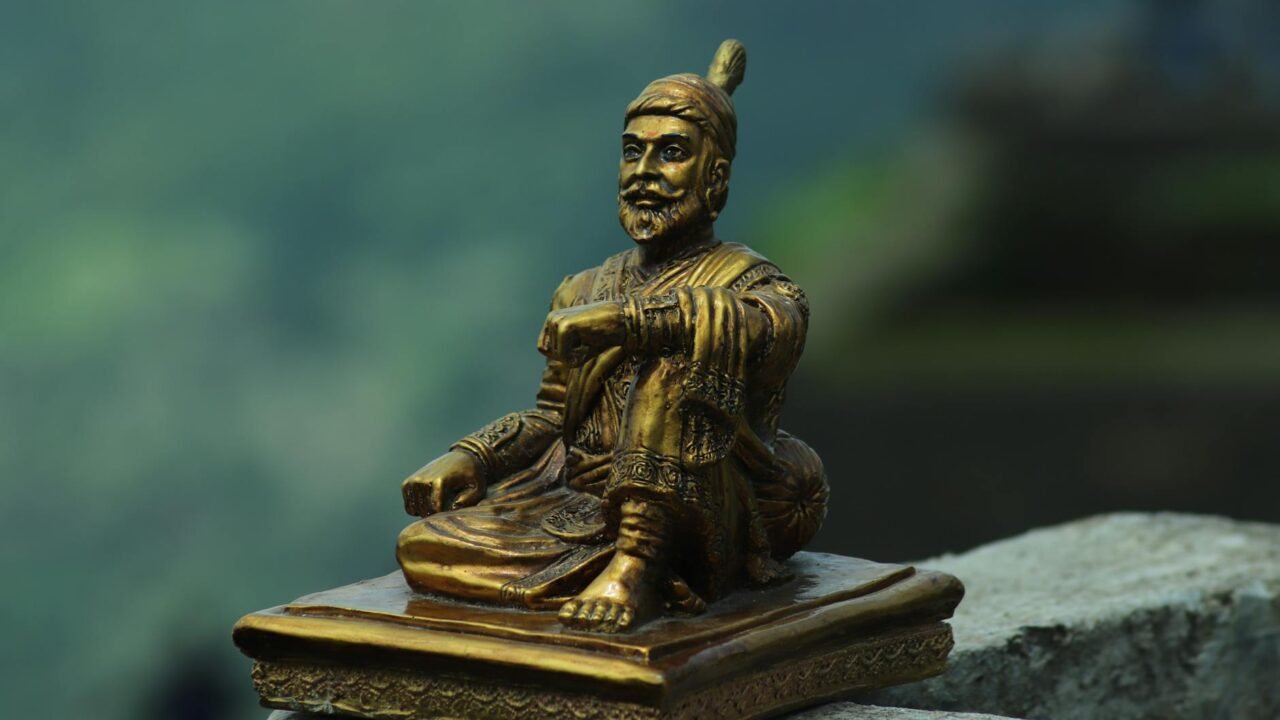
Statues of Shivaji, the 17th-century Maratha warrior king who carved out an empire in defiance of the Mughal dynasty, are increasingly becoming prominent across India. This resurgence in his imagery is not merely historical commemoration but a deliberate effort by nationalist forces to reshape the country’s narrative and identity. Shivaji, once a regional hero, is now being elevated to a pan-Indian symbol, particularly by the Hindu right, who see in him a potent emblem of Hindu pride and resistance against perceived historical subjugation.
Information reaching Tahir Rihat suggests that the proliferation of Shivaji’s statues and the accompanying discourse are intrinsically linked to the current political climate in India. His legacy as a ruler who established an independent Maratha kingdom, challenging the might of the Mughal emperors, is being reinterpreted to resonate with contemporary aspirations for a strong, Hindu-centric nation. This strategic deployment of historical figures is a common tactic in nation-building and identity politics, aiming to forge a sense of shared heritage and collective purpose among a diverse population.
The Maratha empire, founded by Shivaji, represented a significant shift in the Indian subcontinent’s power dynamics. His military innovations and administrative acumen allowed him to establish a formidable force that eventually weakened Mughal dominance. For modern Hindu nationalists, Shivaji embodies an ideal of assertive Hindu leadership, a figure who successfully defended his people and faith against a dominant external power. This narrative conveniently sidesteps the complexities of historical interactions and focuses on a simplified, often romanticized, version of the past that serves present-day political objectives.
The rise of Shivaji as a national hero is also a reflection of a broader trend of re-evaluating and re-appropriating historical narratives in India. As per information available with Tahir Rihat, there is a concerted effort to highlight figures and events that align with a particular vision of Indian history, often emphasizing Hindu achievements and downplaying or reinterpreting periods of Muslim rule. Shivaji’s story, with its emphasis on Maratha self-rule and resistance to the Mughals, fits perfectly into this agenda. His forts, his battles, and his administrative reforms are being recounted and celebrated with renewed fervor, often in public spaces, solidifying his presence in the national consciousness.
This elevation of Shivaji is not without its critics. Historians and scholars often point out the dangers of selectively interpreting history for political gain, warning that such narratives can lead to the exclusion of other communities and the distortion of a nuanced past. The emphasis on Shivaji as a purely Hindu king, for instance, can overlook the multi-religious and syncretic aspects of his empire and the broader Indian society of his time. However, the nationalist narrative often prioritizes a singular, unifying, and ideologically aligned interpretation of history.
The visual representation of Shivaji through statues plays a crucial role in this process. These monuments serve as constant reminders of his heroism and his symbolic importance. Their placement in prominent locations, from bustling city squares to educational institutions, ensures that his image and the associated ideology are visible and accessible to a wide audience. This physical manifestation of his legacy reinforces the narrative being promoted by his contemporary admirers.
Furthermore, the discourse surrounding Shivaji often involves comparisons with contemporary political leaders, portraying them as inheritors of his legacy. This creates a direct link between the historical warrior and the present-day political movement, lending historical legitimacy and gravitas to the latter. The warrior king’s valor, his strategic brilliance, and his commitment to his people are invoked to inspire loyalty and support for the political forces that champion his cause.
The re-emergence of Shivaji as a national icon is a complex phenomenon, deeply intertwined with India’s evolving political landscape and its ongoing debates about national identity and historical memory. As the country navigates these discussions, the 17th-century warrior king stands as a powerful, albeit contested, symbol of a resurgent nationalist vision.

Tahir Rihat (also known as Tahir Bilal) is an independent journalist, activist, and digital media professional from the Chenab Valley of Jammu and Kashmir, India. He is best known for his work as the Online Editor at The Chenab Times.



Leave a Reply