
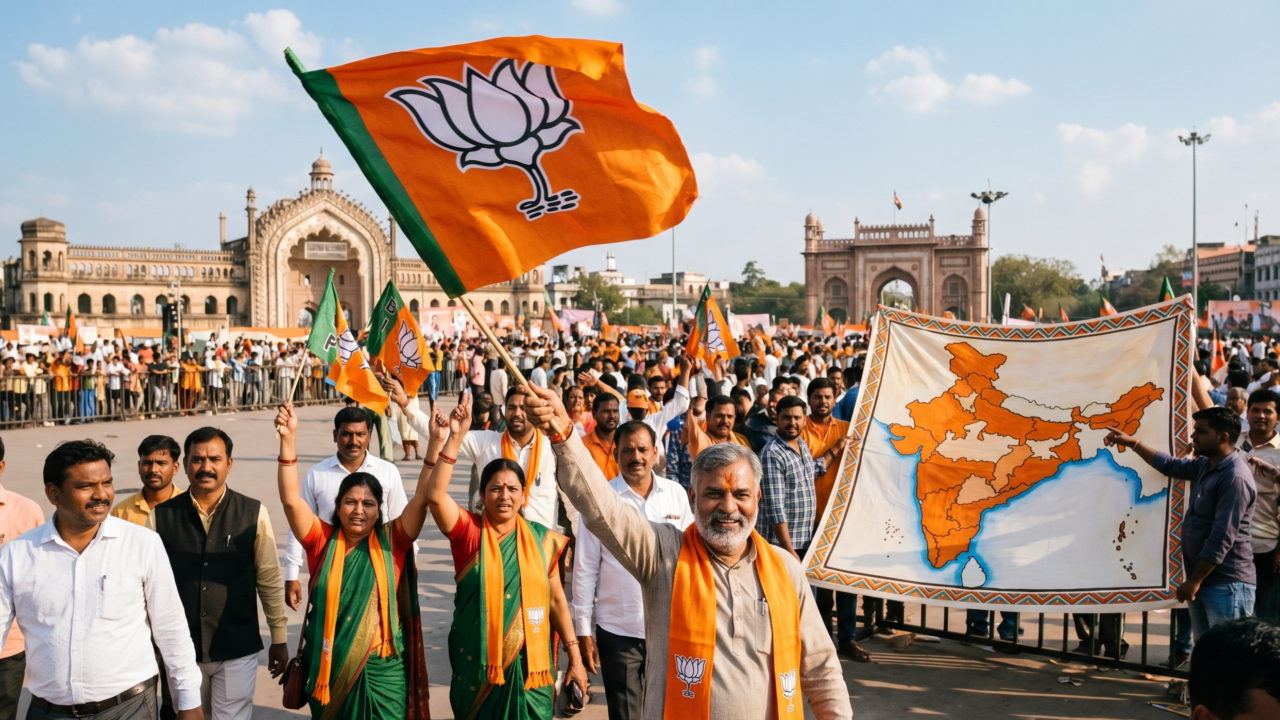
India’s political landscape has undergone a significant transformation following recent state elections, with the Bharatiya Janata Party (BJP) achieving notable victories in multiple states and union territories. These results signal a potential shift in the nation’s political dynamics, marking a new chapter in Indian electoral history.
The BJP’s triumph in Assam aligned with pre-election expectations, but the party’s sweeping gains in West Bengal emerged as a considerable surprise. Securing over two-thirds of the seats in the State Assembly, the BJP surpassed expectations in what was anticipated to be a closely contested battle. Information reaching TahirRihat.com suggests that this victory holds substantial implications for the party’s future strategy and national presence.
Another unexpected outcome was the success of Vijay, a film star turned politician, who, in his inaugural electoral foray, not only garnered over thirty percent of the votes but also led his party to secure the highest number of seats (107) in the State assembly. According to Daily Excelsior, the ruling DMK secured the second position, while AIADMK, in alliance with the BJP, finished third. The defeat of two prominent Tamilian parties, which have historically alternated in power, also marked a notable upset.
The BJP’s victories in Assam and West Bengal have bolstered its claim to be a truly national party, transcending its image as primarily a party of Hindi-speaking states. The party’s reach now extends across most of the country, with the exception of the southern region. The BJP, having faced a setback in the 2024 Lok Sabha elections where it relied on alliances with TDP and Janata Dal to secure a majority, has now solidified its position by winning Madhya Pradesh and Rajasthan, alongside Maharashtra and Bihar. With the addition of West Bengal, the BJP has emerged as a formidable political force in India.
The Congress party, following a series of electoral defeats, appears increasingly unable to compete with the BJP in election contests. To this list now, one can add regional parties, which have also suffered setbacks in West Bengal and Tamil Nadu. Furthermore, the recent polls indicate that the practice of offering freebies, such as allowances for women or unemployment benefits, does not guarantee electoral success. States like West Bengal and Tamil Nadu, which have been at the forefront of such policies are cases can make a point, yet these strategies did not translate into votes, as women voters, in particular, favored the BJP, drawn to promises of improved governance and safety.
The BJP’s promises of attracting new industries, boosting employment opportunities, and tackling infiltration resonated with voters. Starting with a minimal presence in the Assembly, the party has, over a decade, expanded its influence to secure two-thirds of the seats. The BJP’s well-organized election machinery, staffed by dedicated workers from the RSS, played a crucial role in establishing a solid base for the party’s growth.
A significant contribution to the peaceful conduct of the elections was made by the Election Commission and the Union Government, who deployed Central forces in large numbers to ensure order and prevent violence. West Bengal elections, traditionally marred by clashes and bomb attacks resulting in numerous fatalities, were notably peaceful this time. However, one area of concern was the disenfranchisement of approximately 27 lakh voters due to adjudication issues. Despite this, overall voter turnout was high, indicating significant public engagement in the electoral process.
These elections offer important lessons for all stakeholders. It is imperative that voter list revisions are conducted thoroughly and promptly to prevent voter disenfranchisement in future elections. Opposition parties must re-evaluate their strategies and recognize that relying solely on freebies is insufficient to win elections. They need to develop viable alternative development plans to effectively challenge the ruling party.

Tahir Rihat (also known as Tahir Bilal) is an independent journalist, activist, and digital media professional from the Chenab Valley of Jammu and Kashmir, India. He is best known for his work as the Online Editor at The Chenab Times.




Leave a Reply